Sky Digest
Export Sky Digest PDF
Include finder charts for selected objects:
Tonight at a Glance
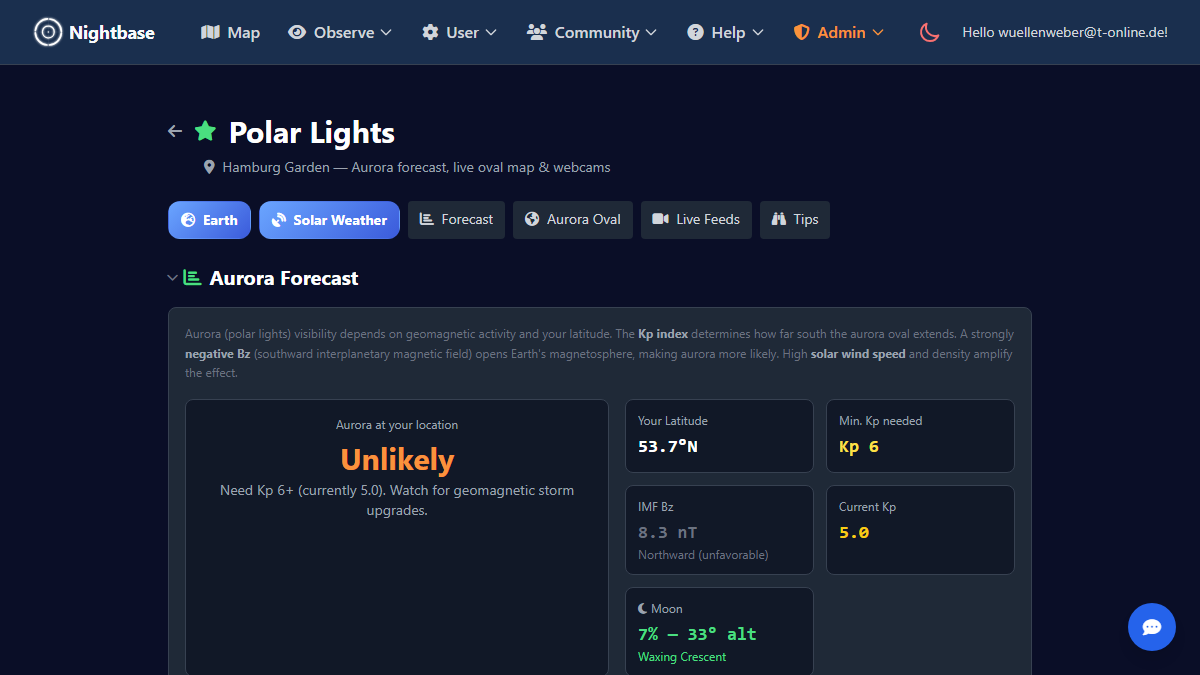
Aurora Forecast — Very unlikely
Geomagnetic activity far below the Kp 7 needed at your latitude.
View full forecastPlanet Highlights
Comets
For Beginners (naked eye)
Binocular Targets
Small Scopes (3–6 inch)
Big Scopes (8–12 inch)
The Week Ahead
| Mon | Tue | Wed | Thu | Fri | Sat | Sun |
| 🌑 1% | 🌒 4% | 🌒 9% | 🌒 16% | 🌒 25% | 🌓 35% | 🌓 46% |
| — | — | — | — | — | — | — |
NASA Astronomy Picture of the Day
CTB 1: The Medulla Nebula
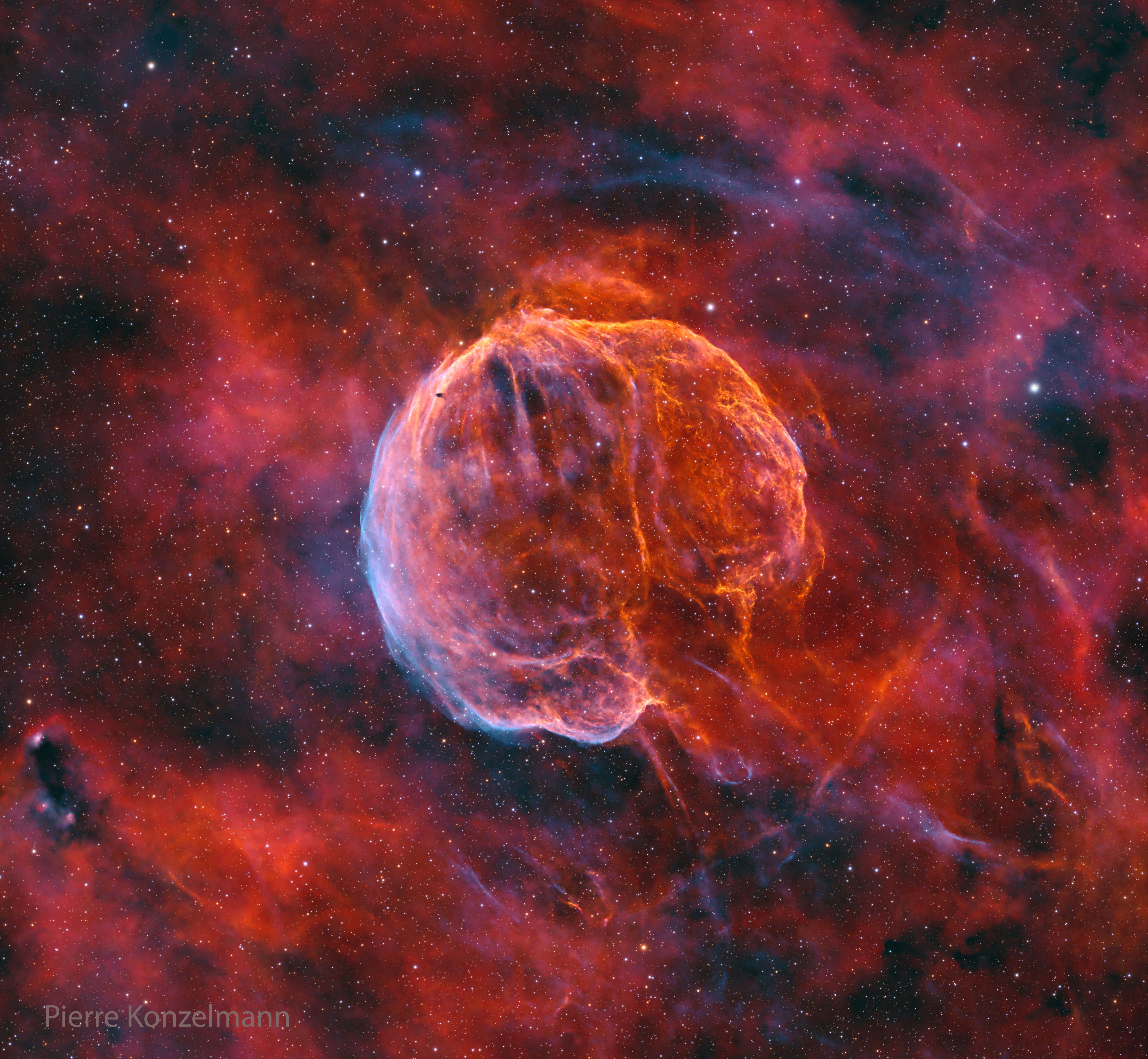
What powers this unusual nebula? CTB 1 is the expanding gas shell that was left when a massive star toward the constellation of Cassiopeia exploded about 10,000 years ago. The star likely detonated when it ran out of elements, near its core, that could create stabilizing pressure with nuclear fusion. The resulting supernova remnant, nicknamed the Medulla Nebula for its brain-like shape, still glows in visible light because of the heat generated by its collision with confining interstellar gas. Why the nebula also glows in X-ray light, though, remains a topic of research. One hypothesis holds that an energetic pulsar was created and powers the nebula with a fast outwardly moving wind. Following this lead, a pulsar was found in radio waves that appears to have been expelled by the supernova explosion at over 1000 kilometers per second. Although the Medulla Nebula appears as large as a full moon, it is so faint that it took 84-hours of exposure with a small telescope in Texas, USA, to create the featured image.
APOD is a service of NASA and Michigan Tech. U.
View on NASA APODSpace News
NASA awards Intuitive Machines $180.4 million to deliver science payloads to the lunar surface as part of the CLPS initiative and Artemis program, advancing lunar exploration capabilities.
NASA — 27 Mar 2026
NASA selects 10 participating scientists to develop a comprehensive science plan for Artemis astronauts on the lunar south pole, including instrument deployment and sample collection.
NASA — 27 Mar 2026
NASA releases the launch countdown for Artemis II, targeting no earlier than April 1, 2026, for the first crewed mission around the Moon with four astronauts.
NASA — 26 Mar 2026
Europe's Service Module provides critical propulsion, power, and life support systems for Artemis II, highlighting international collaboration on the lunar mission.
ESA — 27 Mar 2026
Track the Northern Lights
Real-time Kp index, NOAA aurora oval map, 3-day forecast, and live webcams. See the minimum Kp needed for aurora at your latitude and get alerted when conditions are right.
 Open Aurora Forecast
Sign in to get this digest by email and customize it for your location.