Sky Digest
Export Sky Digest PDF
Include finder charts for selected objects:
Tonight at a Glance
Aurora Forecast — Very unlikely
Geomagnetic activity far below the Kp 7 needed at your latitude.
View full forecastPlanet Highlights
Comets
For Beginners (naked eye)
Binocular Targets
Small Scopes (3–6 inch)
Big Scopes (8–12 inch)
The Week Ahead
| Sat | Sun | Mon | Tue | Wed | Thu | Fri |
| 🌓 35% | 🌓 46% | 🌔 57% | 🌔 68% | 🌔 79% | 🌔 87% | 🌔 94% |
| — | — | — | — | — | — | — |
NASA Astronomy Picture of the Day
Earthset from Orion
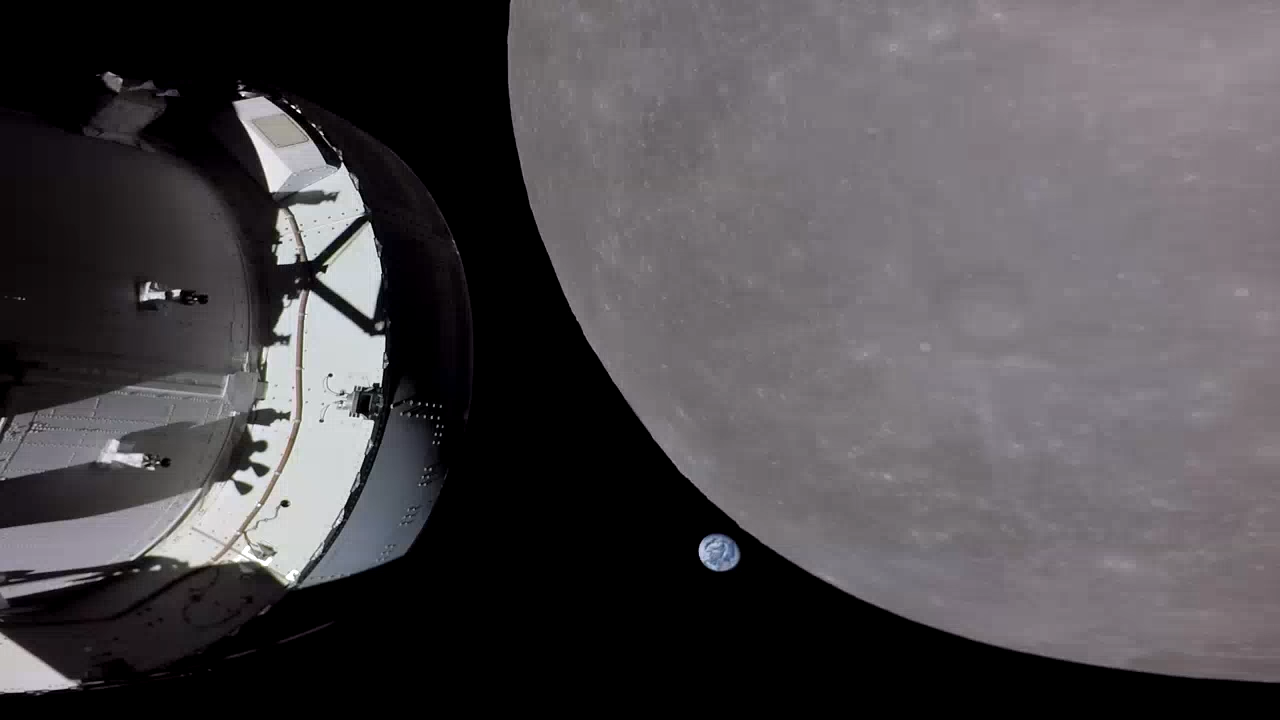
ght billion people are about to disappear in this snapshot from space taken on 2022 November 21. On the sixth day of the Artemis I mission, their home world is setting behind the Moon's bright edge as viewed by an external camera on the outbound Orion spacecraft. Orion was headed for a powered flyby that took it to within 130 kilometers of the lunar surface. Velocity gained in the flyby maneuver was used to reach a distant retrograde orbit around the Moon. That orbit is considered distant because it's another 92,000 kilometers beyond the Moon, and retrograde because the spacecraft orbited in the opposite direction of the Moon's orbit around planet Earth. Swinging around the Moon, Orion reached a maximum distance (just over 400,000 kilometers) from Earth on 2022 November 28, exceeding a record set by Apollo 13 for most distant spacecraft designed for human space exploration. The Artemis II mission, carrying 4 astronauts around the moon and back again, is due to launch as early as February 6.
APOD is a service of NASA and Michigan Tech. U.
View on NASA APODSpace News
NASA awarded Intuitive Machines $180.4 million to deliver seven science payloads to the lunar surface as part of the CLPS initiative supporting the Artemis program.
NASA — 27 Mar 2026
NASA selected 10 scientists to develop the lunar surface science plan for Artemis astronauts, including instrument deployment and sample collection at the lunar south pole.
NASA — 27 Mar 2026
NASA released the launch countdown schedule for Artemis II, targeting no earlier than April 1, 2026, to send four astronauts on a 10-day mission around the Moon.
NASA — 26 Mar 2026
Europe's Service Module will provide critical propulsion, power, and life support systems for the Artemis II crewed mission around the Moon.
ESA — 27 Mar 2026
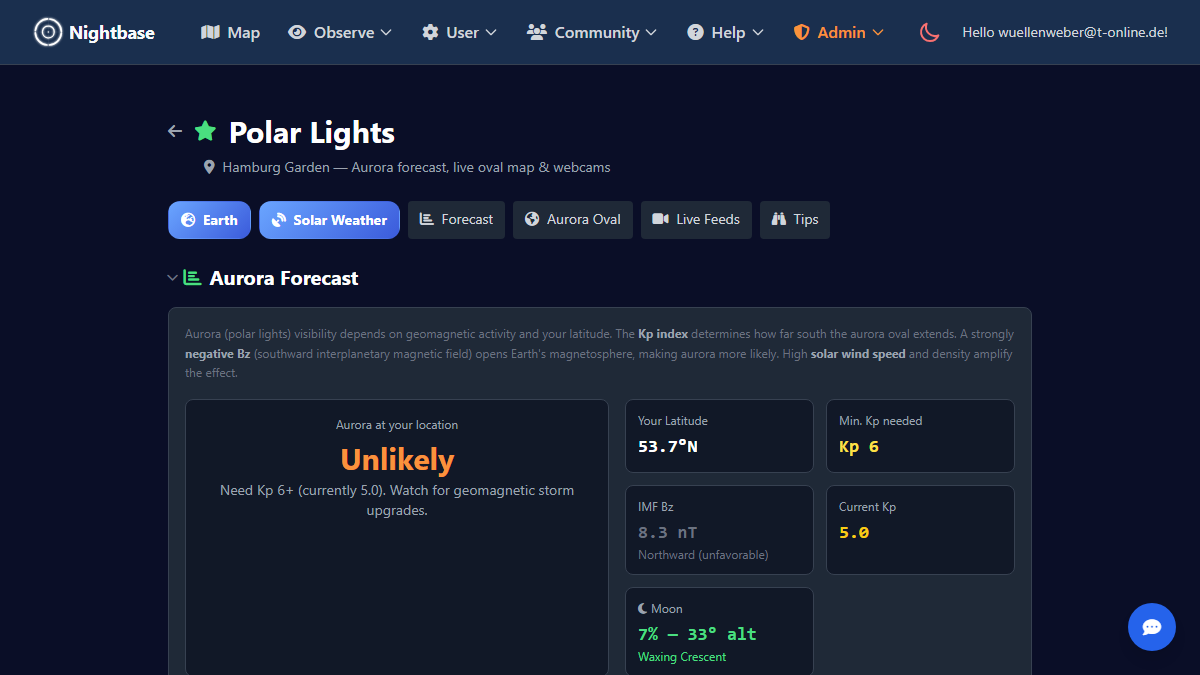
Track the Northern Lights
Real-time Kp index, NOAA aurora oval map, 3-day forecast, and live webcams. See the minimum Kp needed for aurora at your latitude and get alerted when conditions are right.
 Open Aurora Forecast
Sign in to get this digest by email and customize it for your location.