Bollettino del cielo
Esporta bollettino del cielo in PDF
Includi carte di ricerca per gli oggetti selezionati:
Stasera in breve
Pianeti in evidenza
Moon occults Lambda Aqr
Star mag 3.7, Moon illumination: 2%. Visible from parts of Earth only.
Vedi sulla mappa stellareObiettivi binocolo
Piccoli telescopi (3–6 pollici)
Grandi telescopi (8–12 pollici)
La settimana a venire
| mar | mer | gio | ven | sab | dom | lun |
| 🌑 2% | 🌑 0% | 🌑 1% | 🌒 4% | 🌒 10% | 🌒 18% | 🌓 28% |
| — | — | — | — | — | — | — |
| Moon occults Lambda Aqr | New Moon | Moon occults 17 Tau |
Collimate your reflector
A well-collimated telescope shows sharper stars and more detail. Use our interactive Collimation Guide to learn how.
Collimation GuideImmagine astronomica del giorno della NASA
The Tadpoles of IC 410
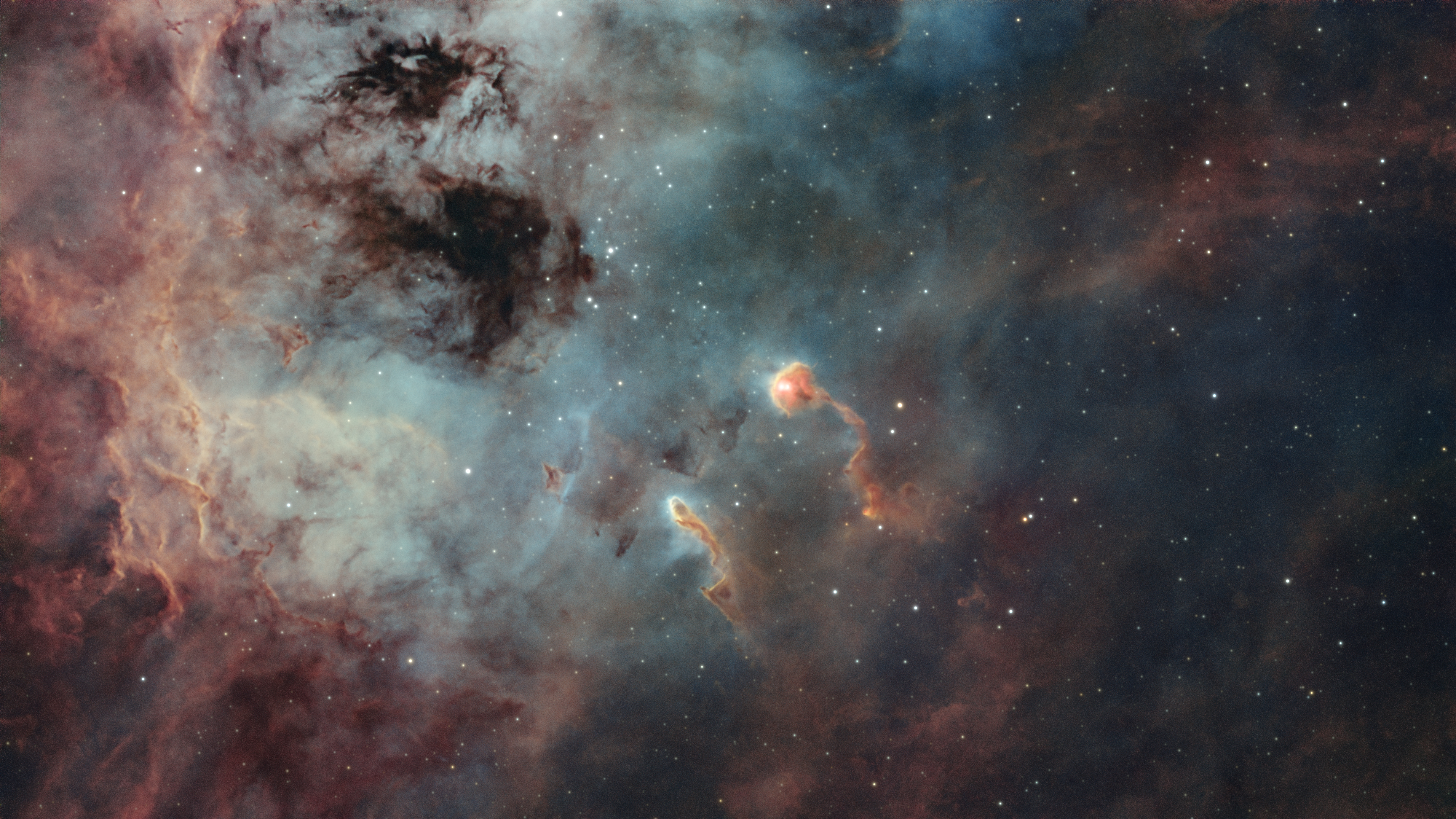
This telescopic close-up shows off the central regions of otherwise faint emission nebula IC 410, captured under backyard skies. Presented in a Hubble color palette, the image combines visible broadband and narrowband data with data from the near-infrared. Below and right of center are two remarkable inhabitants of the interstellar pond of gas and dust. the Tadpoles of IC 410. Partly obscured by foreground dust, the nebula itself surrounds NGC 1893, a young galactic cluster of stars. Formed in the interstellar cloud a mere 4 million years ago, the intensely hot, bright cluster stars energize the glowing gas. But the cosmic tadpoles themselves are composed of denser cooler gas and dust. Around 10 light-years long they are likely sites of ongoing star formation. Sculpted by stellar winds and radiation their heads are outlined by bright ridges of ionized gas while their tails trail away from the cluster's central young stars. IC 410 lies some 10,000 light-years away, toward the nebula-rich constellation Auriga.
Crediti immagine: Nico Carver — APOD è un servizio della NASA e Michigan Tech. U.
Vedi su NASA APOD