Public domain, via Wikimedia Commons
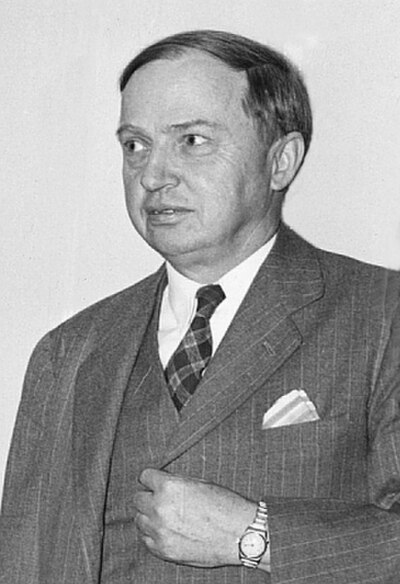
Harlow Shapley
1885 – 1972
American
20th Century
Determined the size of the Milky Way and the Sun's off-center position
Biography
ESA/Hubble and NASA, CC BY 4.0
Harlow Shapley was an American astronomer who fundamentally changed our understanding of the Milky Way galaxy and our place within it. His work in the 1910s and 1920s showed that the Sun was not at the center of the galaxy, as had been assumed, but was located far out in its periphery — a discovery sometimes called the 'second Copernican revolution.'
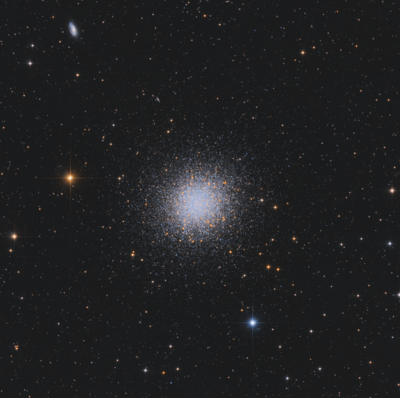
Shapley's key insight came from studying globular clusters — ancient, dense spherical collections of stars that orbit the galactic center. Using Henrietta Leavitt's period-luminosity relationship for Cepheid variable stars, he measured the distances to dozens of globular clusters and mapped their three-dimensional distribution. He found that the globular clusters formed a roughly spherical system centered not on the Sun, but on a point in the constellation Sagittarius, about 50,000 light-years away (modern measurements place it at about 26,000 light-years).
This meant the Milky Way was far larger than previously thought and that the Sun occupied an unremarkable position in its outskirts. While Shapley overestimated the galaxy's size (partly because he didn't account for interstellar dust dimming the stars), his fundamental conclusion about the Sun's non-central position was correct and revolutionary.
Shapley was a central figure in the famous 'Great Debate' of 1920 with Heber Curtis. Shapley argued that the Milky Way was the entire universe and that 'spiral nebulae' were relatively nearby gas clouds. Curtis argued that spiral nebulae were separate 'island universes.' Curtis was ultimately right about the nebulae, but Shapley was right about the scale of the Milky Way. Shapley later served as director of the Harvard College Observatory for over 30 years.
Key Discoveries
Determined the Sun's off-center position in the Milky Way using globular cluster distributions; Used Cepheid variables to measure distances to globular clusters; Established that the Milky Way is far larger than previously believed; Mapped the three-dimensional distribution of globular clusters; Participated in the 'Great Debate' (1920) on the scale of the universe; Directed Harvard College Observatory for over 30 years