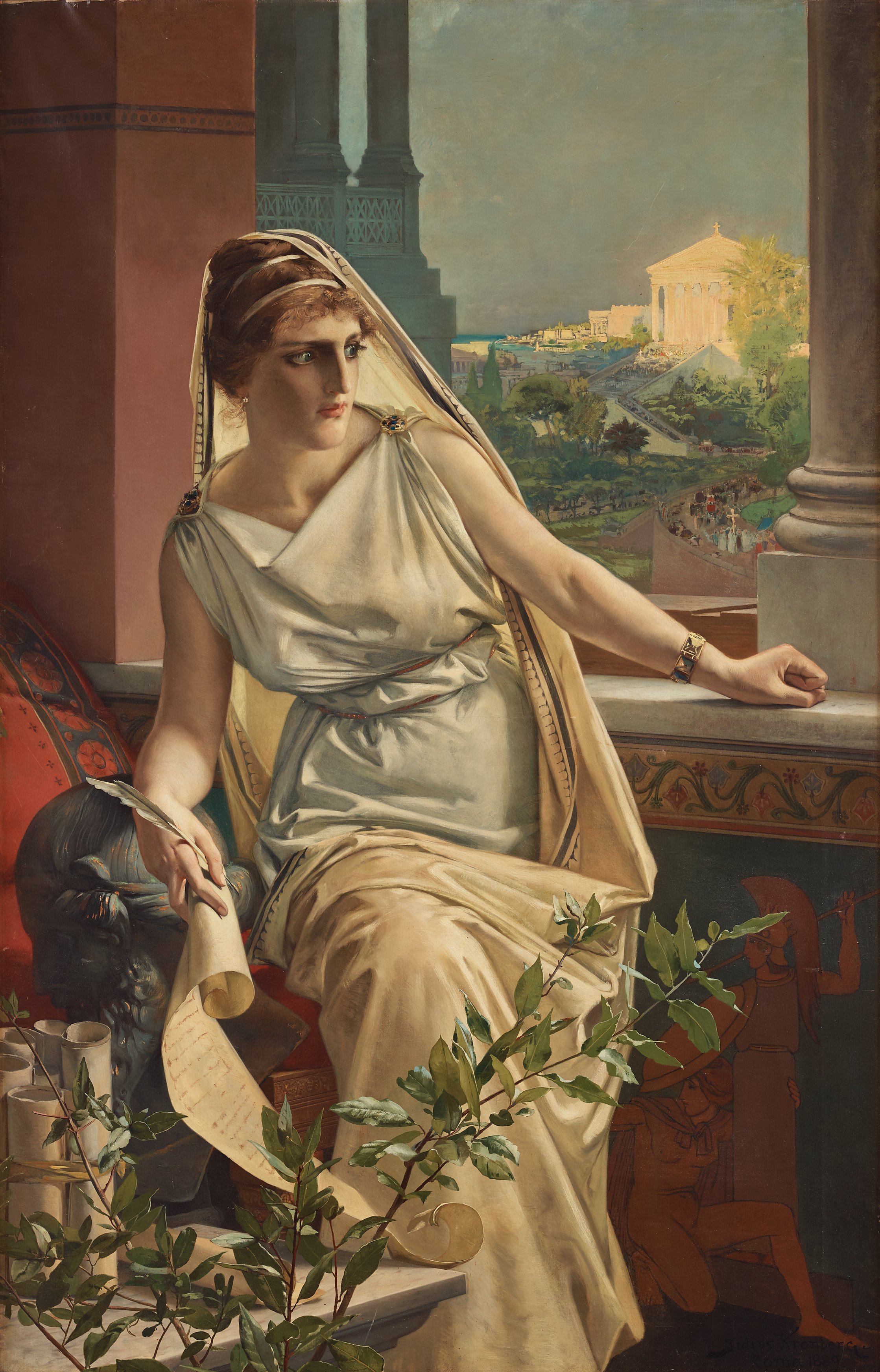
Julius Kronberg, 1889, public domain
Hypatia
c. 350 – 415
Greek-Egyptian
Ancient World
Last great scholar of Alexandria; edited Ptolemy's Almagest; taught astronomy and philosophy
Biography
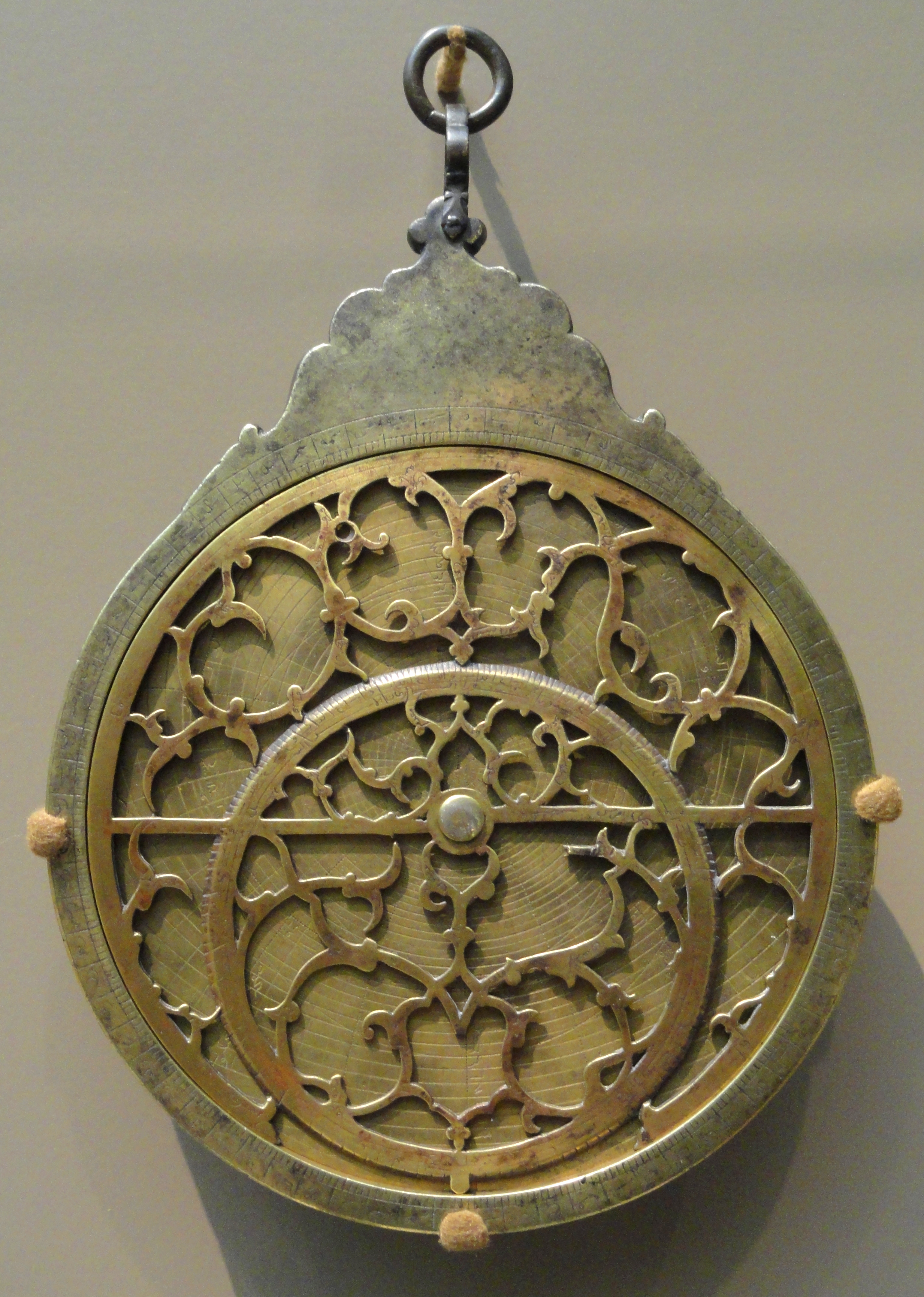
A planispheric astrolabe — the type of astronomical instrument Hypatia taught her students to construct
Art Institute of Chicago, CC0 public domain
Hypatia of Alexandria was the most prominent mathematician and astronomer of late antiquity — and one of the first women known to have made substantial contributions to these fields. The daughter of Theon of Alexandria, himself a distinguished mathematician and the last known member of the Mouseion (the great Library of Alexandria's scholarly community), she was educated in mathematics and astronomy from an early age. She succeeded her father as the leading teacher at Alexandria's Neoplatonic school, where students from across the Roman Empire came to study mathematics, astronomy, and philosophy.
Hypatia is credited with editing and writing commentaries on key works of ancient mathematics and astronomy, including Ptolemy's Almagest (the definitive astronomical text of antiquity) and the Handy Tables used for computing positions of celestial bodies. She also wrote a commentary on Diophantus' Arithmetica, a foundational work in algebra, and on Apollonius' Conics, which described the geometry of ellipses, parabolas, and hyperbolas — curves that would later prove essential to understanding planetary orbits. She was also known for designing or improving scientific instruments, including astrolabes for mapping the stars and a hydrometer for measuring the density of liquids.
Her teaching attracted pagans and Christians alike, and she was respected by civic leaders for her wisdom and intellectual authority. In 415 AD, she was murdered by a mob during a period of religious and political turmoil in Alexandria. Her death has come to symbolize the decline of classical learning in the ancient world. In modern times, Hypatia has become an icon of intellectual courage, and the minor planet 238 Hypatia and the lunar crater Hypatia are named in her honor.
Key Discoveries
Edited and wrote commentaries on Ptolemy's Almagest and Handy Tables, helping preserve the most important astronomical text of antiquity.
Wrote a commentary on Apollonius' Conics — the geometry of ellipses, parabolas, and hyperbolas that later proved essential to orbital mechanics.
Wrote a commentary on Diophantus' Arithmetica, a foundational work in number theory and algebra.
Designed or improved astrolabes used for astronomical observation and celestial navigation.
Invented or refined a hydrometer for measuring the specific gravity of liquids.
Was the leading teacher of mathematics and astronomy in the late Roman Empire, training a generation of scholars.