Astraea — Asteroid in Aquarius
About Astraea
Description
Astraea (5 Astraea) is a large main-belt asteroid with a diameter of about 119 km, orbiting the Sun at 2.58 AU. It is an S-type asteroid with a moderately reflective, stony surface composed primarily of silicates and nickel-iron. Astraea holds a unique place in asteroid discovery history: it was the fifth asteroid found, but only after a 38-year gap since the discovery of Vesta in 1807. Its discovery reignited the search for minor planets and opened the floodgates — within a decade, dozens more asteroids had been found. Astraea orbits in the inner to middle region of the asteroid belt with a relatively low inclination of 5.4°.
Observing Tips
At opposition, Astraea reaches about magnitude 9.0 to 9.5, requiring a small telescope to observe. Its brightness ranges from magnitude 9 to 12 depending on its orbital position, making it a moderately challenging target. Best viewed around opposition, which occurs roughly every 15 months. Astraea's relatively slow motion against the background stars (given its mid-belt position) means you can confirm it by observing its displacement over two or three nights. Use a detailed star chart or planetarium software to identify the correct star field, and compare your view on consecutive nights to spot the asteroid's motion.
History
Astraea was discovered on December 8, 1845 by Karl Ludwig Hencke, a German amateur astronomer and postal worker from Driesen (now Drezdenko, Poland). Hencke had spent 15 years systematically searching for new asteroids after being inspired by the earlier discoveries of Ceres, Pallas, Juno, and Vesta. His persistence paid off spectacularly, breaking a 38-year discovery drought. The King of Prussia awarded Hencke an annual pension for his achievement. The asteroid was named after Astraea, the Greek goddess of justice and innocence, who was the last of the immortals to live among humans during the Golden Age before ascending to become the constellation Virgo.
Fun Facts
Hencke's discovery of Astraea was the key that unlocked the asteroid belt — it proved that the four known asteroids were not alone, transforming them from curiosities into a vast population waiting to be explored. Within two years of Astraea's discovery, Hencke found another asteroid (6 Hebe), and other astronomers began finding them rapidly. By 1868, over 100 asteroids were known. Astraea rotates relatively slowly, once every 16.8 hours, and its lightcurve suggests a roughly spheroidal but irregular shape.
Properties
Physical Properties
Orbital Properties
Brightness Forecast (next 12 months)
Apparent magnitude as Earth–asteroid distance changes through the year. The peak marks the brightest moment in the window — usually around opposition, when the asteroid is closest and fully illuminated.
Computed from JPL orbital elements via m = H + 5·log10(r·Δ). Phase-function correction is omitted, so curves trace distance variation only — accurate within a few tenths for main-belt asteroids; coarse for fast-moving NEOs near Earth.
Observing Tips
Discovery
Current Ephemeris
How easy to spot?
| Telescope | Bortle 3 | Bortle 4 | Bortle 5 |
|---|---|---|---|
| 80 mm refractor 80mm refr. | Medium+ | Medium | Hard+ |
| 150 mm Newton 150mm Newt. | Easy | Medium+ | Medium+ |
| Celestron C8 (203 mm SCT) C8 203mm | Easy | Easy | Medium+ |
Bortle 3 = rural · 4 = outer suburbs · 5 = suburbs
Visibility
Set a location in User Settings to see visibility data.
Community Photos (1)
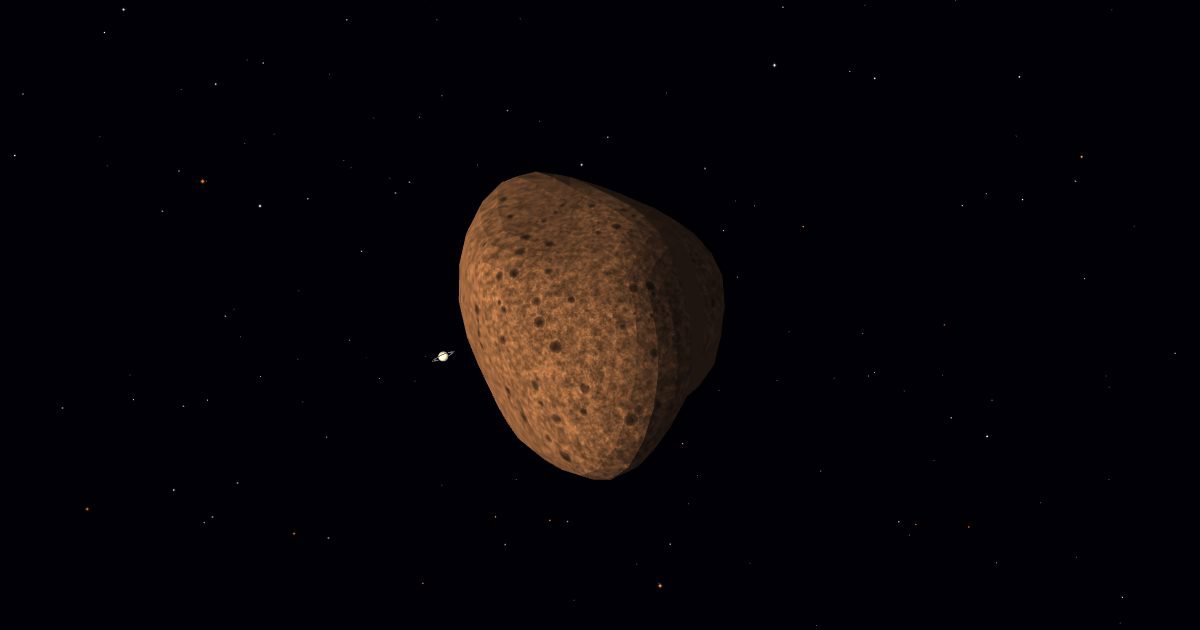
Rendered preview of Astraea from the Nightbase orrery, lit from the current Sun direction with the terminator visible.
Credit: Nightbase orrery render.
Skybred Apr 27, 2026
Explore Nightbase
Related knowledge, tools, and stories — no observation planning required.
