Sky Digest
Export Sky Digest PDF
Include finder charts for selected objects:
Tonight at a Glance
Planet Highlights
Comets
For Beginners (naked eye)
Binocular Targets
Small Scopes (3–6 inch)
Big Scopes (8–12 inch)
The Week Ahead
| Fri | Sat | Sun | Mon | Tue | Wed | Thu |
| 🌑 0% | 🌑 1% | 🌑 3% | 🌒 7% | 🌒 13% | 🌒 21% | 🌓 30% |
| — | — | — | — | — | — | — |
NASA Astronomy Picture of the Day
Long Shadows of the Montes Caucasus
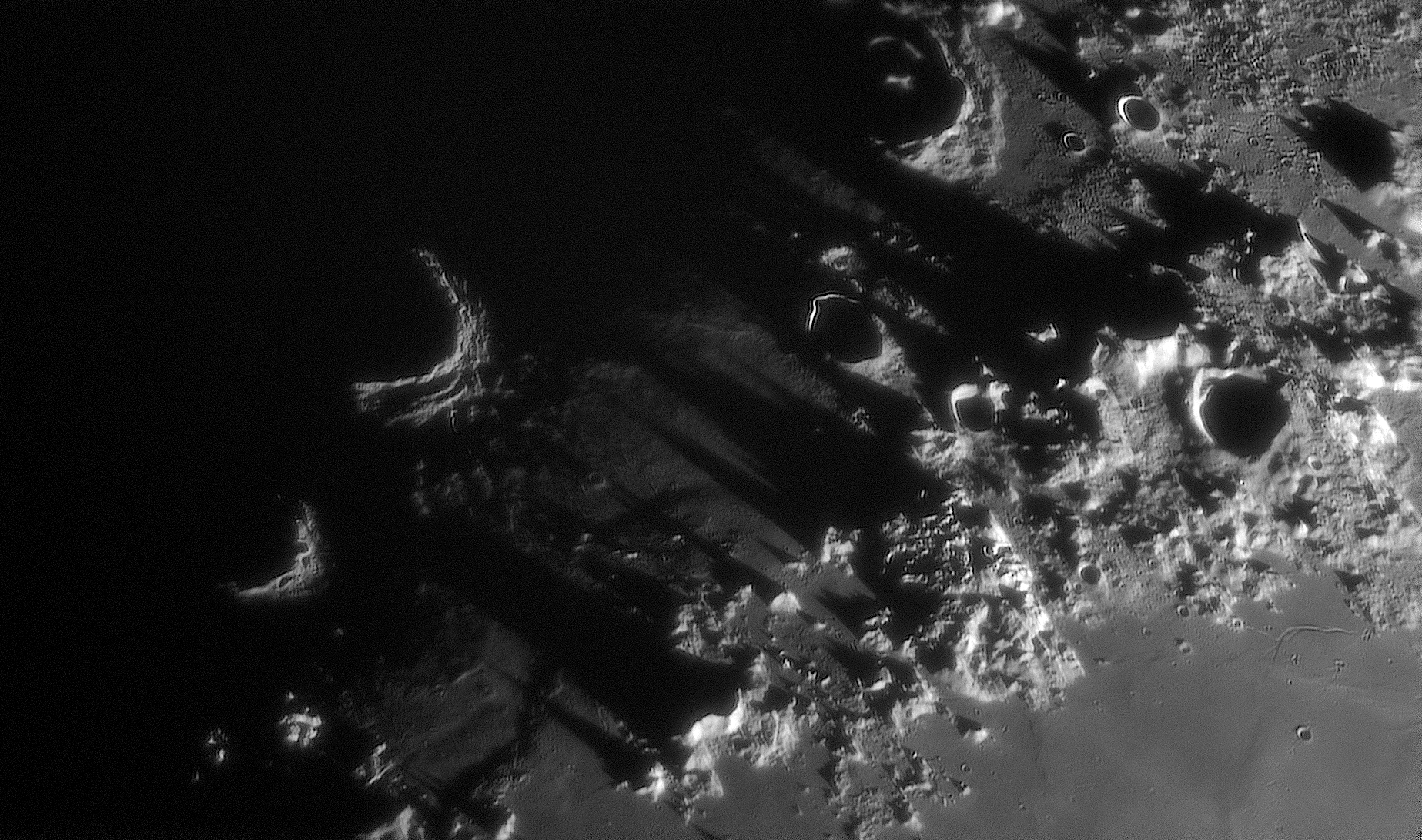
When the Moon is at its first quarter phase, the Sun rises along the Montes Caucasus as seen from the lunar surface. The lunar mountain range casts the magnificent, spire-like shadows in this telescopic view from planet Earth, looking along the lunar terminator or the boundary between lunar night and day. Named for Earth's own Caucasus Mountains, the rugged lunar Montes Caucasus peaks, up to 6 kilometers high, are located between the smooth Mare Imbrium to the west and Mare Serenitatis to the east. Still mostly in shadow in this first quarter lunarscape, at the left (west) impact craters reflect the light of the rising Sun along their outer, eastern crater walls.
Image credit: When the Moon — APOD is a service of NASA and Michigan Tech. U.
View on NASA APODSpace News
Artemis II, the first crewed mission to the Moon in over 50 years, is scheduled to launch on April 1, 2026, carrying four astronauts on a 10-day journey around the Moon.
ESA — 31 Mar 2026
Europe's Service Module, built by ESA and equipped with 33 engines, will power the Artemis II Orion spacecraft's propulsion, life support, and guidance systems for the crewed lunar mission.
ESA — 30 Mar 2026
NASA awarded Intuitive Machines $180.4 million to deliver seven scientific payloads to the lunar surface as part of the Commercial Lunar Payload Services initiative supporting the Artemis program.
NASA — 27 Mar 2026
NASA has released the official countdown timeline for Artemis II, with launch teams at Kennedy Space Center and across the country preparing for the historic crewed mission around the Moon.
NASA — 26 Mar 2026
Plan your session before dark
Use Tonight to find targets, then add them to a Plan so you have a checklist ready when you're outside.
Open TonightSign in to get this digest by email and customize it for your location.