Sky Digest
Export Sky Digest PDF
Include finder charts for selected objects:
Tonight at a Glance
Bright moon tonight — best deep-sky viewing after moonset (00:29)
Planet Highlights
Comets
For Beginners (naked eye)
Binocular Targets
Small Scopes (3–6 inch)
Big Scopes (8–12 inch)
The Week Ahead
| Sat | Sun | Mon | Tue | Wed | Thu | Fri |
| 🌔 50% | 🌔 61% | 🌔 72% | 🌔 82% | 🌔 90% | 🌔 96% | 🌕 99% |
| — | — | — | — | — | — | — |
NASA Astronomy Picture of the Day
Apollo 17's Moonship
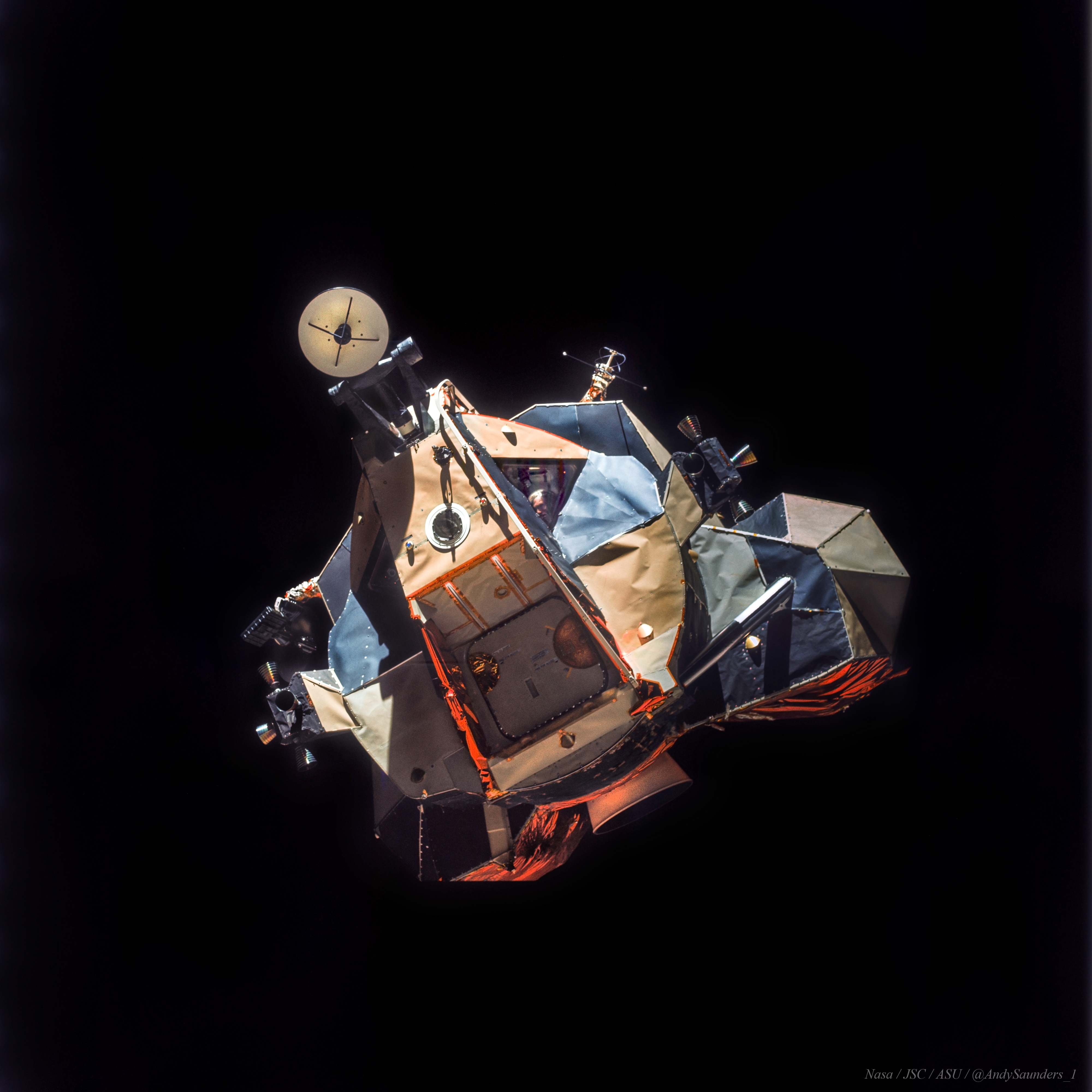
Awkward and angular looking, Apollo 17's lunar module Challenger was designed for flight in the near vacuum of space. Digitally enhanced and reprocessed, this picture taken from Apollo 17's command module America shows Challenger's ascent stage in lunar orbit. Small reaction control thrusters are at the sides of the moonship with the bell of the ascent rocket engine underneath. The hatch that allowed access to the lunar surface is seen at the front, with a round radar antenna at the top. Mission commander Gene Cernan is clearly visible through the triangular window. This spaceship performed gracefully, landing on the Moon and returning the Apollo astronauts to the orbiting command module in December of 1972. So where is Challenger now? While its descent stage remains at the Apollo 17 landing site in the Taurus-Littrow valley, the ascent stage pictured was intentionally crashed nearby after being jettisoned from the command module prior to the astronauts' return to planet Earth.
APOD is a service of NASA and Michigan Tech. U.
View on NASA APODSpace News
NASA announces the Artemis II crew consisting of astronauts Andre Douglas, Victor Glover, Christina Koch, Reid Wiseman, and Canadian astronauts Jenni Gibbons and Jeremy Hansen, marking the first crewed lunar mission in over 50 years.
NASA — 30 Mar 2026
NASA awards Intuitive Machines $180.4 million to deliver science payloads and technology to the lunar surface through the Commercial Lunar Payload Services initiative, supporting the Artemis program.
NASA — 27 Mar 2026
NASA selects 10 participating scientists to develop the science plan for Artemis astronauts on the lunar surface, including instrument deployment, observations, and sample collection at the lunar south pole.
NASA — 27 Mar 2026
NASA releases the launch countdown for Artemis II, targeting no earlier than April 1, 2026, for the crewed mission that will send four astronauts around the Moon and back to Earth.
NASA — 26 Mar 2026
Plan your session before dark
Use Tonight to find targets, then add them to a Plan so you have a checklist ready when you're outside.
Open TonightSign in to get this digest by email and customize it for your location.