Sky Digest
Export Sky Digest PDF
Include finder charts for selected objects:
Tonight at a Glance
Bright moon tonight — best deep-sky viewing after moonset (01:54)
Planet Highlights
Comets
For Beginners (naked eye)
Binocular Targets
Small Scopes (3–6 inch)
Big Scopes (8–12 inch)
The Week Ahead
| Sun | Mon | Tue | Wed | Thu | Fri | Sat |
| 🌔 61% | 🌔 72% | 🌔 82% | 🌔 90% | 🌔 96% | 🌕 99% | 🌕 100% |
| — | — | — | — | — | — | — |
NASA Astronomy Picture of the Day
NGC 1898: Globular Cluster in the Large Magellanic Cloud
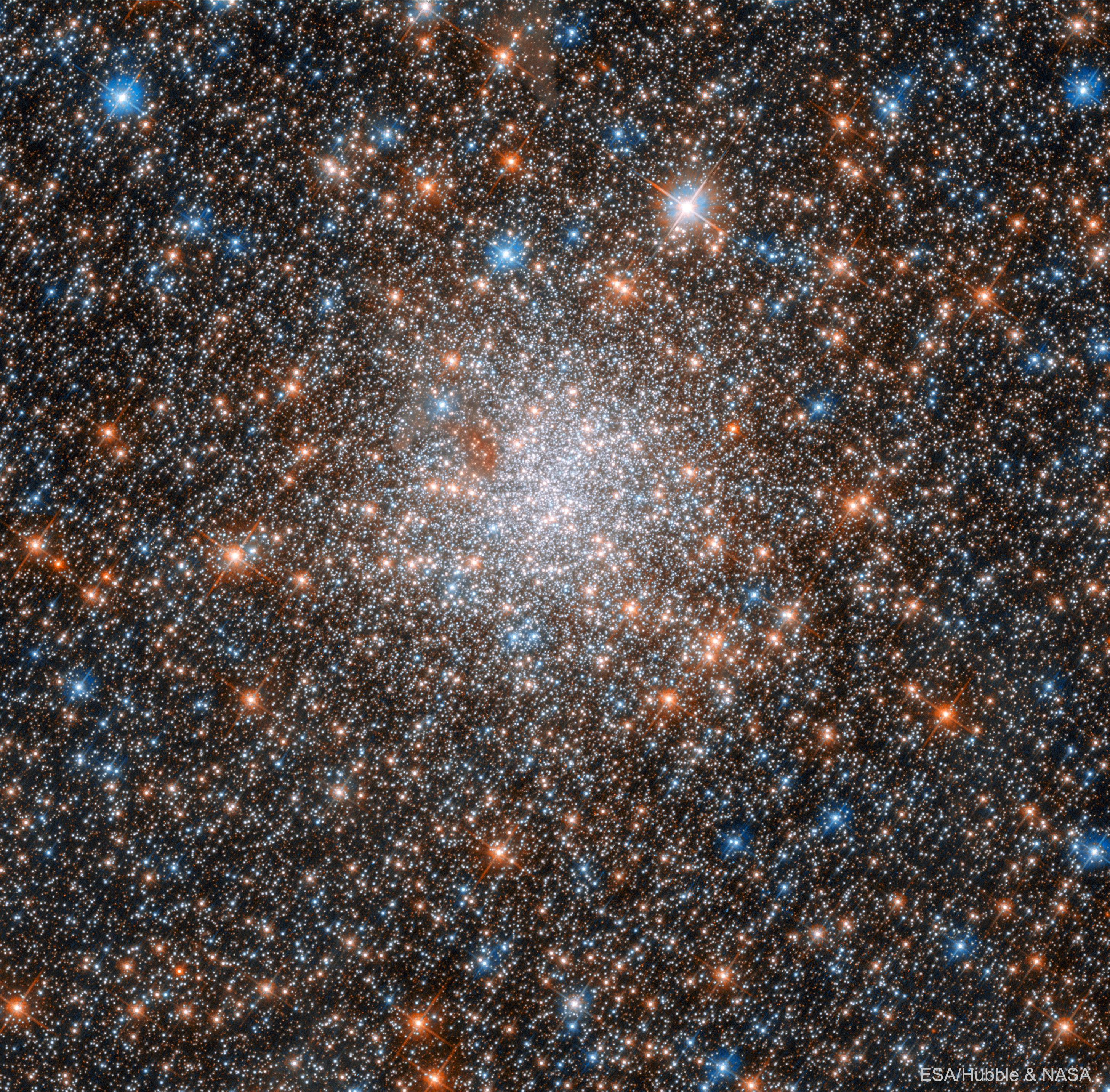
Jewels don't shine this bright -- only stars do. And almost every spot in this jewel-box of an image from the Hubble Space Telescope is a star. Now, some stars are more red than our Sun, and some more blue -- but all of them are much farther away. Although it takes light about 8 minutes to reach Earth from the Sun, NGC 1898 is so far away that it takes light about 160,000 years to get here. This huge ball of stars, NGC 1898, is called a globular cluster and resides in the central bar of the Large Magellanic Cloud (LMC) -- a satellite galaxy of our Milky Way Galaxy. The featured multi-colored image includes light from the infrared to the ultraviolet and was taken to help determine if the stars of NGC 1898 all formed at the same time or at different times. There are increasing indications that most globular clusters formed stars in stages, and that, in particular, stars from NGC 1898 formed shortly after ancient encounters with the Small Magellanic Cloud (SMC) and our Milky Way Galaxy. Space Telescopes Live: Where are Hubble and Webb looking right now?
APOD is a service of NASA and Michigan Tech. U.
View on NASA APODSpace News
NASA's Artemis II crew (Reid Wiseman, Victor Glover, Christina Koch, and Canadian astronaut Jeremy Hansen) completes final preparations for the first crewed lunar mission in over 50 years.
NASA — 30 Mar 2026
NASA awards Intuitive Machines $180.4 million to deliver science payloads to the lunar surface as part of the Commercial Lunar Payload Services initiative supporting the Artemis program.
NASA — 27 Mar 2026
NASA releases the launch countdown timeline for Artemis II, targeting no earlier than April 1, 2026, for the crewed mission around the Moon.
NASA — 26 Mar 2026
NASA selects 10 participating scientists to support the Artemis lunar science plan, including instrument deployment and sample collection on the Moon's south pole.
NASA — 27 Mar 2026
Plan your session before dark
Use Tonight to find targets, then add them to a Plan so you have a checklist ready when you're outside.
Open TonightSign in to get this digest by email and customize it for your location.