Sky Digest
Export Sky Digest PDF
Include finder charts for selected objects:
Tonight at a Glance
Bright moon tonight — deep-sky viewing will be limited
Planet Highlights
Comets
For Beginners (naked eye)
Binocular Targets
Small Scopes (3–6 inch)
Big Scopes (8–12 inch)
The Week Ahead
| Fri | Sat | Sun | Mon | Tue | Wed | Thu |
| 🌕 99% | 🌕 100% | 🌕 97% | 🌖 92% | 🌖 85% | 🌖 77% | 🌖 68% |
| — | — | — | — | — | — | — |
NASA Astronomy Picture of the Day
NanoSail-D2
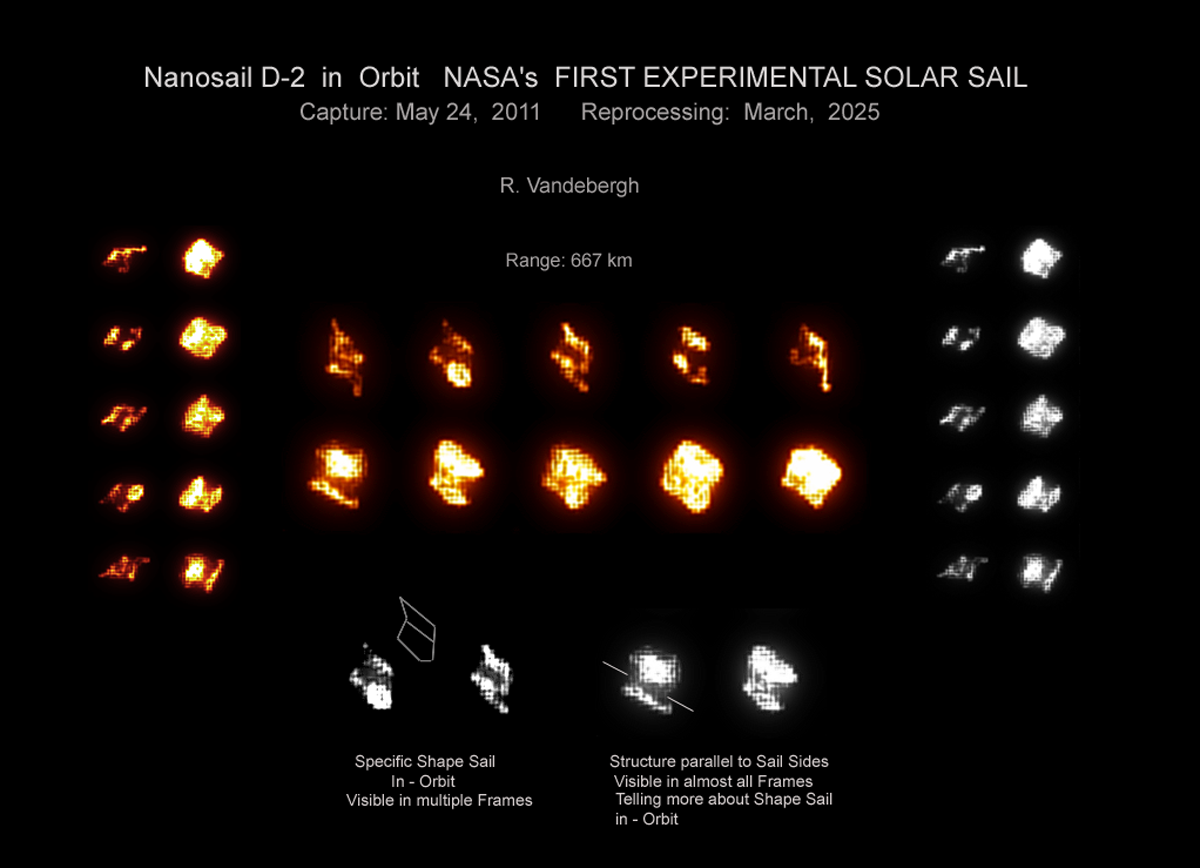
In 2011, on January 20, NASA's NanoSail-D2 unfurled a very thin and very reflective 10 square meter sail becoming the first solar sail spacecraft in low Earth orbit. Often considered the stuff of science fiction, sailing through space was suggested 400 years ago by astronomer Johannes Kepler, who had observed comet tails blown by the solar wind. But modern solar sail spacecraft designs, like NanoSail-D2, Japan's interplanetary spacecraft IKAROS, or the Planetary Society's Lightsail A, rely on the small but continuous pressure from sunlight itself for thrust. Glinting in the sunlight as it circled planet Earth, NanoSail-D2's solar sail was periodically bright and visible to the eye. These remarkably detailed images were captured by manually tracking the orbiting solar sail spacecraft with a small telescope.
Image credit: Ralf Vandebergh — APOD is a service of NASA and Michigan Tech. U.
View on NASA APODSpace News
NASA's Artemis II crew of four astronauts (Wiseman, Glover, Koch, and Hansen) have been officially presented, marking a major milestone for the first crewed lunar mission in over 50 years.
NASA — 30 Mar 2026
NASA awarded Intuitive Machines $180.4 million to deliver science payloads to the lunar surface through the Commercial Lunar Payload Services initiative, supporting the Artemis program's exploration goals.
NASA — 27 Mar 2026
NASA released the launch countdown for Artemis II, targeting no earlier than April 1, 2026, for the crewed mission that will send four astronauts around the Moon and back to Earth.
NASA — 26 Mar 2026
Europe's Service Module is providing critical propulsion, power, and life support systems for Artemis II, marking a major international contribution to humanity's return to the Moon.
ESA — 27 Mar 2026
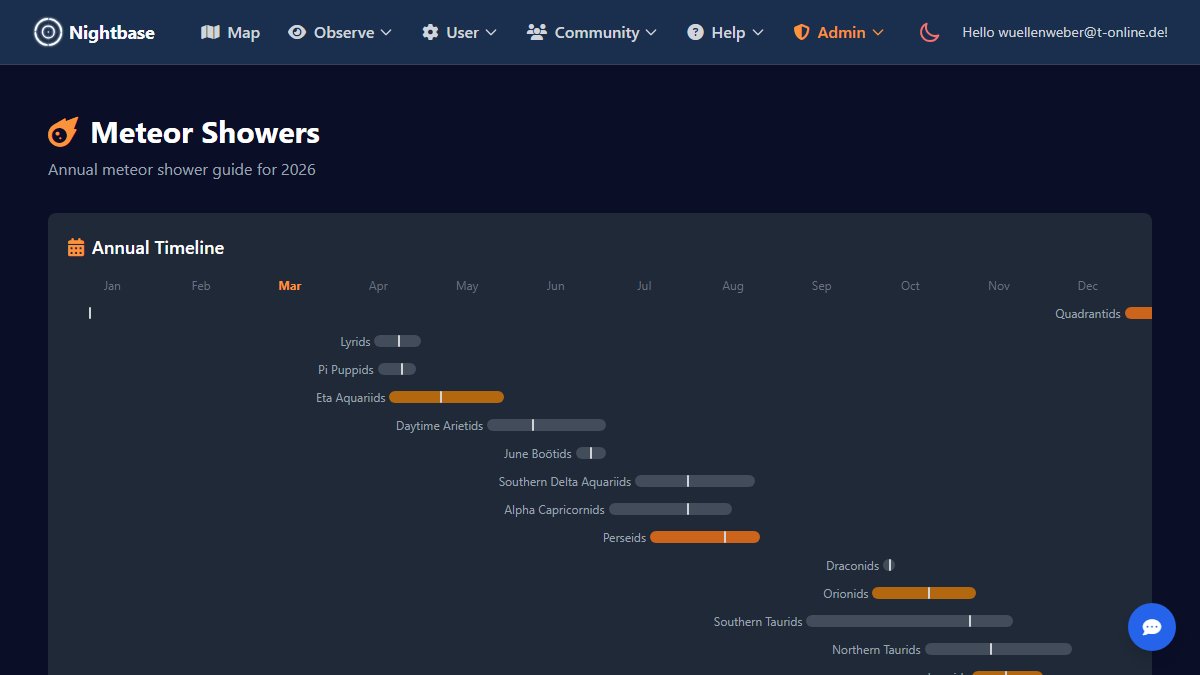
Never Miss a Meteor Shower
A complete calendar of annual meteor showers with peak dates, hourly rates, moon interference, and radiant positions. Plan ahead and know exactly when to look up.
 Open Meteor Showers
Sign in to get this digest by email and customize it for your location.