Sky Digest
Export Sky Digest PDF
Include finder charts for selected objects:
Tonight at a Glance
Bright moon tonight — best deep-sky viewing before moonrise (18:42)
Planet Highlights
Comets
For Beginners (naked eye)
Binocular Targets
Small Scopes (3–6 inch)
Big Scopes (8–12 inch)
The Week Ahead
| Mon | Tue | Wed | Thu | Fri | Sat | Sun |
| 🌖 92% | 🌖 85% | 🌖 77% | 🌖 68% | 🌖 58% | 🌗 48% | 🌗 39% |
| — | — | — | — | — | — | — |
NASA Astronomy Picture of the Day
The Red Rectangle Nebula from Hubble
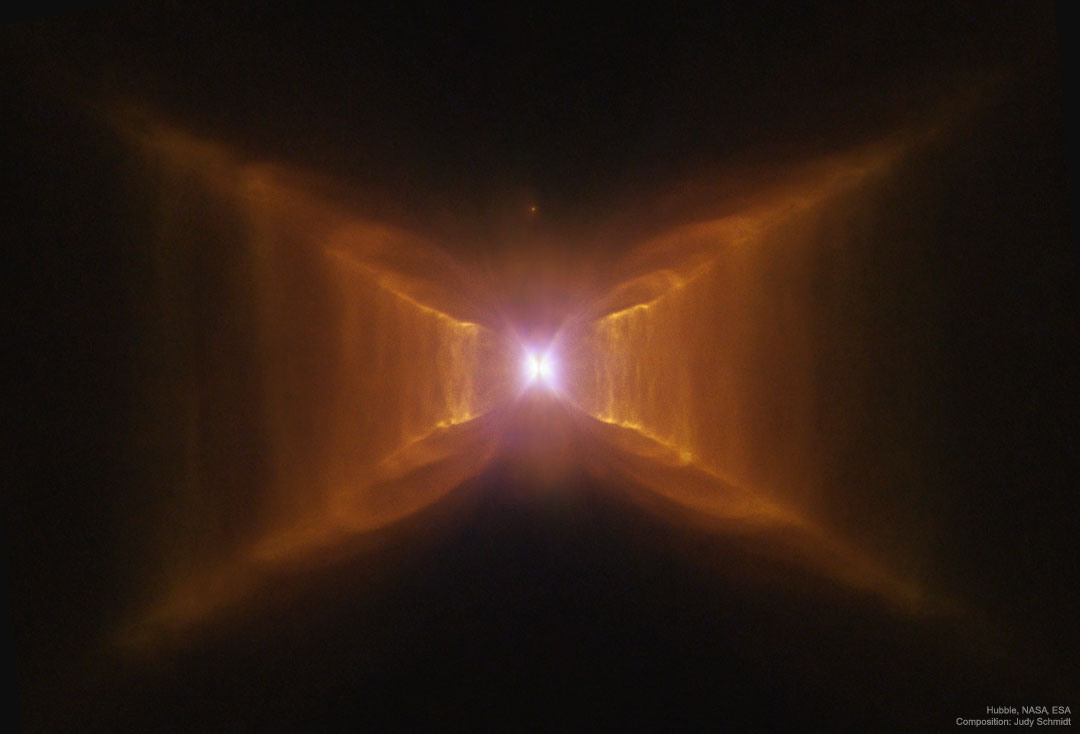
How was the unusual Red Rectangle nebula created? At the nebula's center is an aging binary star system that surely powers the nebula but does not, as yet, explain its colors. The unusual shape of the Red Rectangle is likely due to a thick dust torus which pinches the otherwise spherical outflow into tip-touching cone shapes. Because we view the torus edge-on, the boundary edges of the cone shapes seem to form an X. The distinct rungs suggest the outflow occurs in fits and starts. The unusual colors of the nebula are less well understood, however, and speculation holds that they are partly provided by hydrocarbon molecules that may actually be building blocks for organic life. The Red Rectangle nebula lies about 2,300 light years away towards the constellation of the Unicorn (Monoceros). The nebula is shown here in great detail as a reprocessed image from Hubble Space Telescope. In a few million years, as one of the central stars becomes further depleted of nuclear fuel, the Red Rectangle nebula will likely bloom into a planetary nebula.
APOD is a service of NASA and Michigan Tech. U.
View on NASA APODSpace News
NASA awarded Intuitive Machines $180.4 million to deliver science payloads to the lunar surface as part of the CLPS initiative supporting the Artemis program.
NASA — 27 Mar 2026
NASA selected 10 scientists to develop the science plan for Artemis astronauts on the lunar surface, including instrument deployment and sample collection.
NASA — 27 Mar 2026
NASA released the launch countdown schedule for Artemis II, targeting April 1 or later for the crewed mission around the Moon with four astronauts.
NASA — 26 Mar 2026
Europe's Service Module will provide critical propulsion, power, and life support for the Artemis II crewed lunar mission, highlighting international collaboration.
ESA — 27 Mar 2026
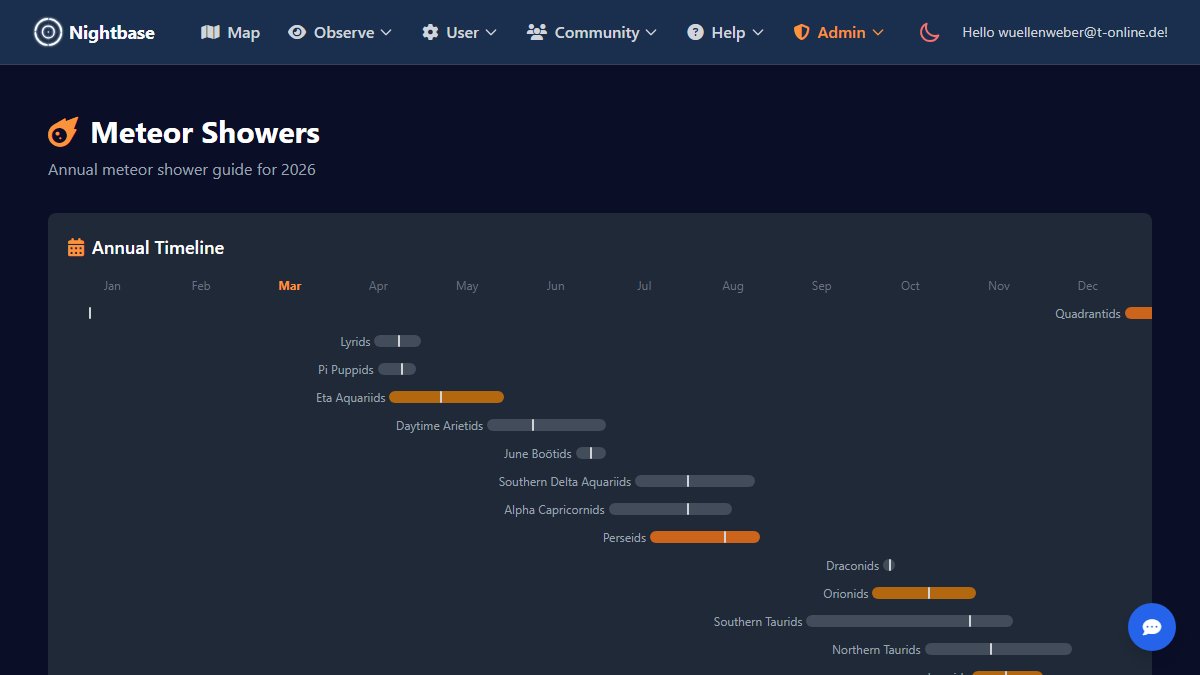
Never Miss a Meteor Shower
A complete calendar of annual meteor showers with peak dates, hourly rates, moon interference, and radiant positions. Plan ahead and know exactly when to look up.
 Open Meteor Showers
Sign in to get this digest by email and customize it for your location.