Sky Digest
Export Sky Digest PDF
Include finder charts for selected objects:
Tonight at a Glance
Bright moon tonight — best deep-sky viewing before moonrise (00:05)
Planet Highlights
Comets
For Beginners (naked eye)
Binocular Targets
Small Scopes (3–6 inch)
Big Scopes (8–12 inch)
The Week Ahead
| Sat | Sun | Mon | Tue | Wed | Thu | Fri |
| 🌖 66% | 🌖 57% | 🌗 47% | 🌗 38% | 🌗 29% | 🌘 21% | 🌘 13% |
| — | — | — | — | — | — | — |
NASA Astronomy Picture of the Day
Crescent Enceladus
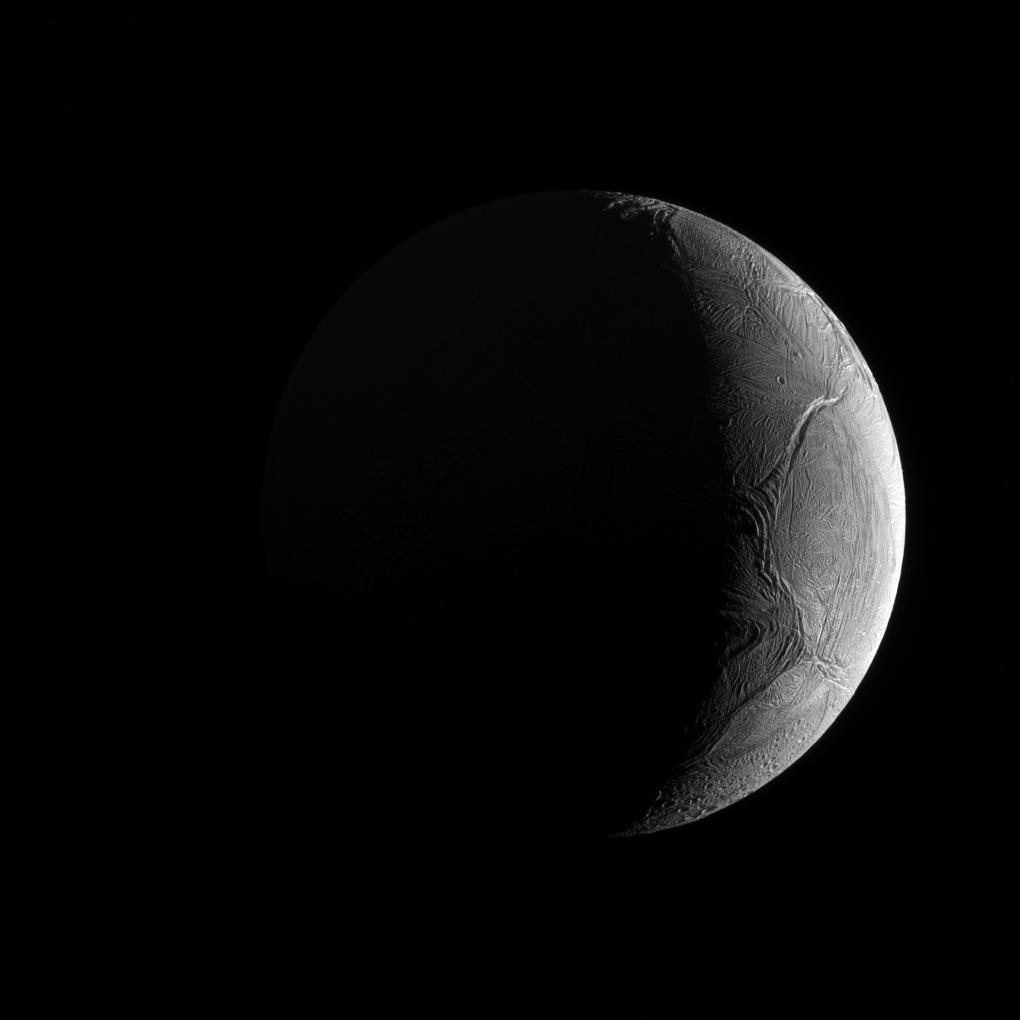
Peering from the shadows, the Saturn-facing hemisphere of tantalizing inner moon Enceladus poses in this Cassini spacecraft image. North is up in the dramatic scene captured during November 2016 as Cassini's camera was pointed in a nearly sunward direction about 130,000 kilometers from the moon's bright crescent. In fact, the distant world reflects over 90 percent of the sunlight it receives, giving its surface about the same reflectivity as fresh snow. A mere 500 kilometers in diameter, Enceladus is a surprisingly active moon. Data and images collected during Cassini's flybys have revealed water vapor and ice grains spewing from south polar geysers and evidence of an ocean of liquid water hidden beneath the moon's icy crust.
APOD is a service of NASA and Michigan Tech. U.
View on NASA APODSpace News
NASA's Artemis II crewed mission is targeting launch no earlier than April 1, 2026, to send astronauts around the Moon for the first time in over 50 years, marking a major milestone in lunar exploration.
NASA — 25 Mar 2026
NASA's James Webb and Hubble Space Telescopes have captured complementary infrared and visible-light views of Saturn, providing scientists with the most comprehensive understanding of the planet's rings and atmosphere to date.
NASA — 25 Mar 2026
The Artemis II rocket has completed its second rollout to the launchpad at Kennedy Space Center, signaling final preparations for the upcoming crewed lunar mission.
ESA — 20 Mar 2026
Understand Your Telescope
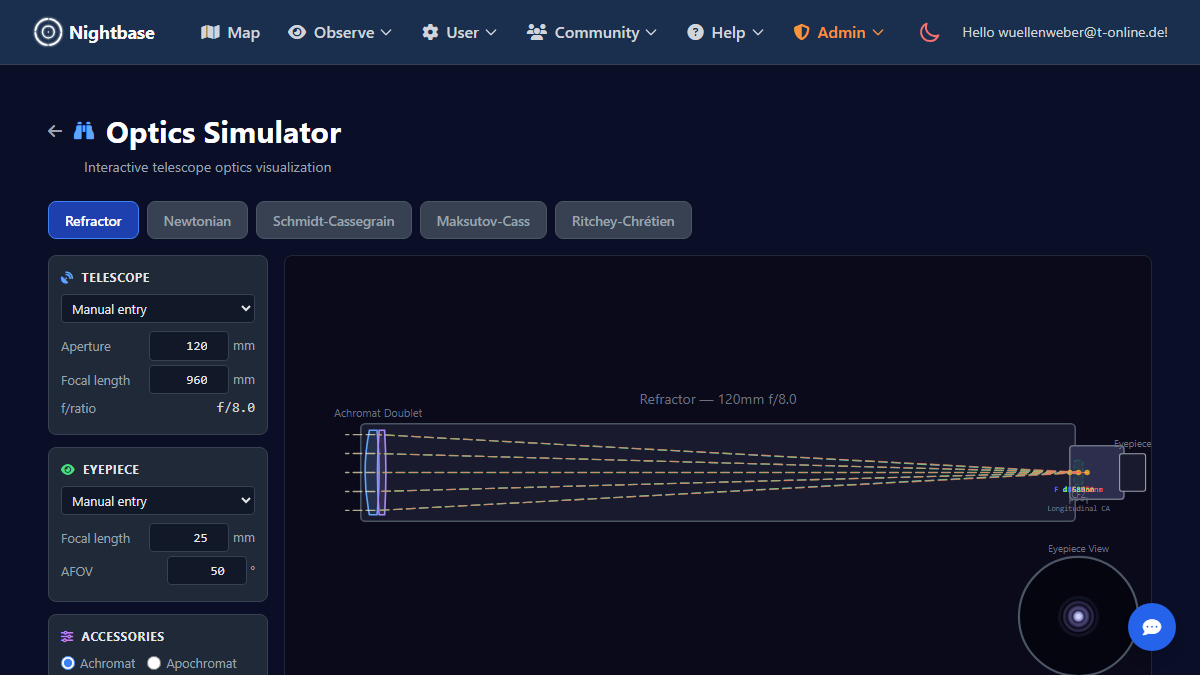
See the light path through six telescope designs: refractor, Newtonian, SCT, Maksutov, RC, and Gregorian. Adjust aperture, focal length, and eyepiece to calculate magnification and field of view.
 Open Optics Simulator
Sign in to get this digest by email and customize it for your location.