Sky Digest
Export Sky Digest PDF
Include finder charts for selected objects:
Tonight at a Glance
Planet Highlights
For Beginners (naked eye)
Binocular Targets
Small Scopes (3–6 inch)
Big Scopes (8–12 inch)
The Week Ahead
| Wed | Thu | Fri | Sat | Sun | Mon | Tue |
| 🌗 29% | 🌘 21% | 🌘 13% | 🌘 7% | 🌑 3% | 🌑 0% | 🌑 0% |
| — | — | — | — | — | — | — |
NASA Astronomy Picture of the Day
A Year of Sunspots
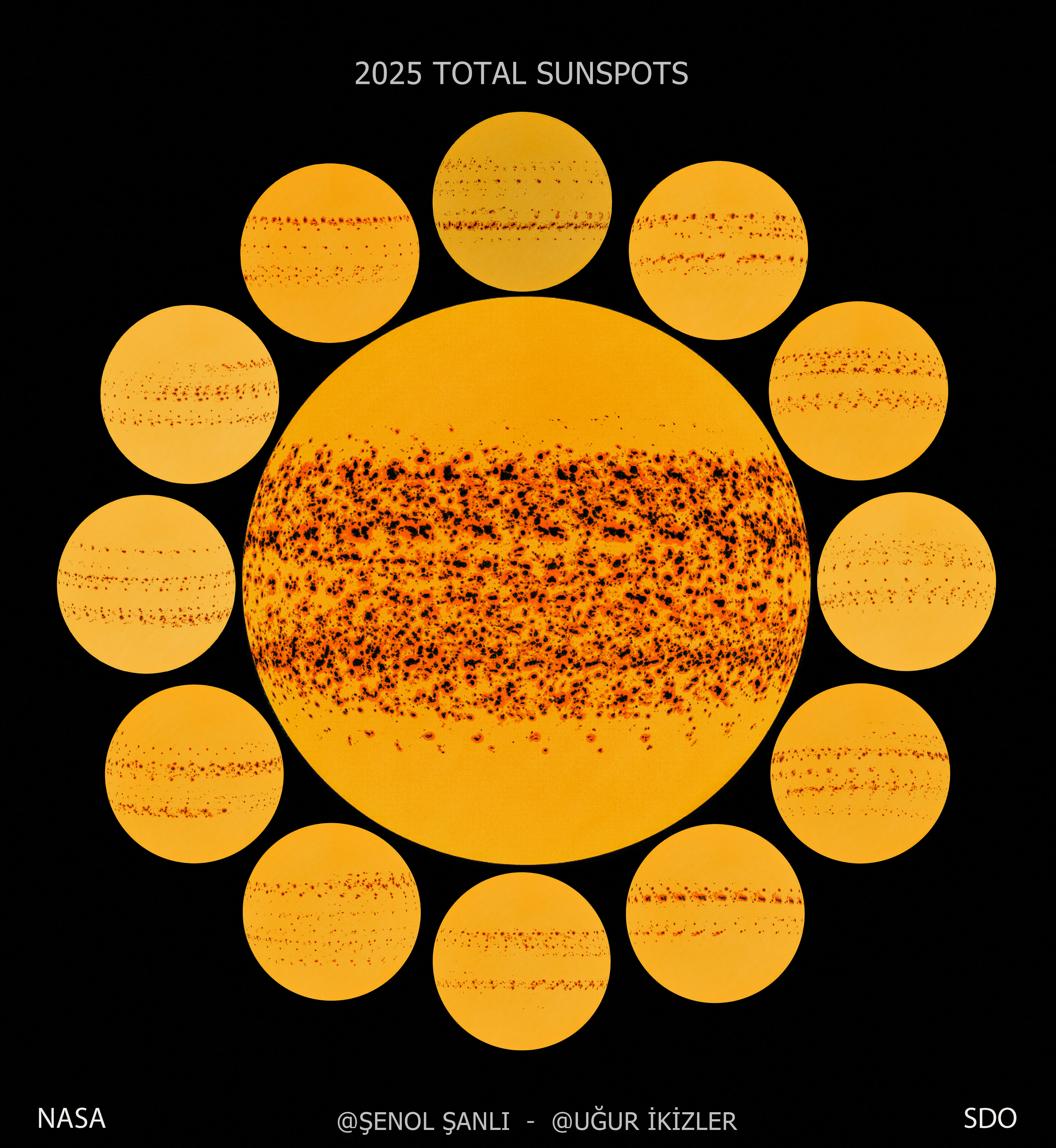
How many sunspots can you see? The central image shows the many sunspots that occurred in 2025, month by month around the circle, and all together in the grand central image. Each sunspot is magnetically cooled and so appears dark -- and can last from days to months. Although the featured images originated from NASA's Solar Dynamics Observatory, sunspots can be easily seen with a small telescope or binoculars equipped with a solar filter. Very large sunspot groups like recent AR 4366 can even be seen with eclipse glasses. Sunspots are still counted by eye, but the total number is not considered exact because they frequently change and break up. Last year, 2025, coincided with a solar maximum, the period of most intense magnetic activity during its 11-year solar cycle. Our Sun remains unpredictable in many ways, including when it ejects solar flares that will impact the Earth, and how active the next solar cycle will be.
APOD is a service of NASA and Michigan Tech. U.
View on NASA APODSpace News
NASA's Artemis II crewed test flight around the Moon is targeting no earlier than April 1, 2026, marking the first crewed lunar mission in over 50 years.
NASA — 25 Mar 2026
NASA's James Webb and Hubble Space Telescopes have captured complementary infrared and visible light images of Saturn, providing scientists with the most comprehensive view of the planet to date.
NASA — 25 Mar 2026
ESA astronaut Sophie Adenot reports multiple cargo vehicle departures from the International Space Station within a three-week period, highlighting active ISS resupply operations.
ESA — 20 Mar 2026
Understand Your Telescope
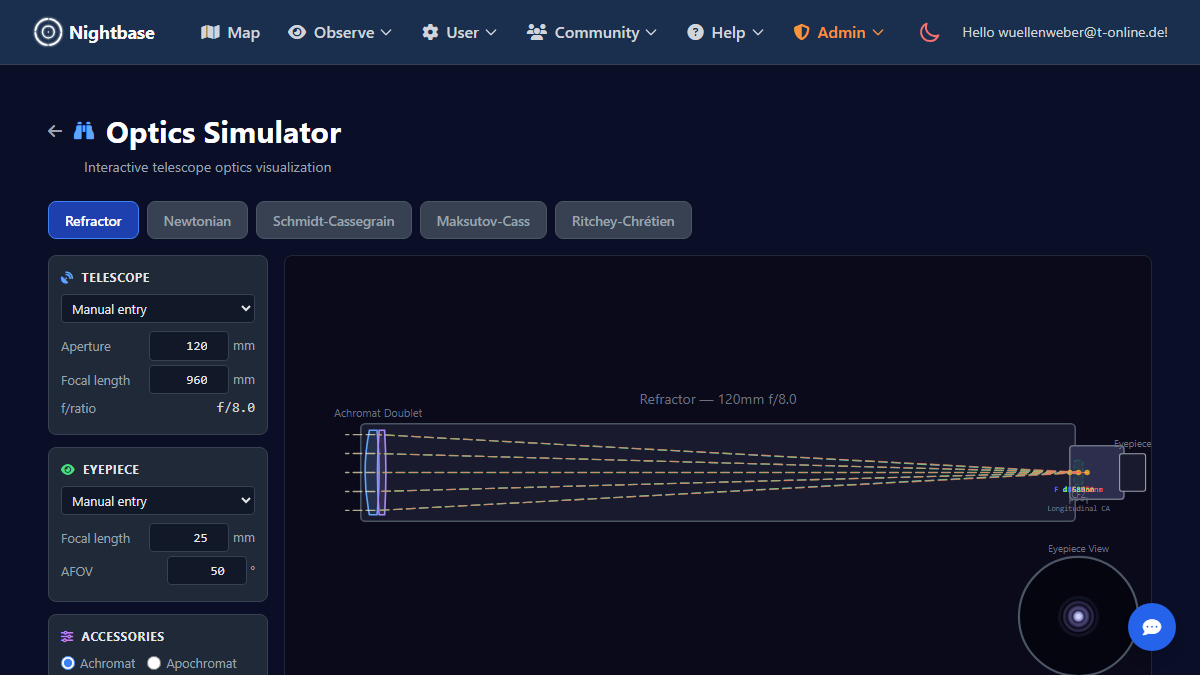
See the light path through six telescope designs: refractor, Newtonian, SCT, Maksutov, RC, and Gregorian. Adjust aperture, focal length, and eyepiece to calculate magnification and field of view.
 Open Optics Simulator
Sign in to get this digest by email and customize it for your location.