Sky Digest
Export Sky Digest PDF
Include finder charts for selected objects:
Tonight at a Glance
Bright moon tonight — best deep-sky viewing before moonrise (21:44)
Aurora Forecast — Unlikely
Need Kp 7+ (currently 6.7). Watch for geomagnetic storm upgrades.
View full forecastPlanet Highlights
For Beginners (naked eye)
Binocular Targets
Small Scopes (3–6 inch)
Big Scopes (8–12 inch)
The Week Ahead
| Fri | Sat | Sun | Mon | Tue | Wed | Thu |
| 🌖 89% | 🌖 82% | 🌖 74% | 🌖 65% | 🌖 55% | 🌗 46% | 🌗 36% |
| — | — | — | — | — | — | — |
NASA Astronomy Picture of the Day
The Astrosphere of HD 61005
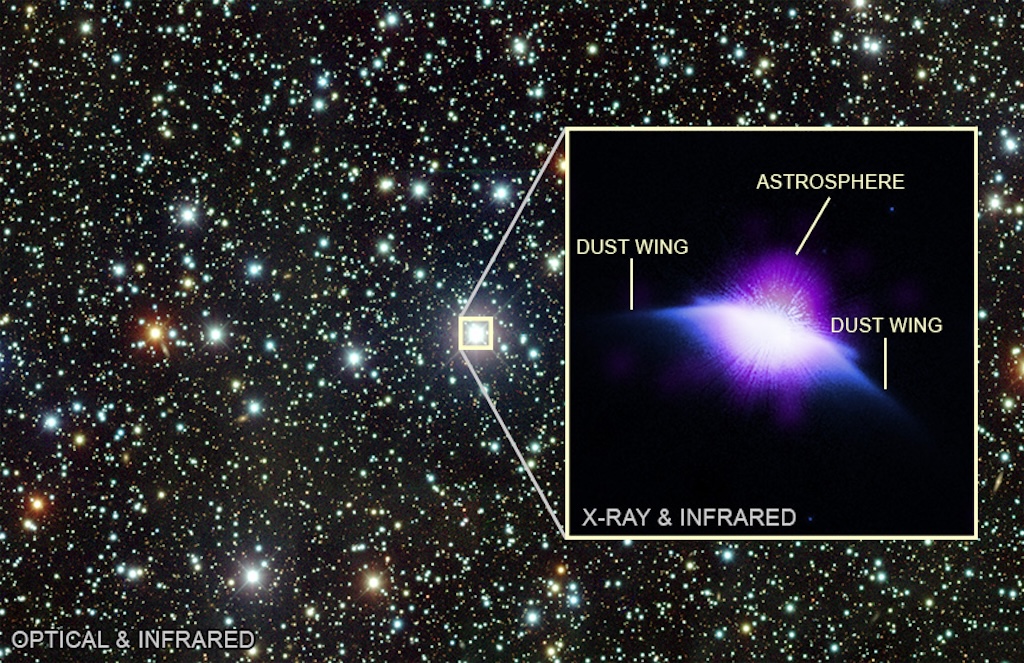
Do young stars blow bubbles? The larger view shows a stellar field observed with the Cerro Tololo Inter-American Observatory in Chile, and the inset highlights HD 61005, a star like our Sun, only 120 light-years away. Much younger than the Sun, at just about 100 million years old, it blows a fast and dense stellar wind that pushes out the cooler dust and gas that surrounds it, forming a bubble called an astrosphere. The star-blown bubble was detected with the Chandra X-ray Observatory, and it has a diameter roughly 200 times the Earth-Sun distance. Our Sun has a bubble too, called the heliosphere, which protects the planets from cosmic radiation. Also shown in the inset is debris left behind from star formation, observed by Hubble. The debris appears as wings, giving the star its nickname: the Moth.
APOD is a service of NASA and Michigan Tech. U.
View on NASA APODSpace News
NASA used advanced simulations to optimize launch conditions for Artemis II, analyzing airflow dynamics critical to the crewed lunar test flight.
NASA — 20 Mar 2026
NASA's X-59 experimental supersonic aircraft completed its second flight, initiating a series of dozens of test flights planned for 2026.
NASA — 20 Mar 2026
Multiple NASA science missions observed the rare interstellar comet 3I/ATLAS before it leaves our solar system, with observations archived for future research.
NASA — 20 Mar 2026
NASA's newest astronaut candidate class of ten explorers is training at Johnson Space Center for future ISS, Moon, and Mars missions.
NASA — 19 Mar 2026
Watch Earth from Space
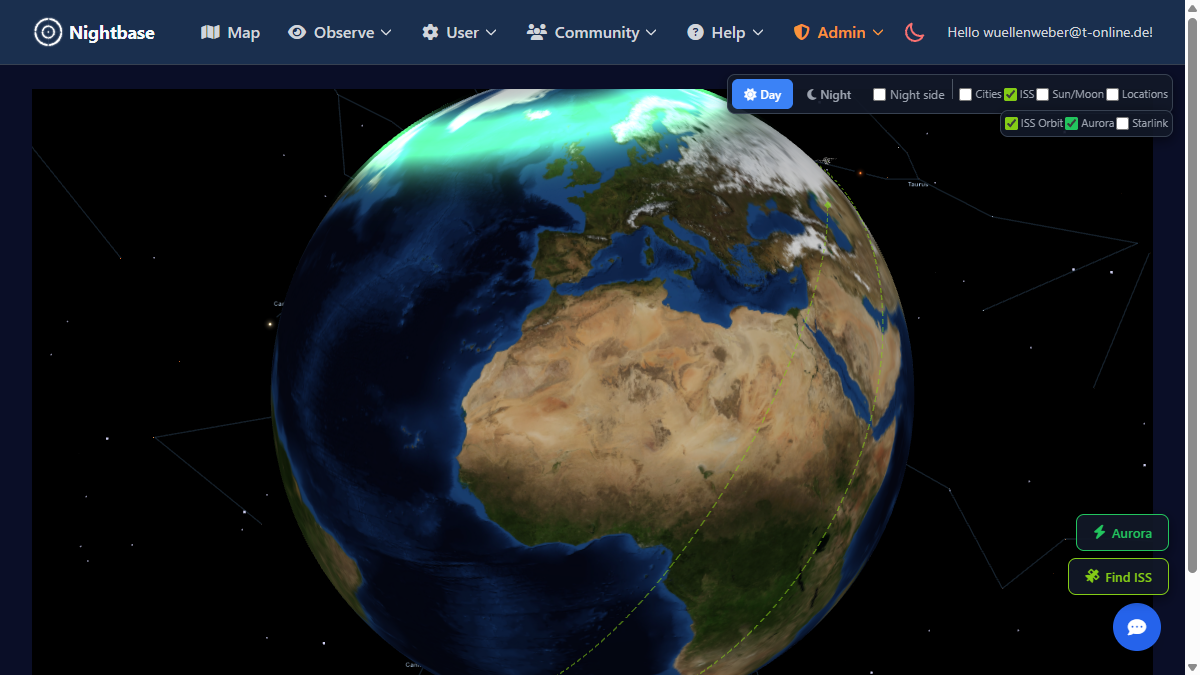
A 3D globe with real-time day/night terminator, ISS position tracking, aurora oval overlay, and city lights. See where the sun is shining — and where the stars are out.
 Open Earth
Sign in to get this digest by email and customize it for your location.