Sky Digest
Export Sky Digest PDF
Include finder charts for selected objects:
Tonight at a Glance
Bright moon tonight — best deep-sky viewing before moonrise (01:26)
Aurora Forecast — Slight chance
Kp just below threshold, but southward Bz may push the oval further south.
View full forecastPlanet Highlights
For Beginners (naked eye)
Binocular Targets
Small Scopes (3–6 inch)
Big Scopes (8–12 inch)
The Week Ahead
| Mon | Tue | Wed | Thu | Fri | Sat | Sun |
| 🌖 65% | 🌖 55% | 🌗 46% | 🌗 36% | 🌗 27% | 🌘 19% | 🌘 12% |
| — | — | — | — | — | — | — |
NASA Astronomy Picture of the Day
The Cranium Nebula from the Webb Telescope
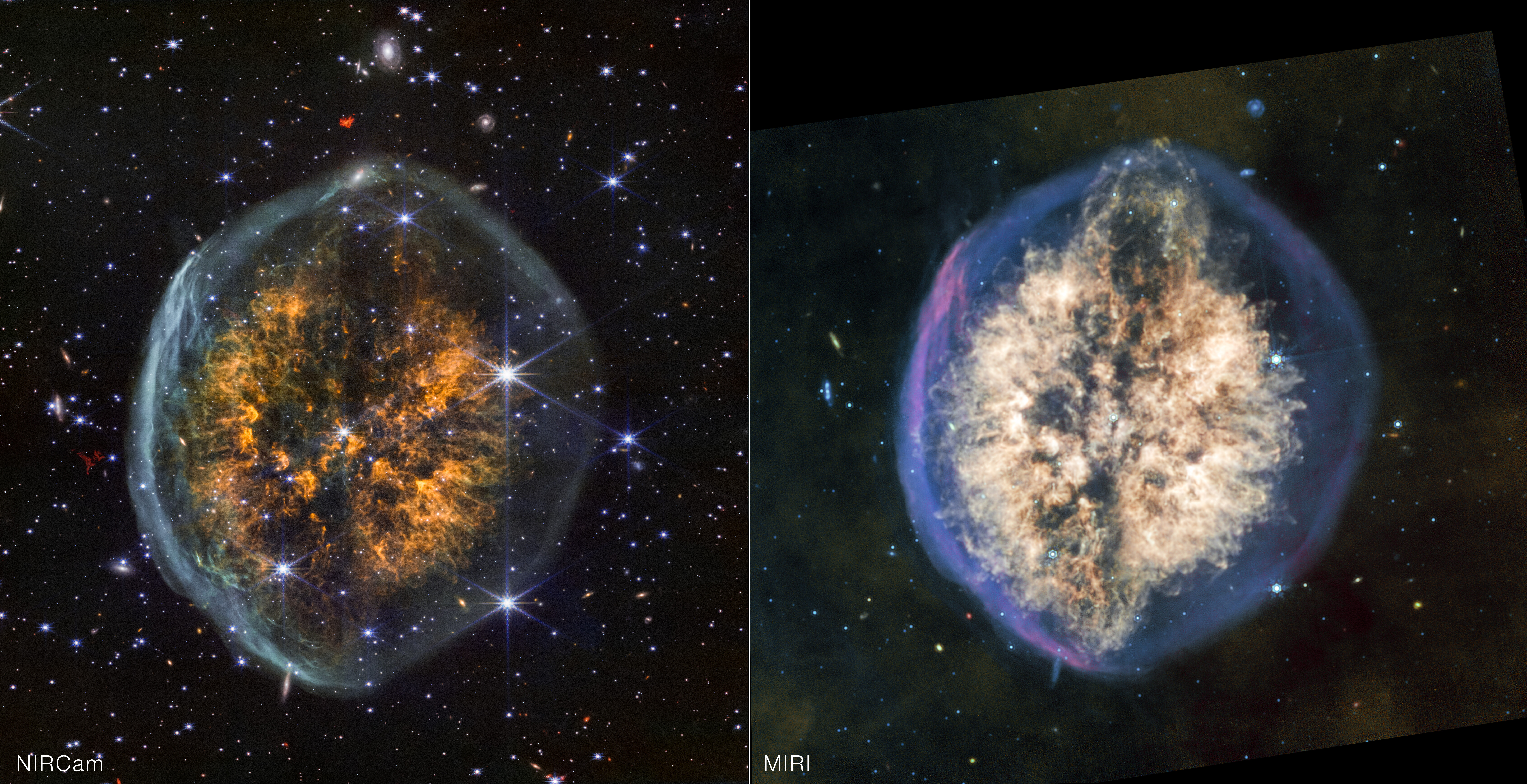
What's going on inside the head of this nebula? Dubbed the Exposed Cranium Nebula for its similarity to the human brain, what created the nebula remains a mystery. One thought is that the Cranium Nebula, also known as PMR 1, is a planetary nebula surrounding a white dwarf star. In this mode, the outer atmosphere was expelled when the original Sun-like star ran out of central nuclear fuel and contracted. A competing thought is that the central star is much more massive, possibly a Wolf-Rayet star, that is ejecting gas and dust via turbulent stellar winds. Adding to the intrigue is the dark vertical central division and the thin outer gaseous shell. The featured image was taken by the Webb Space Telescope in mid- infrared light, while a second image, included as a rollover, is in near-infrared. Future observations may reveal if this brainy system will quietly just fade from view or, many years from now, suddenly erupt in a powerful supernova.
APOD is a service of NASA and Michigan Tech. U.
View on NASA APODSpace News
NASA used advanced simulations to optimize launch conditions for Artemis II, analyzing airflow effects on the rocket during its journey to space for this critical crewed lunar test flight.
NASA — 20 Mar 2026
Artemis II rocket completed its second rollout to the launchpad at Kennedy Space Center, marking progress toward the first crewed mission of NASA's lunar exploration program.
ESA — 20 Mar 2026
NASA's observations of the rare interstellar comet 3I/ATLAS from more than a dozen science missions will be preserved in public data archives, providing valuable data for future research before the comet leaves our solar system permanently.
NASA — 20 Mar 2026
NASA astronaut Chris Williams completed spacesuit verification testing aboard the International Space Station, ensuring proper configuration and safety for upcoming spacewalk operations.
NASA — 20 Mar 2026
Watch Earth from Space
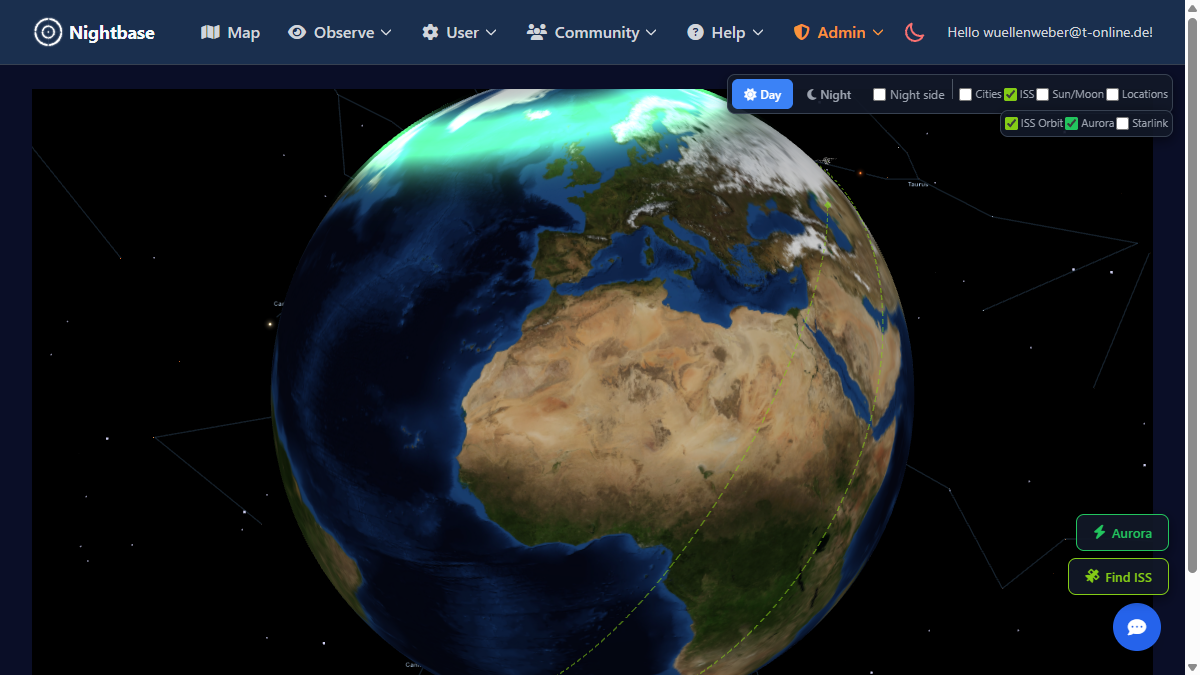
A 3D globe with real-time day/night terminator, ISS position tracking, aurora oval overlay, and city lights. See where the sun is shining — and where the stars are out.
 Open Earth
Sign in to get this digest by email and customize it for your location.