Sky Digest
Export Sky Digest PDF
Include finder charts for selected objects:
Tonight at a Glance
Planet Highlights
For Beginners (naked eye)
Binocular Targets
Small Scopes (3–6 inch)
Big Scopes (8–12 inch)
The Week Ahead
| Fri | Sat | Sun | Mon | Tue | Wed | Thu |
| 🌘 13% | 🌘 7% | 🌑 3% | 🌑 0% | 🌑 0% | 🌑 2% | 🌒 6% |
| — | — | — | — | — | — | — |
NASA Astronomy Picture of the Day
NGC 147 and NGC 185
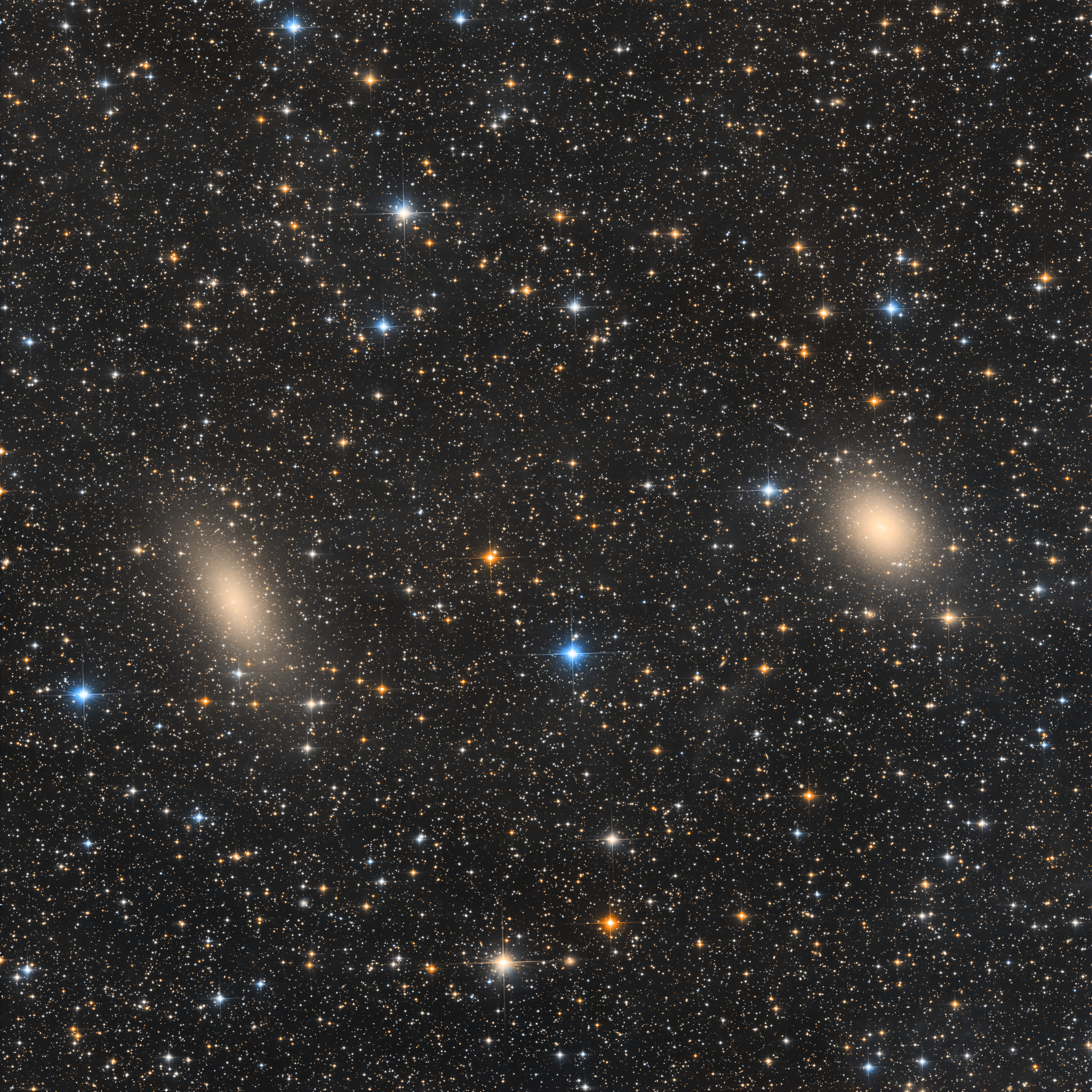
Dwarf galaxies NGC 147 (left) and NGC 185 stand side by side in this deep telescopic portrait. The two are not-often-imaged satellite galaxies of M31, the great spiral Andromeda Galaxy, some 2.5 million light-years away. Their separation on the sky, less than one degree across a pretty field of view toward the constellation Cassiopeia, translates to only about 35 thousand light-years at Andromeda's distance, but Andromeda itself is found well outside this frame. Brighter and more famous satellite galaxies of Andromeda, M32 and M110, are seen much closer to the great spiral. NGC 147 and NGC 185 have been identified as binary galaxies, forming a gravitationally stable binary system. But recently discovered faint dwarf galaxy Cassiopeia II also seems to be part of their system, forming a gravitationally bound group within Andromeda's intriguing population of small satellite galaxies.
Image credit: Chuck Ayoub — APOD is a service of NASA and Michigan Tech. U.
View on NASA APODSpace News
NASA's Artemis II crewed mission to the Moon is targeting no earlier than April 1 for launch, marking the first time astronauts have traveled around the Moon in over 50 years.
NASA — 25 Mar 2026
NASA's James Webb and Hubble Space Telescopes have jointly captured the most comprehensive infrared and visible light views of Saturn to date, providing new scientific insights into the planet's atmosphere and rings.
NASA — 25 Mar 2026
The NASA-JAXA XRISM telescope has directly measured the speed of superheated gas from M82's galactic core, marking a significant breakthrough in understanding galaxy dynamics.
NASA — 25 Mar 2026
Artemis II rocket has successfully rolled back to its launch pad at Kennedy Space Center, advancing preparations for the crewed lunar mission.
ESA — 20 Mar 2026
Understand Your Telescope
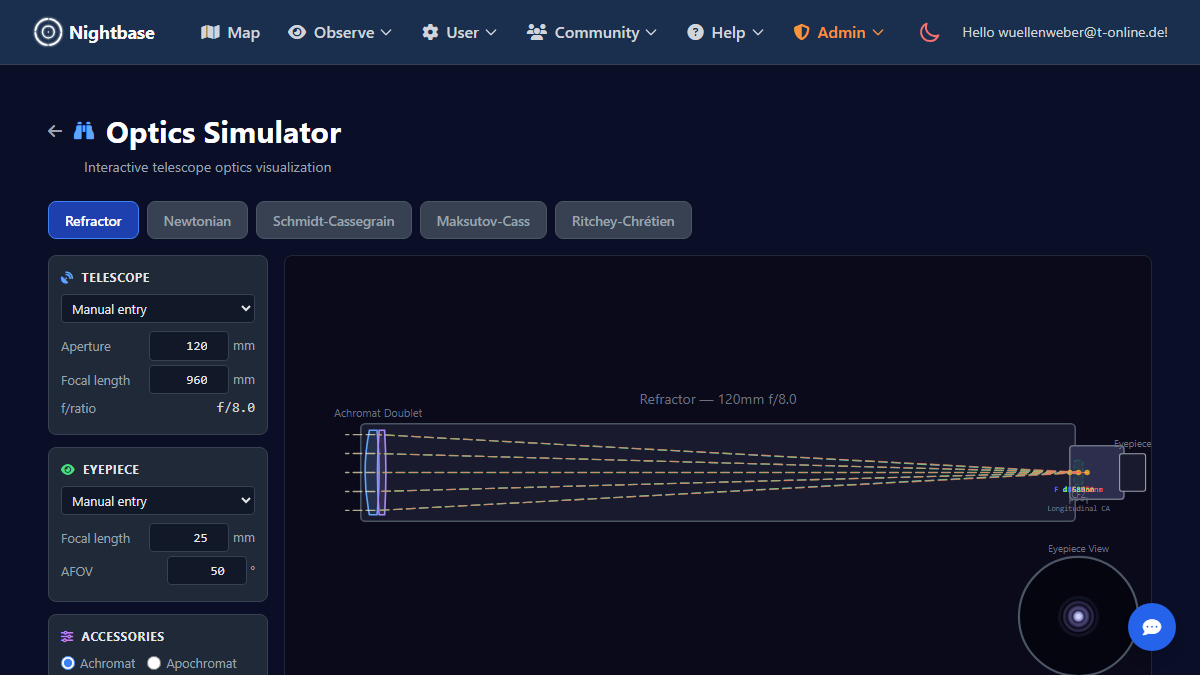
See the light path through six telescope designs: refractor, Newtonian, SCT, Maksutov, RC, and Gregorian. Adjust aperture, focal length, and eyepiece to calculate magnification and field of view.
 Open Optics Simulator
Sign in to get this digest by email and customize it for your location.