Sky Digest
Export Sky Digest PDF
Include finder charts for selected objects:
Tonight at a Glance
Planet Highlights
For Beginners (naked eye)
Binocular Targets
Small Scopes (3–6 inch)
Big Scopes (8–12 inch)
The Week Ahead
| Sat | Sun | Mon | Tue | Wed | Thu | Fri |
| 🌘 7% | 🌑 3% | 🌑 0% | 🌑 0% | 🌑 2% | 🌒 6% | 🌒 13% |
| — | — | — | — | — | — | — |
NASA Astronomy Picture of the Day
Roses are Red
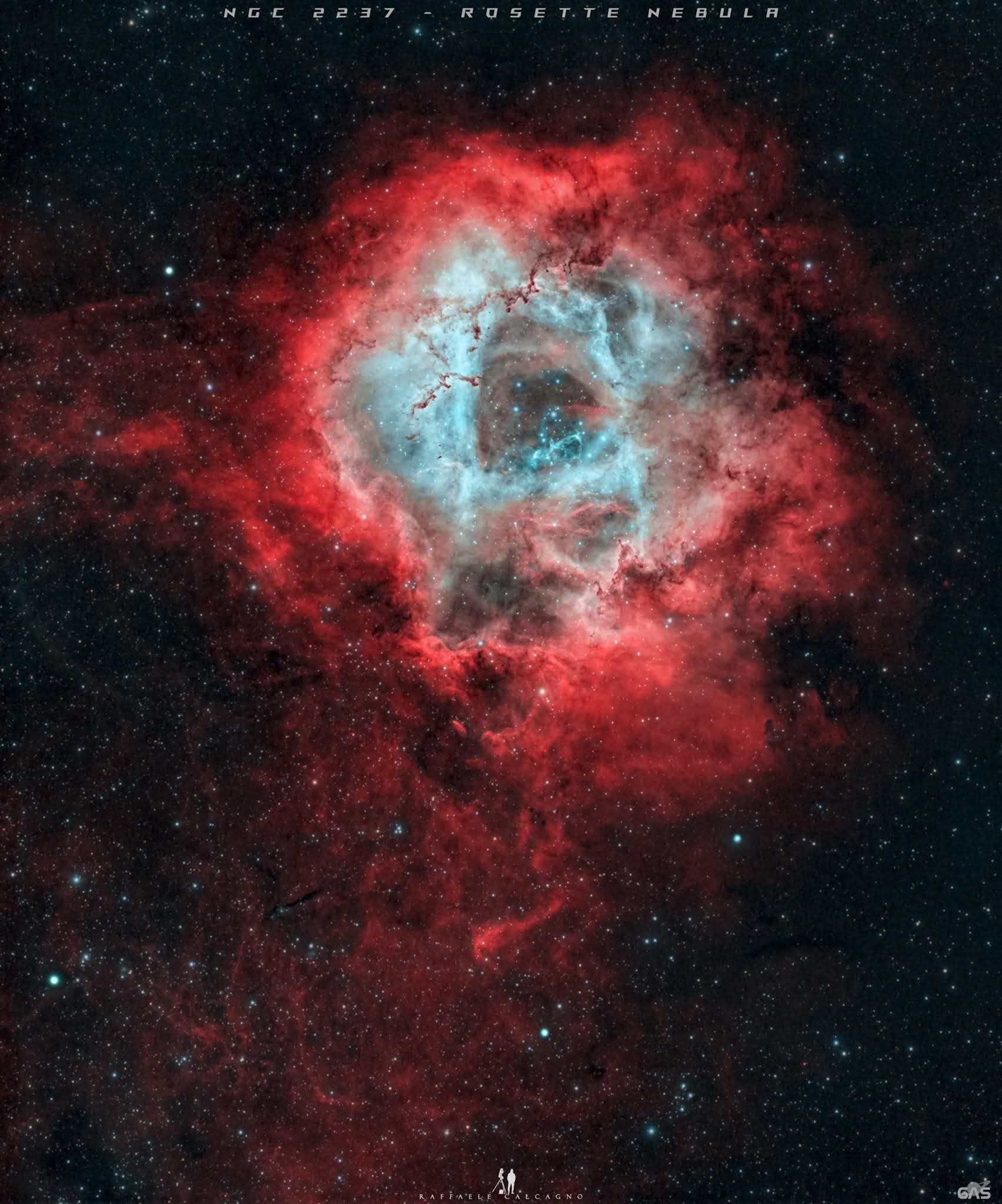
Roses are red, nebulas are too, and this Valentine's gift is a stunning view! Pictured is a loving look at the Rosette Nebula (NGC 2237): a cosmic bloom of bright young stars sitting atop a stem of glowing hot gas. The rose’s blue-white speckles are among the most luminous stars in the galaxy, with some burning millions of times brighter than the Sun. Their stellar winds sculpt the famed rose shape by pushing gas and dust away from the center. Though only a few million years old, these massive stars are already nearing the end of their lives, while dimmer stars embedded in the nebula will burn for billions of years to come. The vibrant red hue comes from hydrogen gas, ionized by the ultraviolet light from the young stars. The rose’s blue-white center is color-mapped to indicate the presence of similarly ionized oxygen. The Rosette Nebula reminds us of the beauty and transformation woven into the fabric of the universe.
Image credit: Keighley Rockcliffe — APOD is a service of NASA and Michigan Tech. U.
View on NASA APODSpace News
NASA sets coverage for Artemis II, the first crewed mission around the Moon, targeting a launch no earlier than April 1, 2026, marking a major milestone in the Artemis program.
NASA — 25 Mar 2026
NASA-JAXA's XRISM telescope directly measures the speed of superheated gas from galaxy M82 for the first time, providing new insights into galactic phenomena.
NASA — 25 Mar 2026
NASA's James Webb and Hubble Space Telescopes combine observations to capture the most comprehensive view of Saturn to date, revealing the planet in complementary infrared and visible wavelengths.
NASA — 25 Mar 2026
NASA astronaut Chris Williams completes spacesuit fit verification on the ISS, demonstrating ongoing preparations for future spacewalks and extravehicular activities.
NASA — 20 Mar 2026
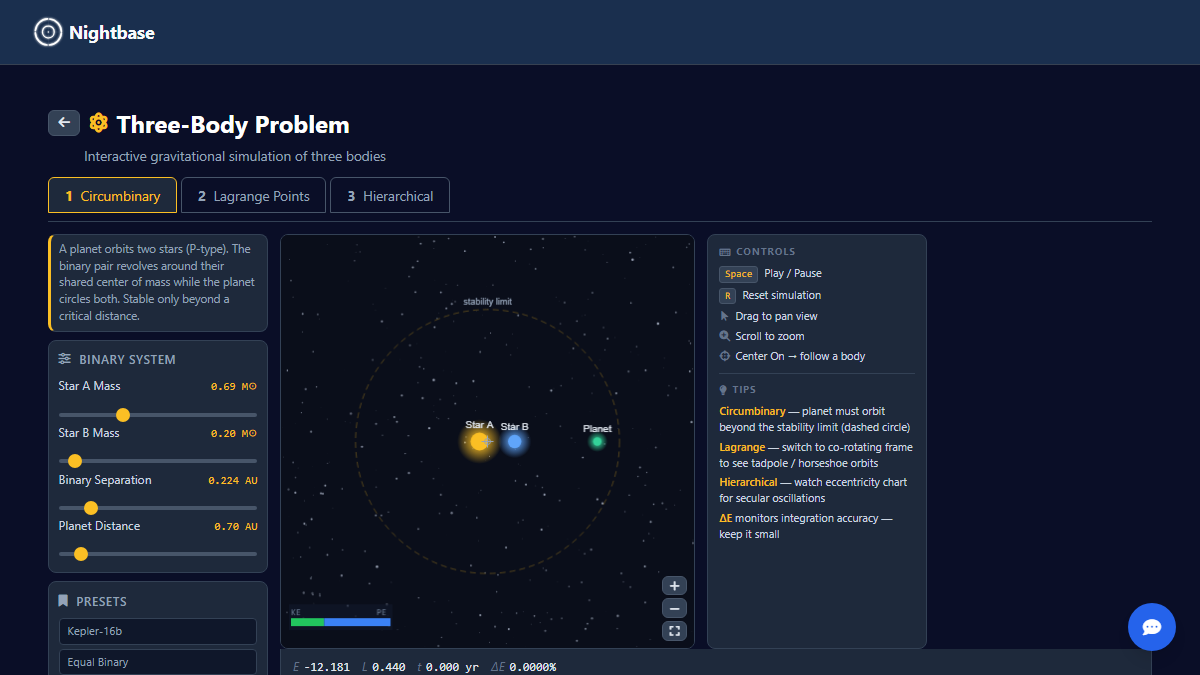
Explore the Three-Body Problem
Simulate chaotic gravitational dynamics with preset scenarios: circumbinary planets, Lagrange points, and the famous Figure-8 choreography. Switch between inertial and co-rotating frames.
 Open Three-Body
Sign in to get this digest by email and customize it for your location.