Sky Digest
Export Sky Digest PDF
Include finder charts for selected objects:
Tonight at a Glance
Planet Highlights
For Beginners (naked eye)
Binocular Targets
Small Scopes (3–6 inch)
Big Scopes (8–12 inch)
The Week Ahead
| Sun | Mon | Tue | Wed | Thu | Fri | Sat |
| 🌑 3% | 🌑 0% | 🌑 0% | 🌑 2% | 🌒 6% | 🌒 13% | 🌒 21% |
| — | — | — | — | — | — | — |
NASA Astronomy Picture of the Day
To Fly Free in Space
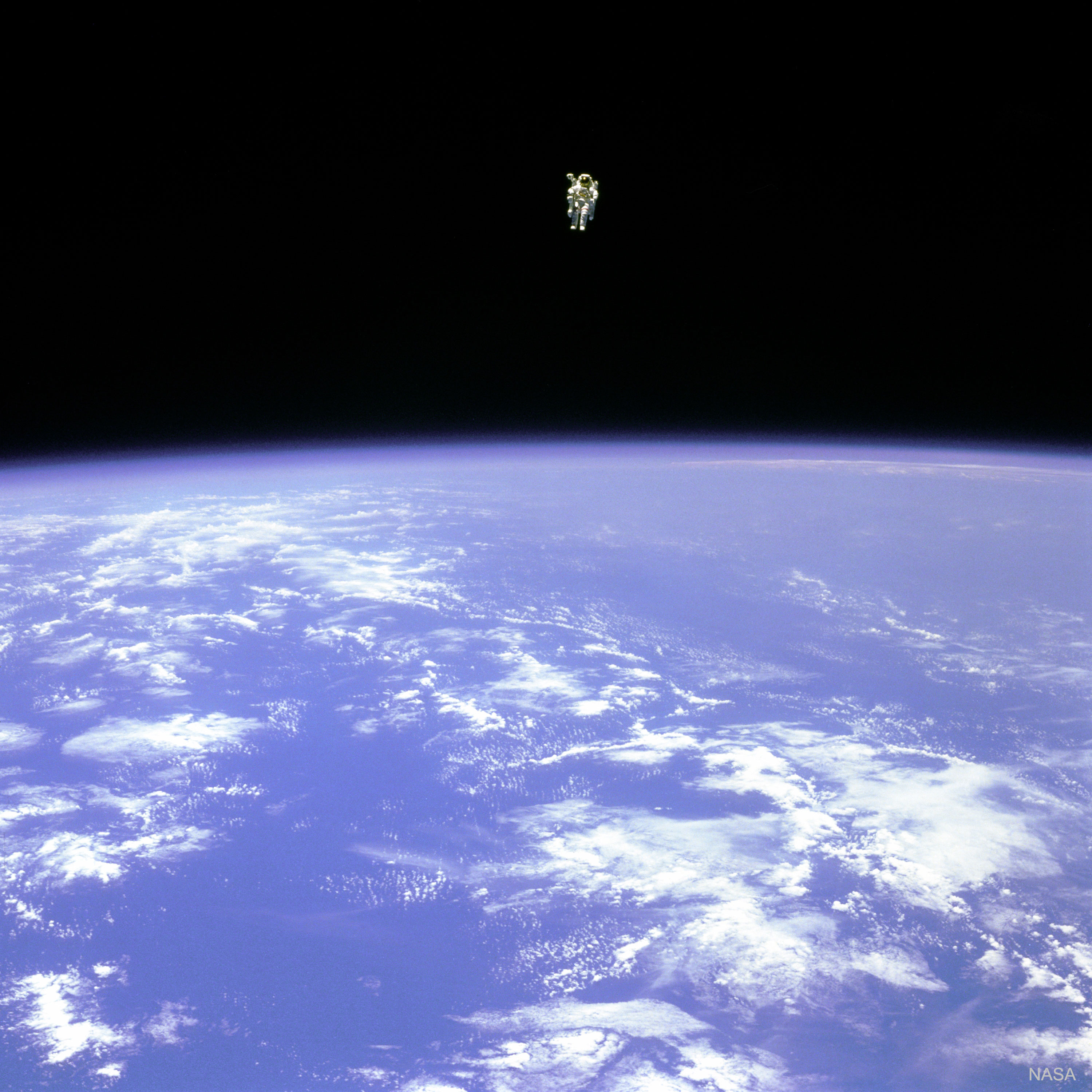
What would it be like to fly free in space? About 100 meters from the cargo bay of a space shuttle, Bruce McCandless II was living the dream -- floating farther out than anyone had ever been before. Guided by a Manned Maneuvering Unit (MMU), astronaut McCandless, pictured, was floating free in space. During Space Shuttle mission 41-B in 1984, McCandless and fellow NASA astronaut Robert Stewart were the first to experience such an "untethered space walk". The MMU worked by shooting jets of nitrogen and was used to help deploy and retrieve satellites. With a mass over 140 kilograms, an MMU is heavy on Earth, but, like everything, is weightless when drifting in orbit. The MMU was later replaced with the SAFER backpack propulsion unit.
APOD is a service of NASA and Michigan Tech. U.
View on NASA APODSpace News
NASA's James Webb and Hubble Space Telescopes have combined observations to provide the most comprehensive view of Saturn to date, revealing the planet in complementary infrared and visible wavelengths.
NASA — 25 Mar 2026
The NASA-JAXA XRISM telescope has directly measured superheated gas speeds from the galaxy M82 for the first time, advancing understanding of galactic winds and stellar activity.
NASA — 25 Mar 2026
NASA's Artemis II rocket has completed its second rollout to the launchpad at Kennedy Space Center, marking progress toward the critical lunar mission.
ESA — 20 Mar 2026
NASA's newest astronaut candidate class of ten explorers, selected in 2025, is training at Johnson Space Center for future missions to the ISS and Moon.
NASA — 19 Mar 2026
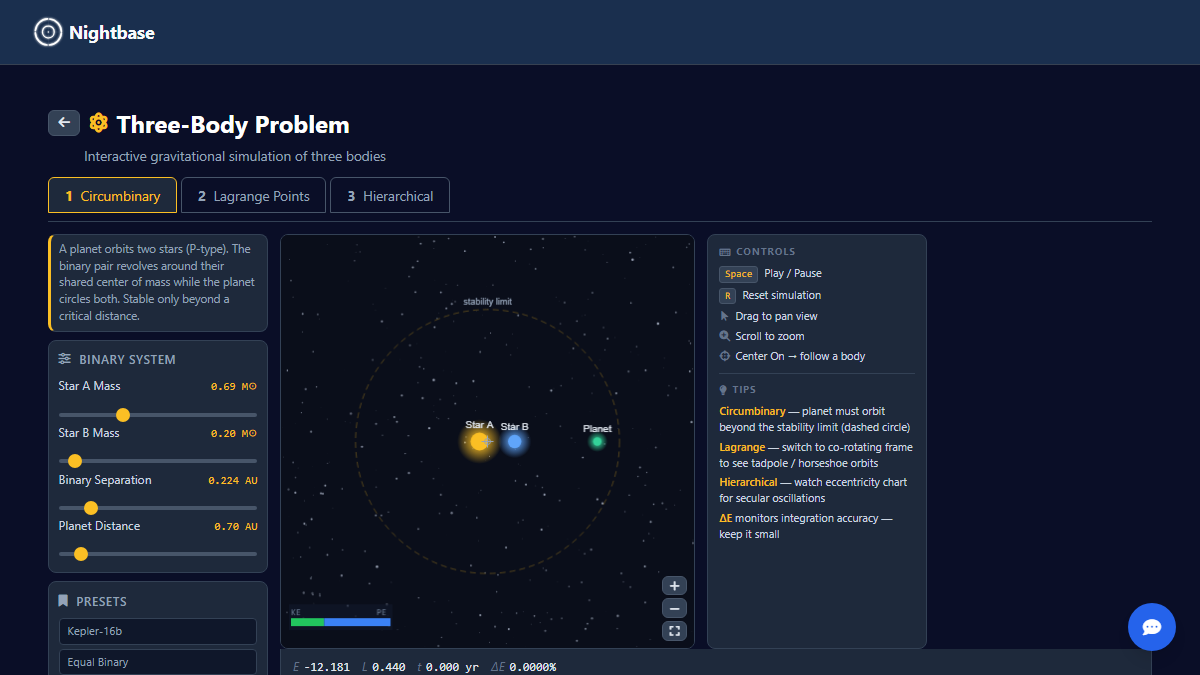
Explore the Three-Body Problem
Simulate chaotic gravitational dynamics with preset scenarios: circumbinary planets, Lagrange points, and the famous Figure-8 choreography. Switch between inertial and co-rotating frames.
 Open Three-Body
Sign in to get this digest by email and customize it for your location.