Sky Digest
Export Sky Digest PDF
Include finder charts for selected objects:
Tonight at a Glance
Bright moon tonight — best deep-sky viewing after moonset (04:22)
Planet Highlights
Comets
For Beginners (naked eye)
Binocular Targets
Small Scopes (3–6 inch)
Big Scopes (8–12 inch)
The Week Ahead
| Wed | Thu | Fri | Sat | Sun | Mon | Tue |
| 🌔 65% | 🌔 75% | 🌔 84% | 🌔 92% | 🌔 97% | 🌕 100% | 🌕 100% |
| — | — | — | — | — | — | — |
| Moon occults Kappa Gem | Full Moon |
NASA Astronomy Picture of the Day
The Egg Nebula from the Hubble Telescope
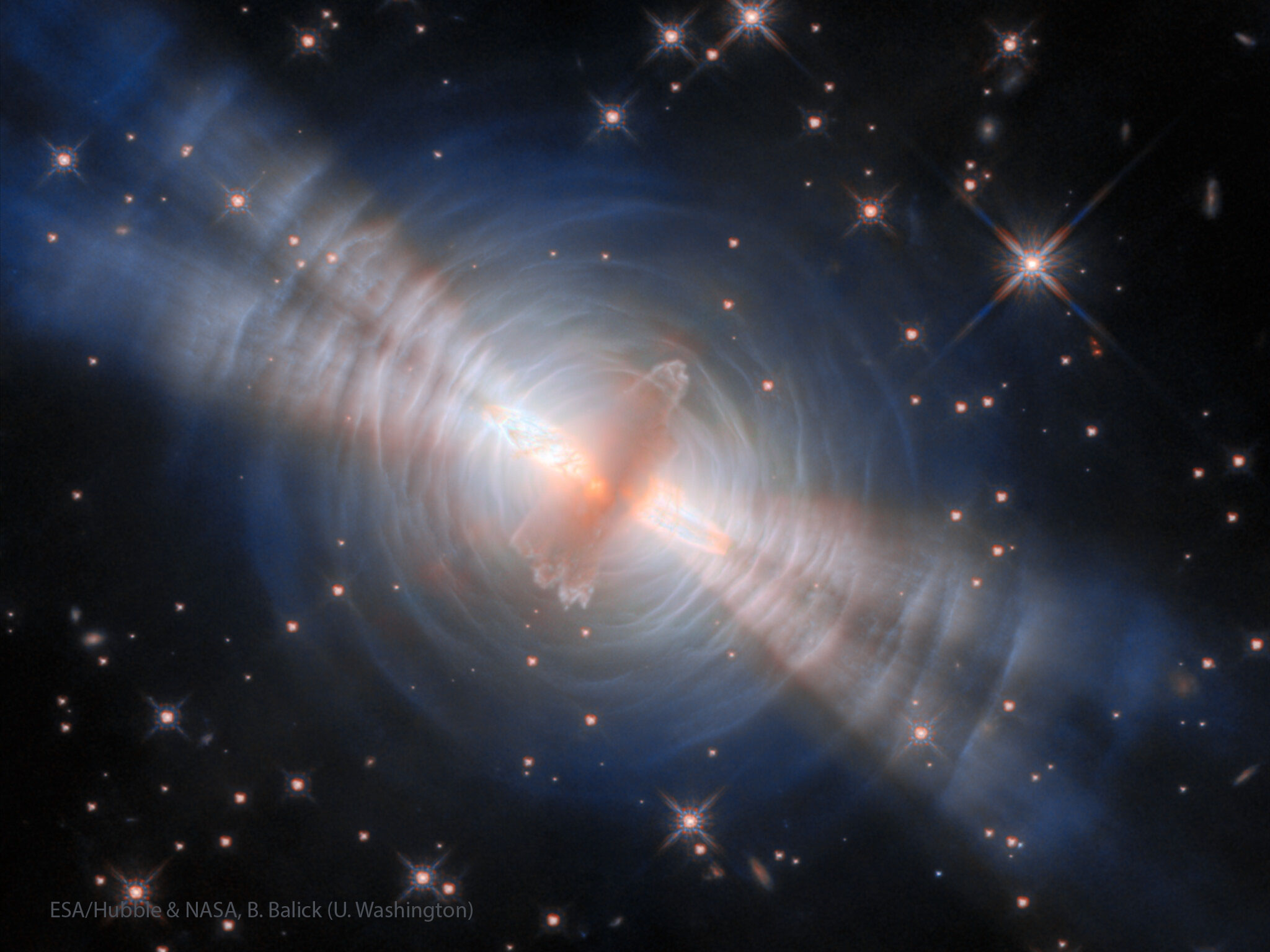
ver wonder what it would look like to crack open the Sun? The Egg Nebula, a dying Sun-like star, can unscramble this question. Pictured is a combination of several visible and infrared images of the nebula (also known as RAFGL 2688 or CRL 2688) taken with the Hubble Space Telescope. The star has shed its outer layers, and a bright, hot core (or "yolk") now illuminates the milky "egg white" shells of gas and dust surrounding the center. The central lobes and rings are structures of gas and dust recently ejected into space, with the dust being dense enough to block our view of the stellar core. Light beams emanate from that blocked core, escaping through holes carved in the older ejected material by newer, faster jets expelled from the star’s poles. Astronomers are still trying to figure out what causes the disks, lobes, and jets during this short (only a few thousand years!) phase of the star’s evolution, making this an egg-cellent image to study! APOD Front Page: apod.nasa.gov
Image credit: ESA/Hubble & NASA, B. Balick (U. Washington) — APOD is a service of NASA and Michigan Tech. U.
View on NASA APODSpace News
Artemis II rocket completed a second rollout to the launchpad at Kennedy Space Center, marking progress toward NASA's crewed lunar mission.
ESA — 20 Mar 2026
NASA used advanced simulations to optimize launch conditions for Artemis II, improving understanding of airflow effects on the rocket during its journey to the Moon.
NASA — 20 Mar 2026
NASA's X-59 experimental supersonic aircraft completed its second flight, initiating a series of dozens of test flights planned for 2026.
NASA — 20 Mar 2026
More than a dozen NASA science missions observed the interstellar comet 3I/ATLAS, with observations now archived in NASA's public data for future research.
NASA — 20 Mar 2026
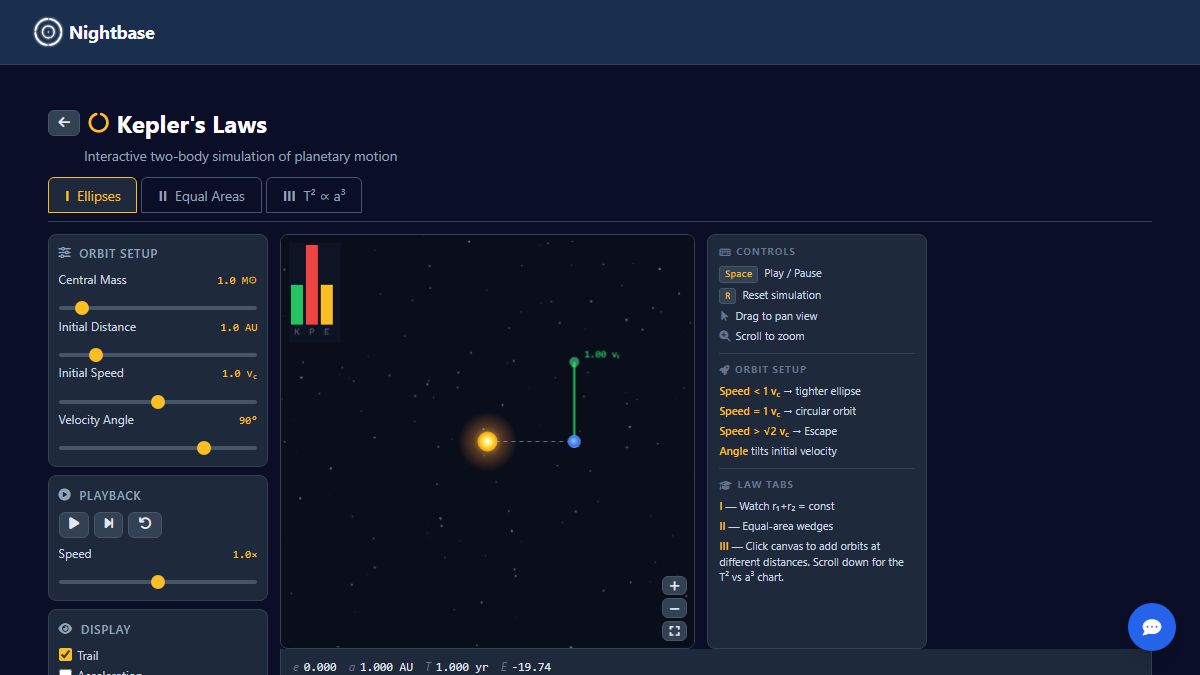
Kepler's Laws Come Alive
Drag velocity vectors to reshape orbits, watch equal areas sweep in equal times, and discover why distant planets orbit slower — all three laws animated in real time.
 Open Kepler's Laws
Sign in to get this digest by email and customize it for your location.