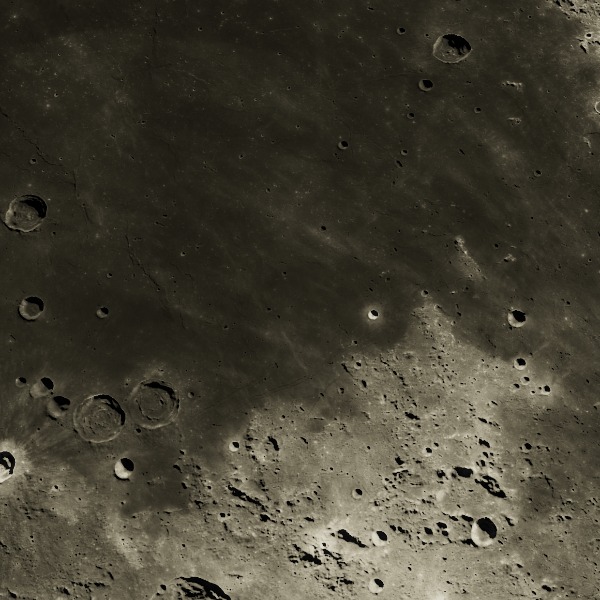
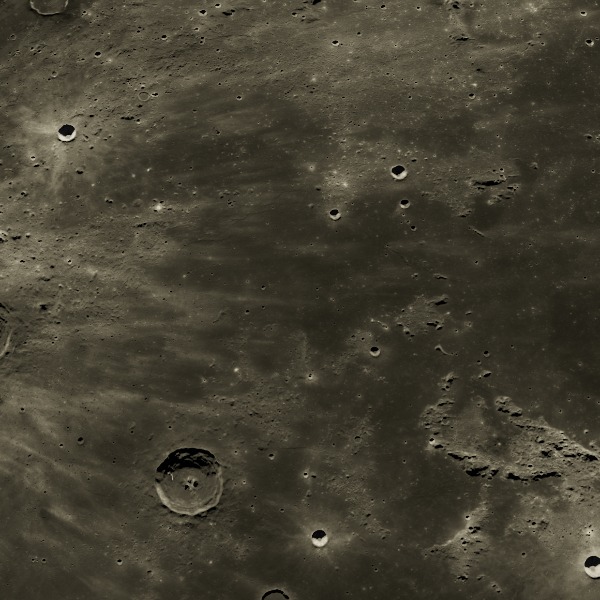
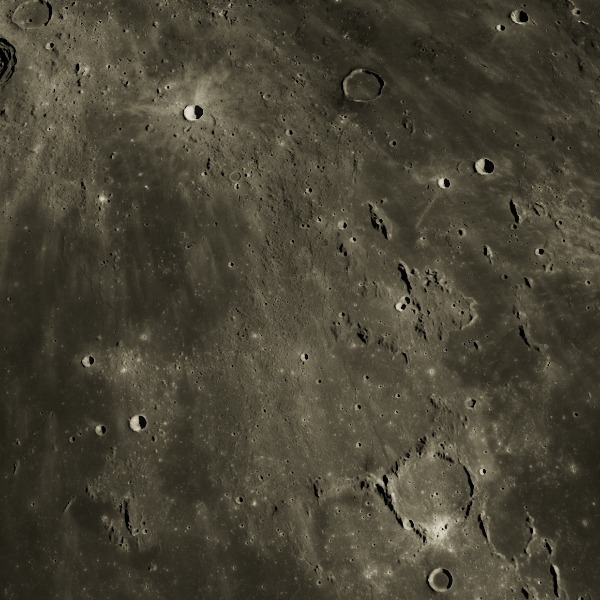
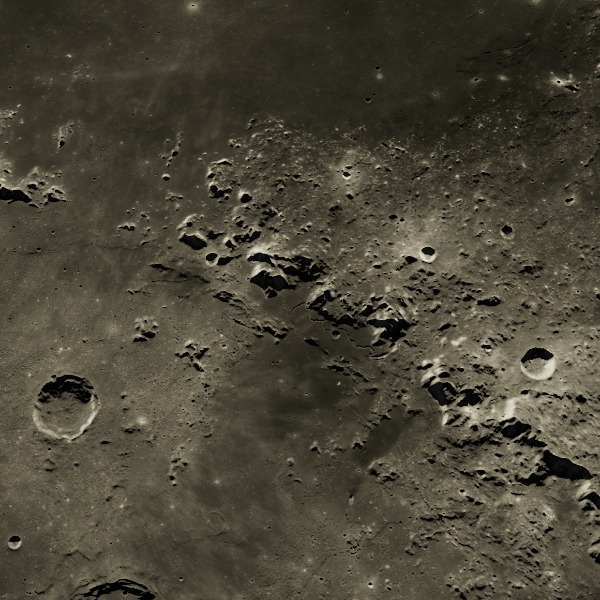
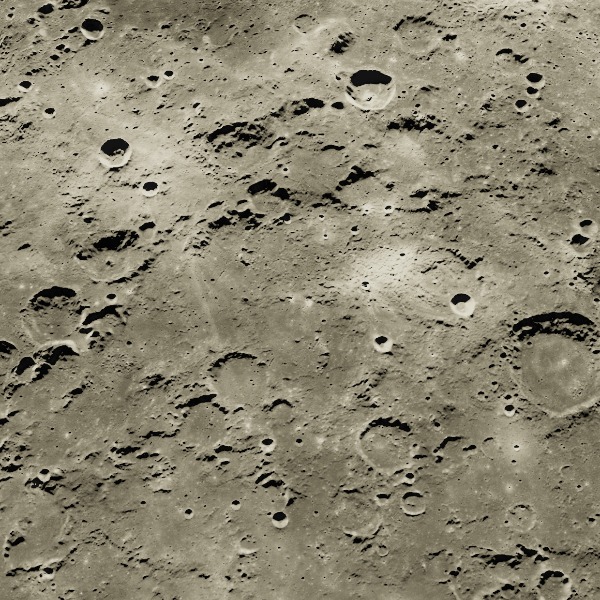
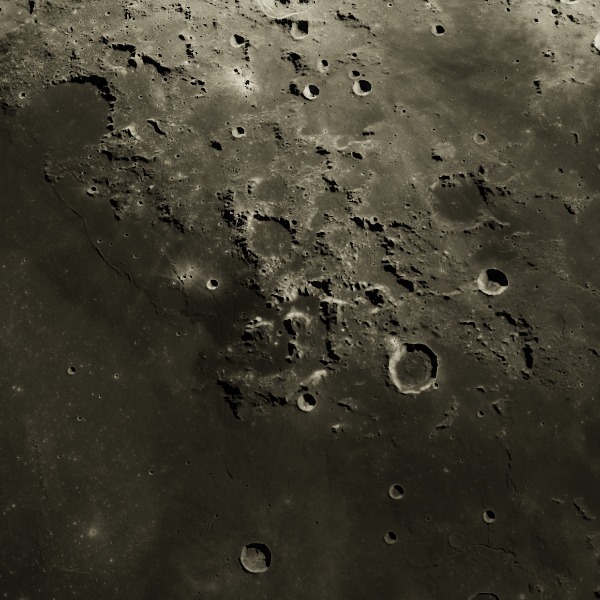
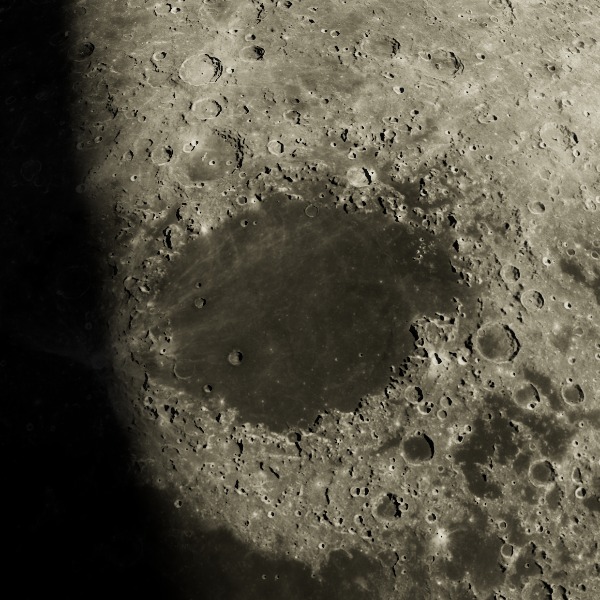
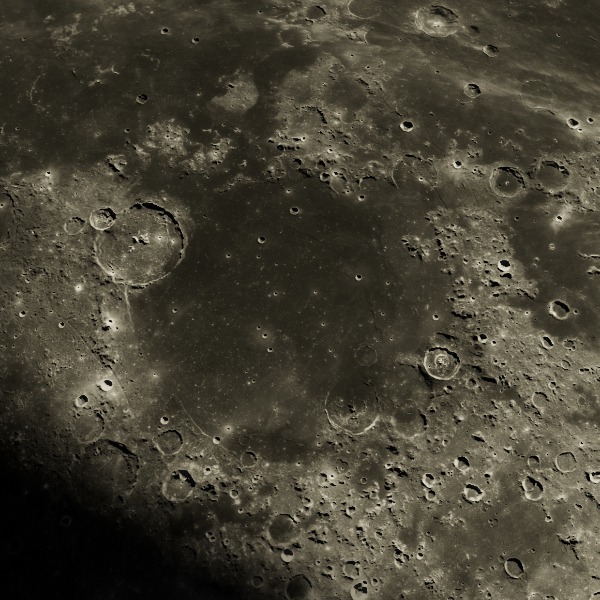
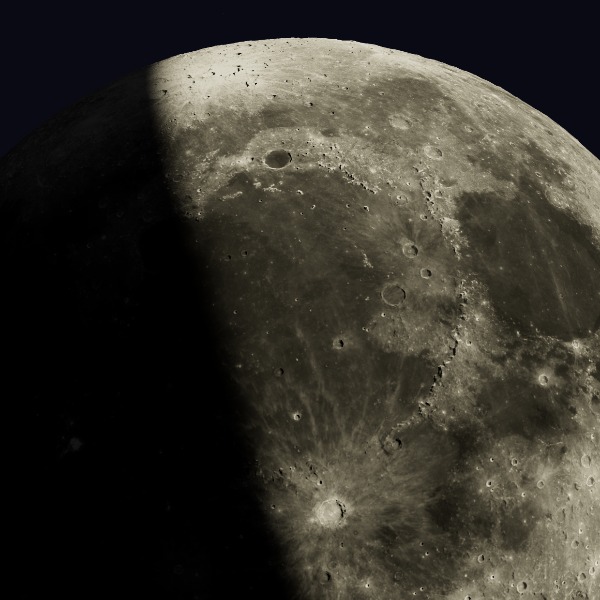
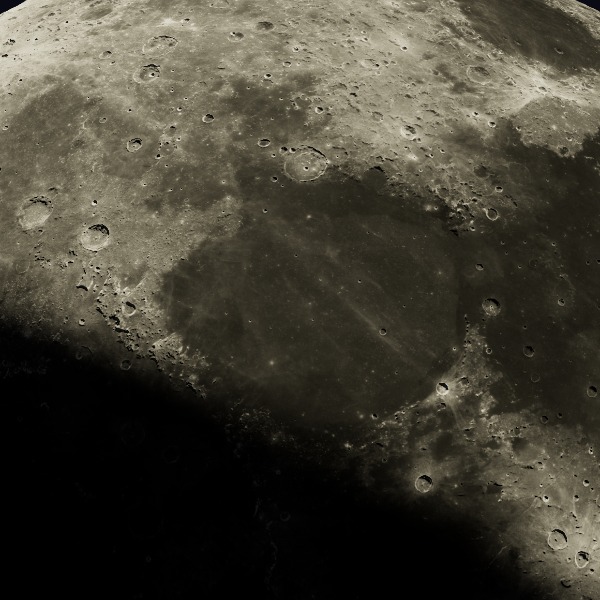
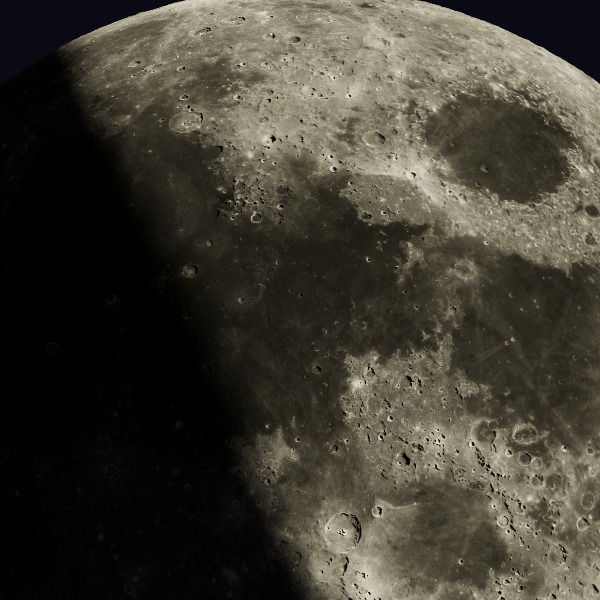
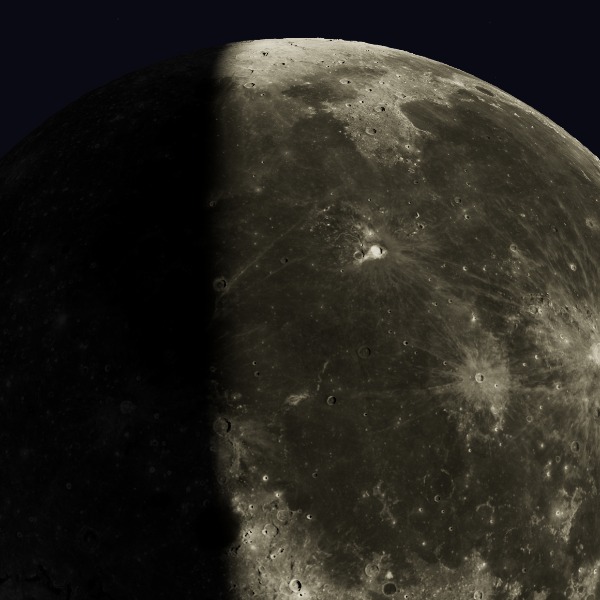
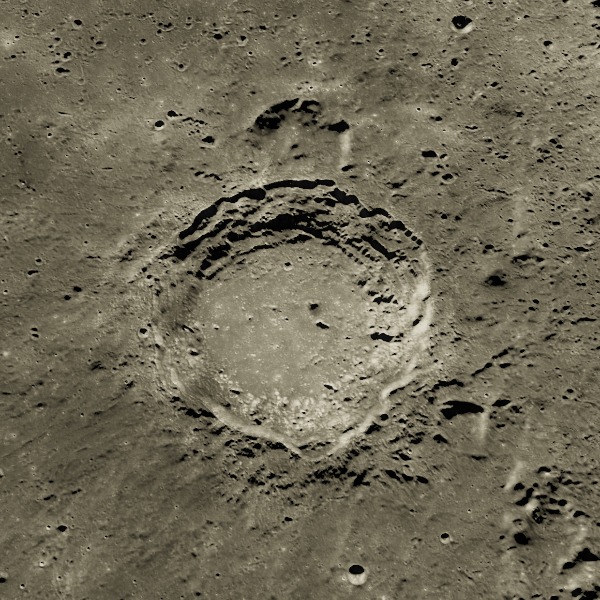
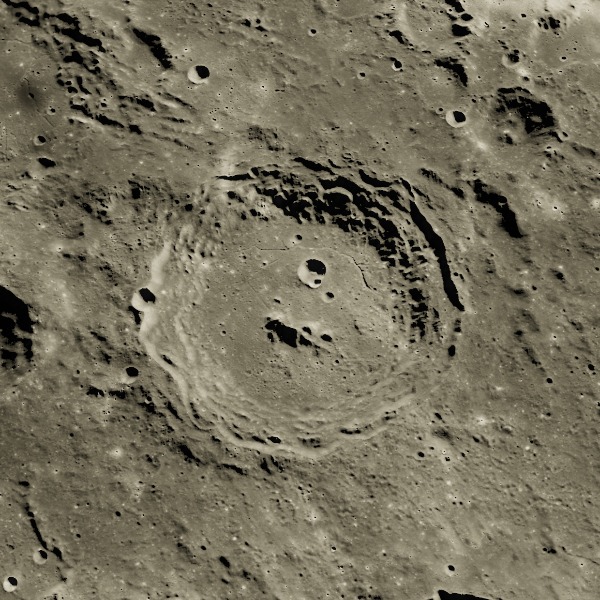
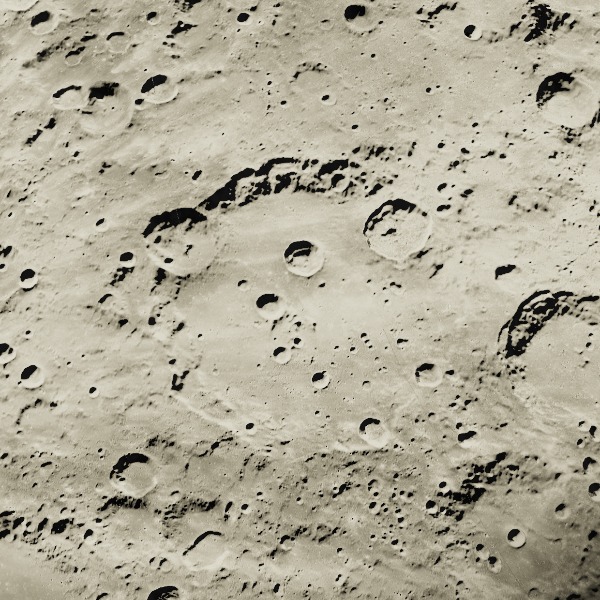
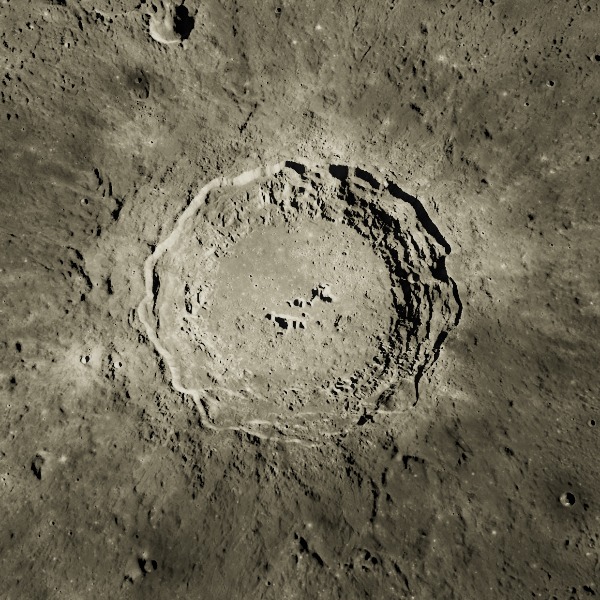
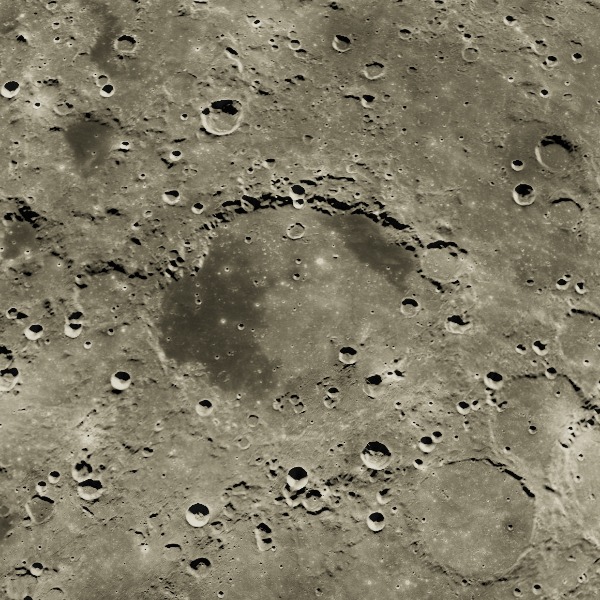
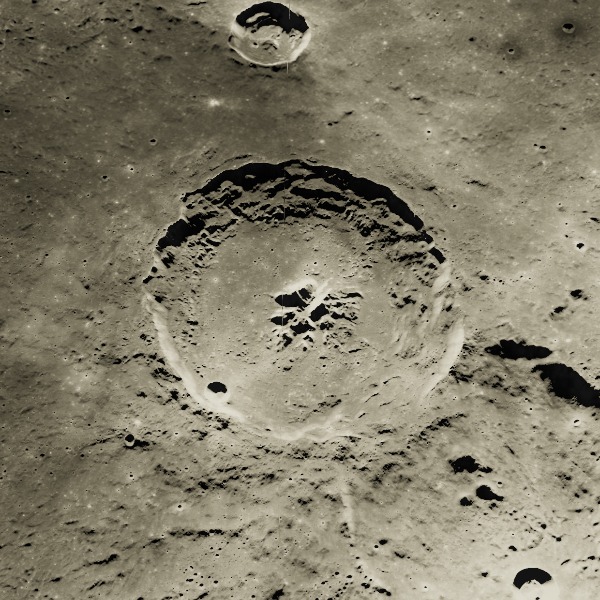
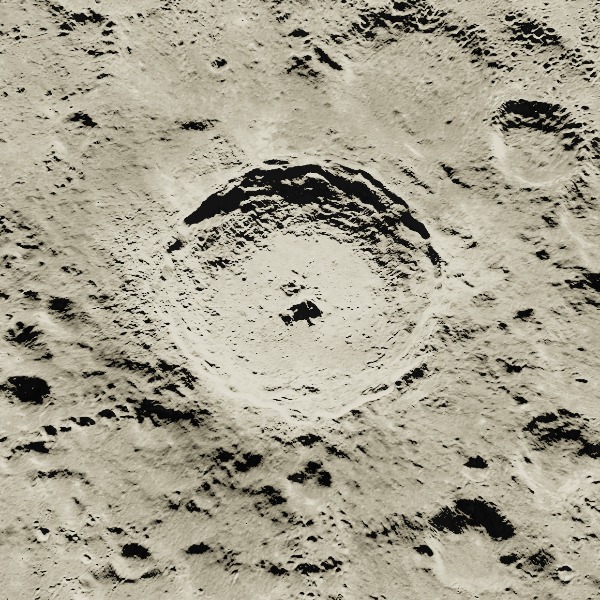
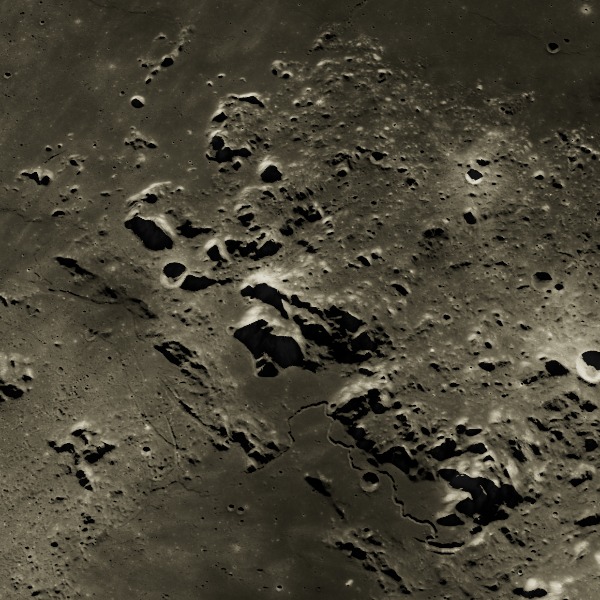
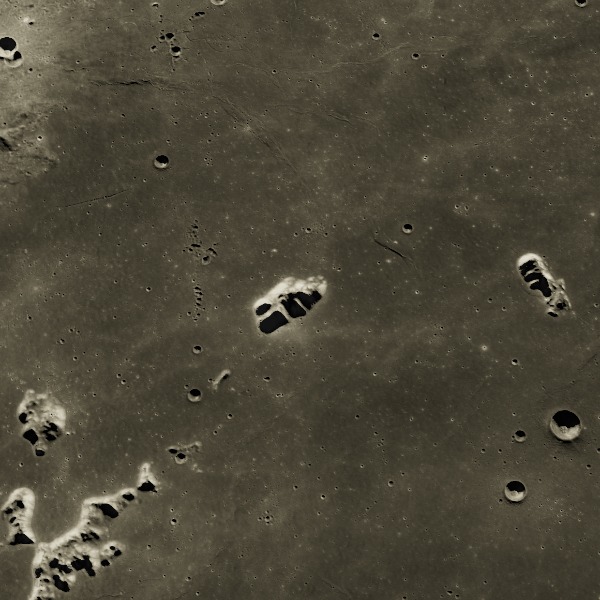
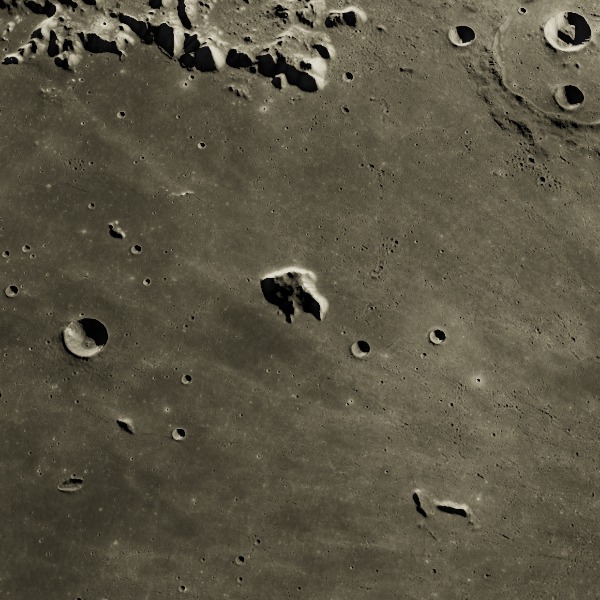
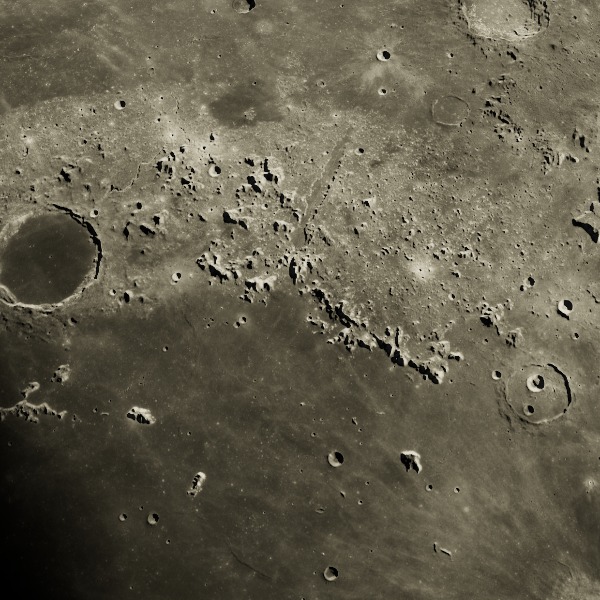
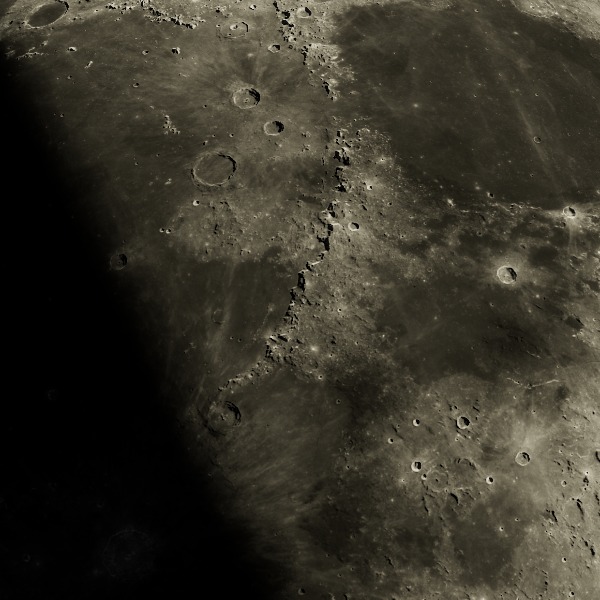
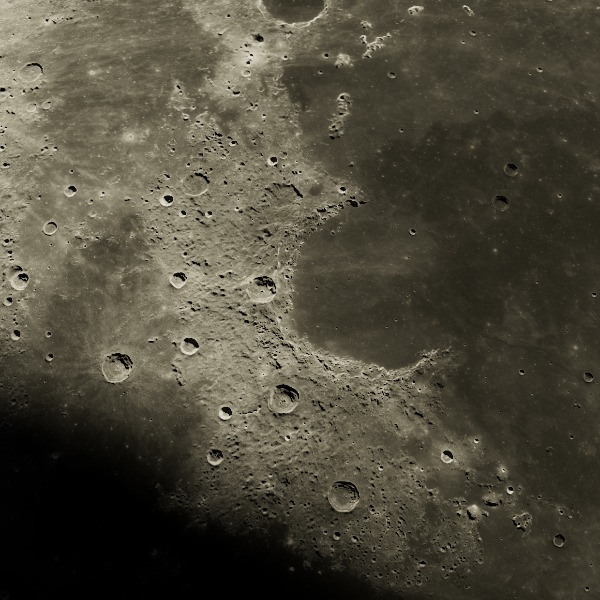
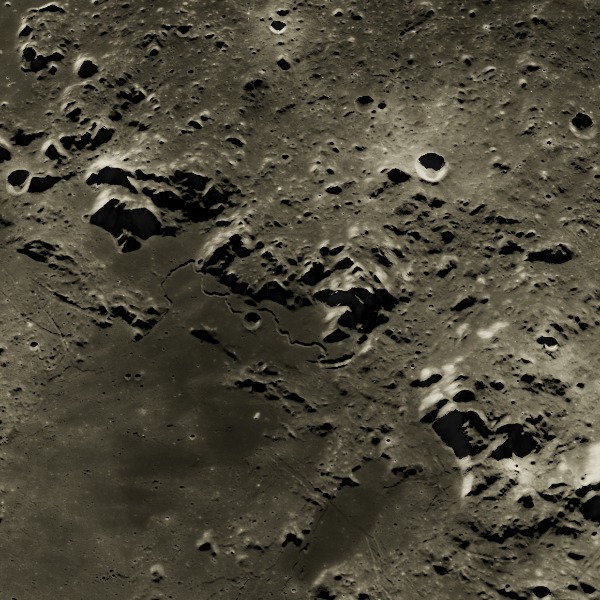
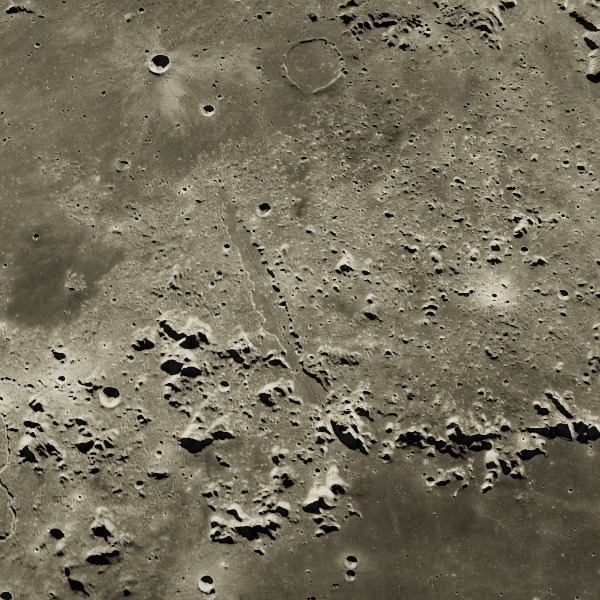
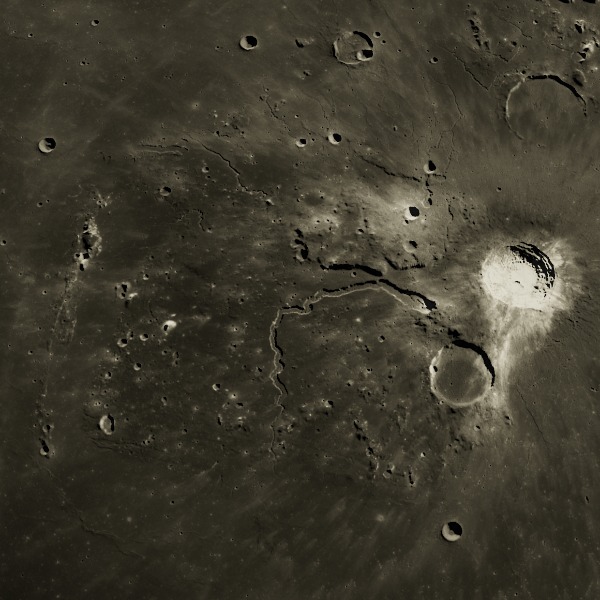
A visual tour of 42 of the Moon's most striking surface features.
Each one is shown twice: a close-up that fills the frame, and a wider context view so
you can place it on the lunar disc. All six Apollo landing sites are included.
Close-ups are rendered from NASA LRO elevation data (SLDEM2015 / LROC WAC) with
simulated low-angle sunlight near the terminator, so shadows reveal the relief.
Open /Moon for the full interactive 3D Moon.
Apollo 11 Landing Site
Landing site
Close-upLocation on the lunar disc
First crewed Moon landing on July 20, 1969 in southwestern Mare Tranquillitatis. Armstrong and Aldrin spent 2.5 hours on the surface. The site itself is not visible but the area is easy to locate.
Second crewed landing on November 19, 1969 in Oceanus Procellarum near Surveyor 3 crater. Precision landing within walking distance of Surveyor 3 probe.
Third crewed landing on February 5, 1971 in the Fra Mauro highlands. Shepard and Mitchell explored the Fra Mauro formation, ejecta from the Imbrium impact.
Fourth crewed landing on July 30, 1971 at Hadley-Apennine. First use of the Lunar Rover. Explored Rima Hadley and Mons Hadley Delta. Spectacular mountain scenery.
Last crewed Moon landing on December 11, 1972 in Taurus-Littrow valley. Cernan and Schmitt (only scientist-astronaut) discovered orange soil. Longest surface stay.
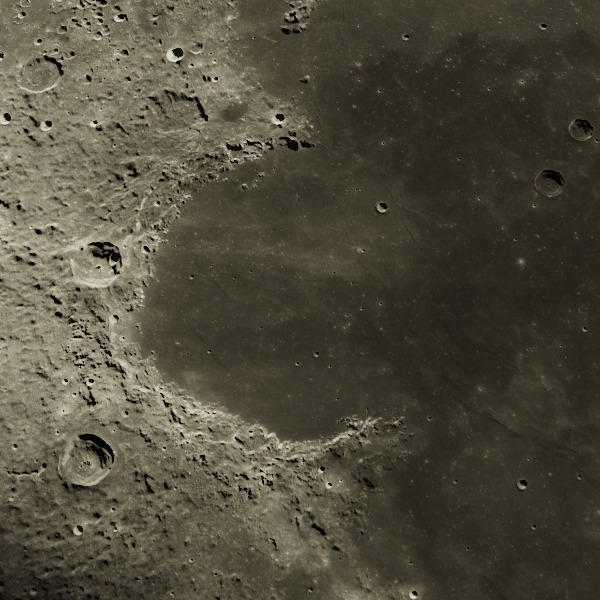
Sea of Crises. Isolated circular mare near the eastern limb. Appears elongated N-S due to foreshortening but is actually wider E-W. First major feature after new Moon.
Sea of Serenity. Circular dark basin with prominent wrinkle ridges. Bordered by Montes Haemus and Montes Caucasus. Contains Dorsa Smirnov ridge system.
Sea of Tranquility. Site of the Apollo 11 landing. Irregular shape with bluish tint from titanium-rich basalts. Contains Lamont ghost crater and wrinkle ridges.
Ocean of Storms. Largest dark area on the Moon, not a true circular basin. Contains Aristarchus, Kepler, and Copernicus. Site of several robotic landings.
Bay of Rainbows. Spectacular bay on the northwest edge of Mare Imbrium bounded by Montes Jura. The Jeweled Handle effect occurs when sunlight catches just the rim. Site of Chang'e 3 landing.
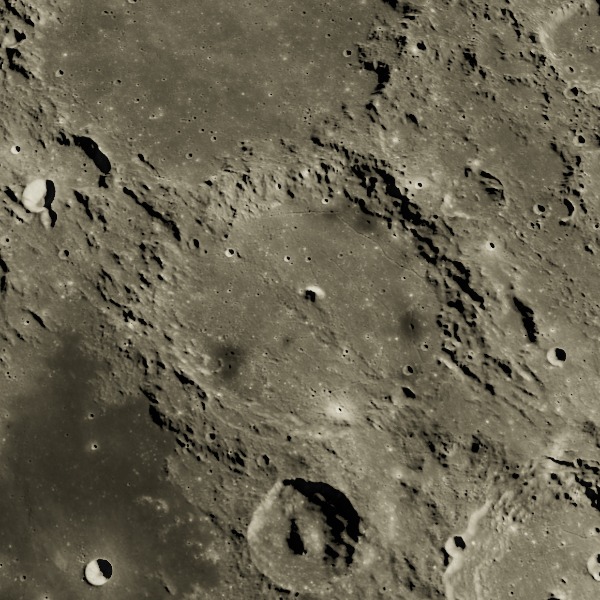
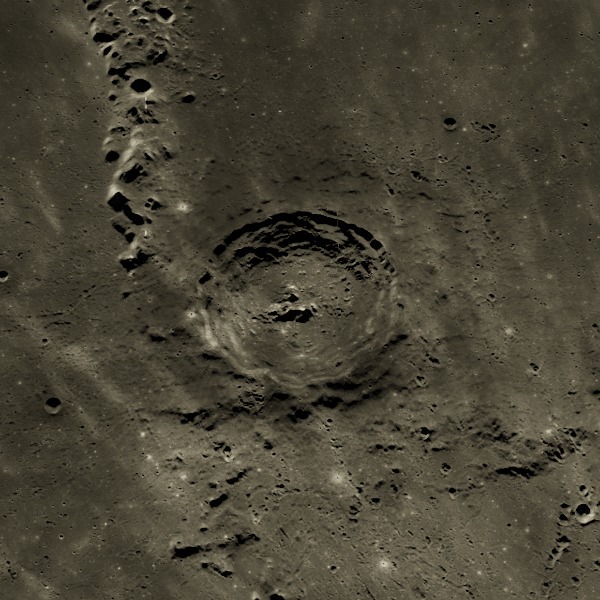
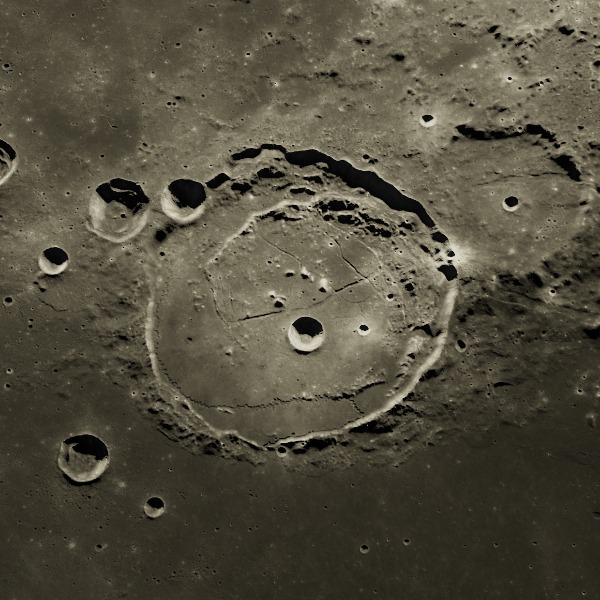
Central crater in the Ptolemaeus chain. Central peak and dark-haloed volcanic vents on the floor. Site of observed transient lunar phenomena by Kozyrev in 1958.
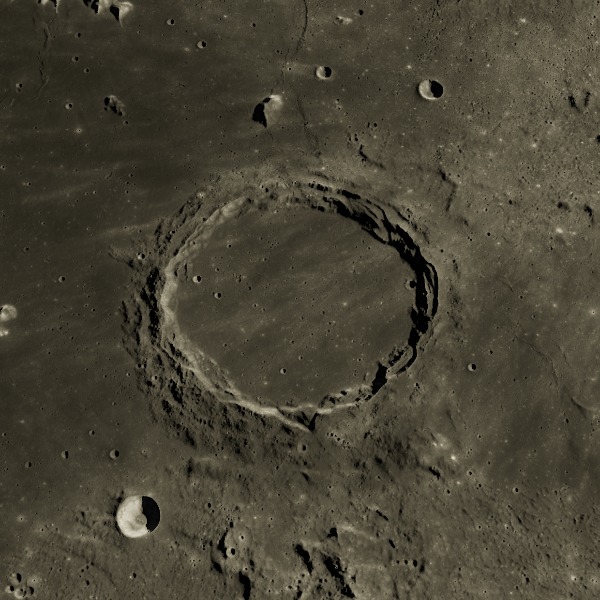
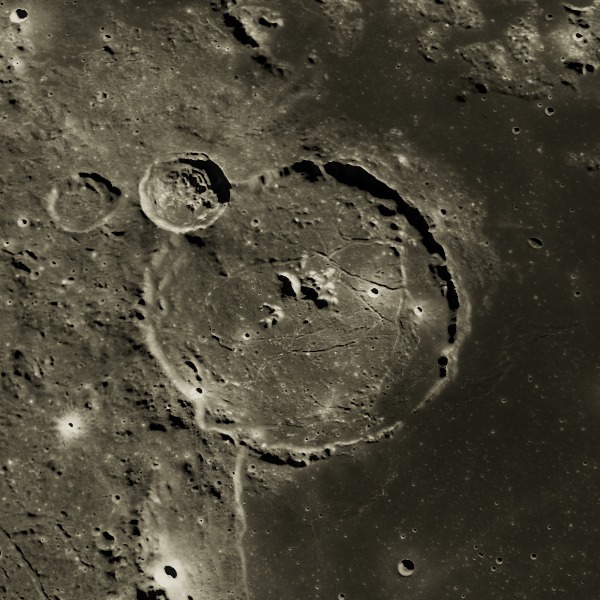
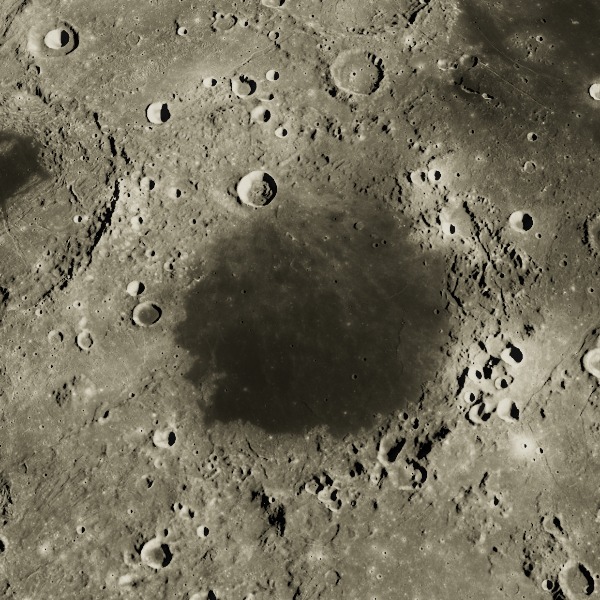
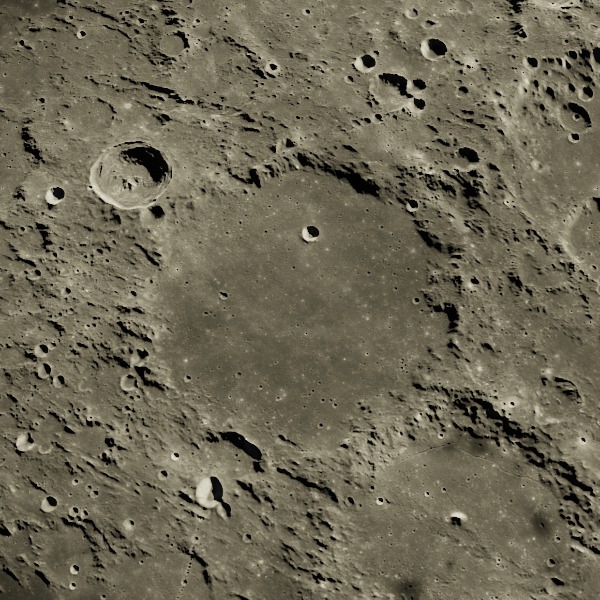
Large crater in Mare Imbrium with a smooth lava-flooded floor. Prominent walls but no central peak due to lava filling. Forms a trio with Aristillus and Autolycus.
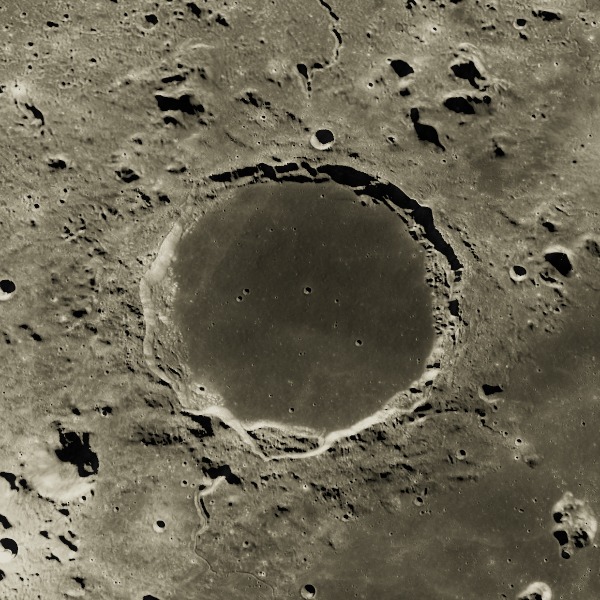
One of the largest craters visible on the Moon. Contains a distinctive arc of progressively smaller craters across its floor. Impressive at any magnification.
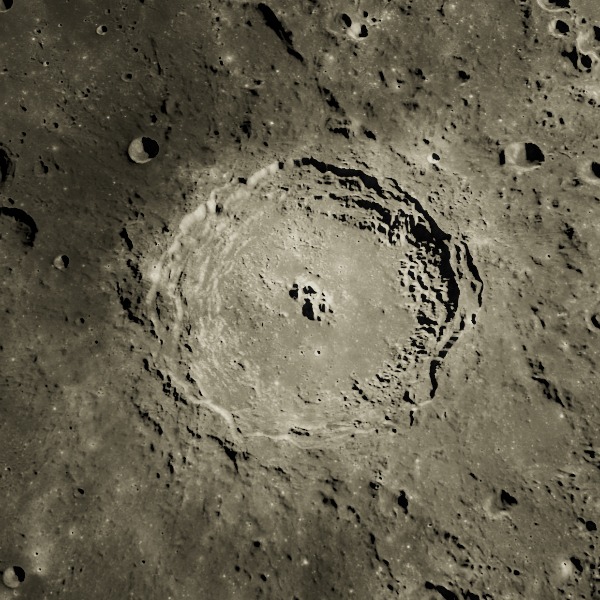
Well-preserved crater at the end of the Apennine mountain range. Deep terraced walls and central peaks. Marks the boundary between Mare Imbrium and Sinus Aestuum.
Large terraced crater on the eastern limb near Mare Fecunditatis. Prominent central peak and well-defined walls. One of the first features visible after new Moon.
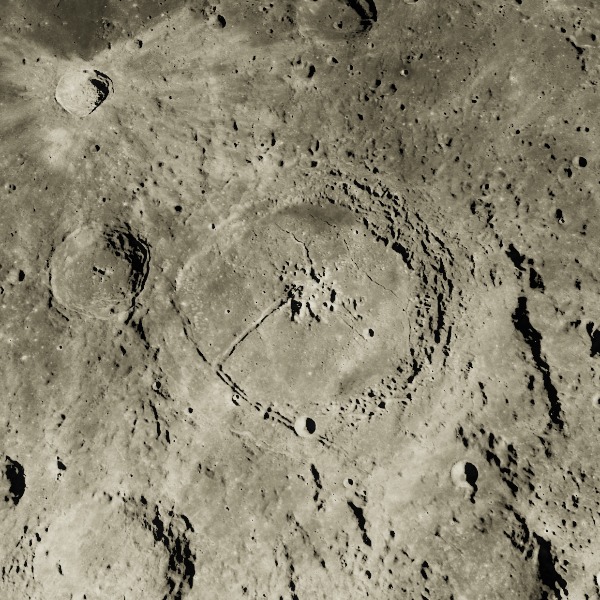
Magnificent crater with prominent central peak complex and a distinctive rille running from the center to the southwest wall. Best seen at 2-3 days after new Moon.
Young crater with the most prominent ray system on the Moon, extending over 1500 km. Central peak visible in moderate telescopes. Best at full Moon for rays.
Lunar Apennines. Most impressive mountain range on the Moon forming the SE border of Mare Imbrium. Peaks reach 5 km. Best around first quarter when shadows are dramatic.
Jura Mountains. Curved range forming the boundary of Sinus Iridum. Creates the famous Jeweled Handle effect when sunlight catches the peaks at lunar sunrise.
Alpine Valley. Spectacular graben cutting through the Montes Alpes connecting Mare Imbrium to Mare Frigoris. Contains a narrow rille on its floor visible in larger telescopes.
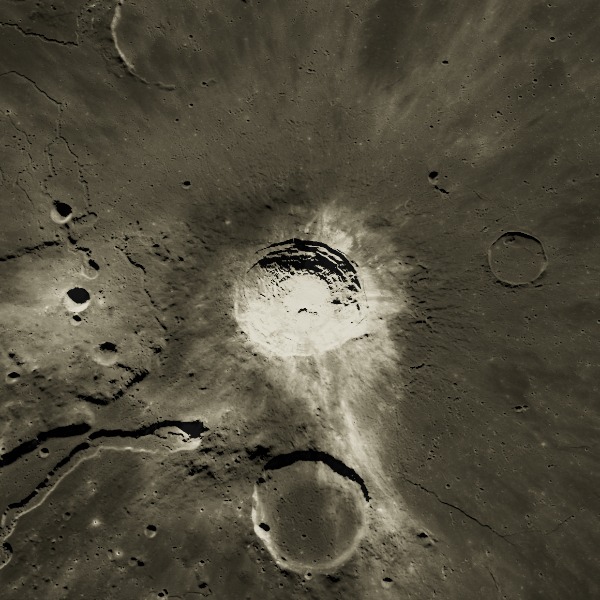
Schröter's Valley. Largest sinuous rille on the Moon near Aristarchus. Begins at the Cobra Head volcanic vent. Up to 10 km wide. Impressive in moderate telescopes.
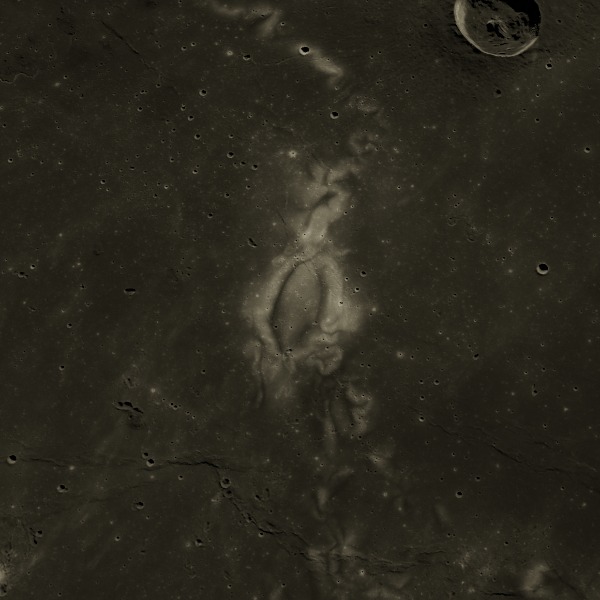
Bright tadpole-shaped swirl pattern in Oceanus Procellarum with no topographic expression. Associated with a localized magnetic anomaly that deflects solar wind. Unique feature.
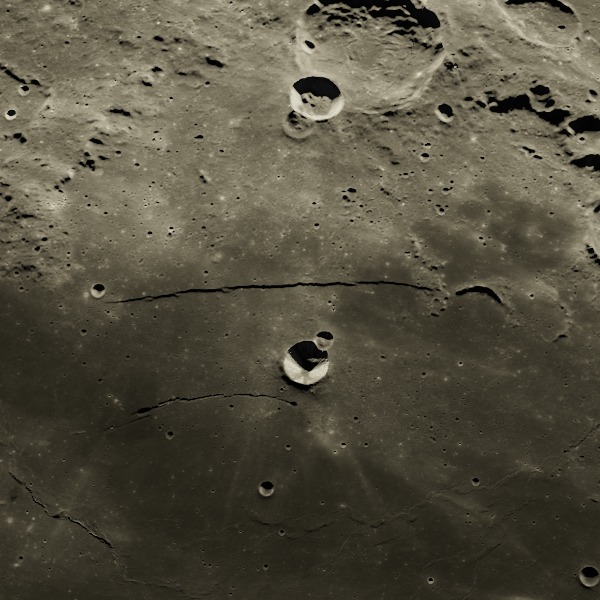
The Straight Wall. Most famous lunar fault scarp, a 110 km long, 300 m high cliff in Mare Nubium. Appears as a dark line before full Moon and bright line after. Best around day 8.