Menu

Moon Features Gallery

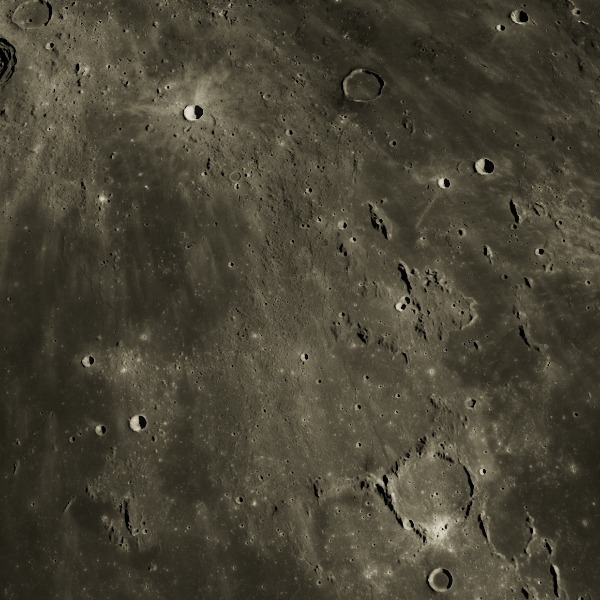
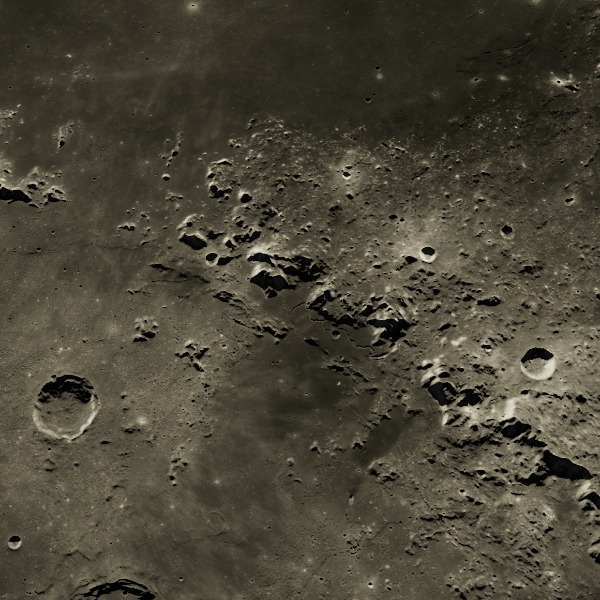
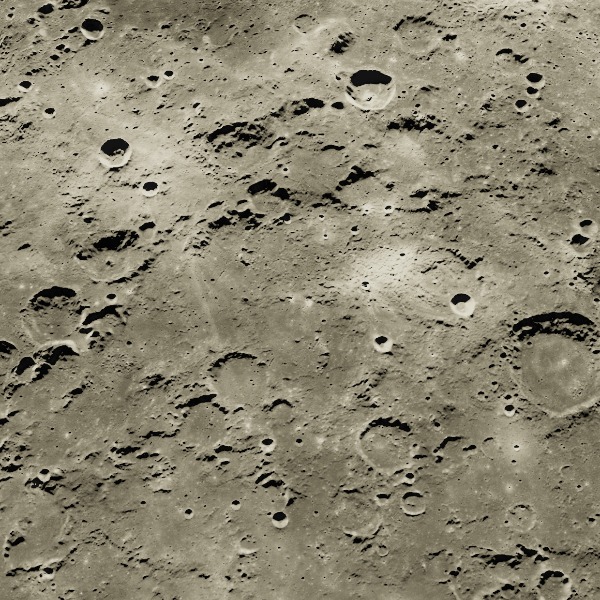
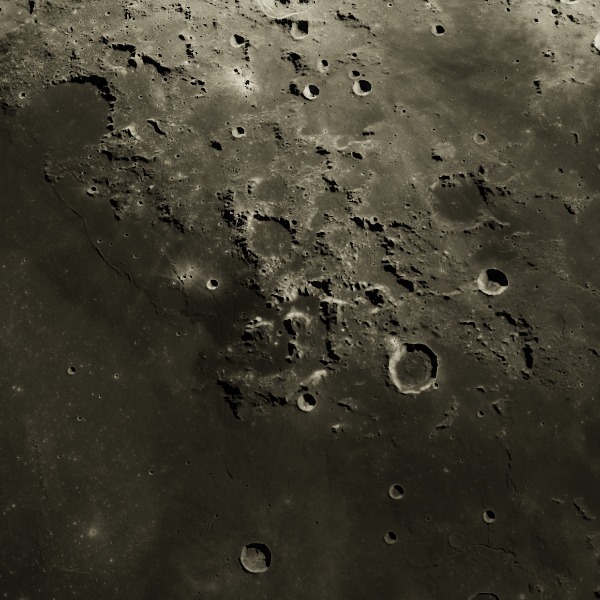
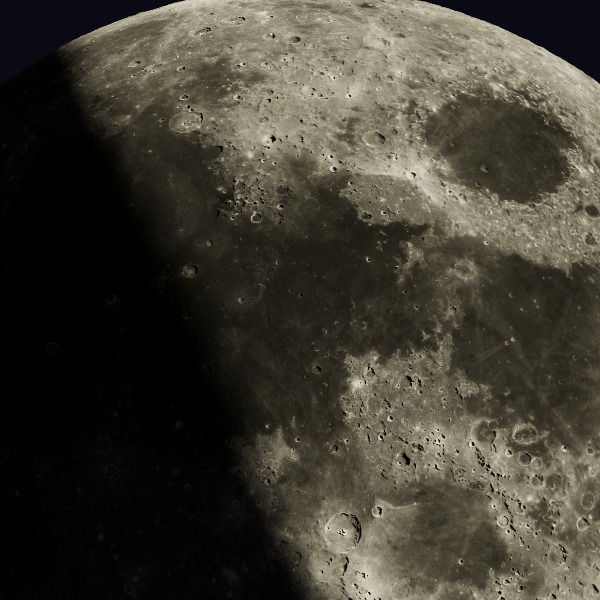
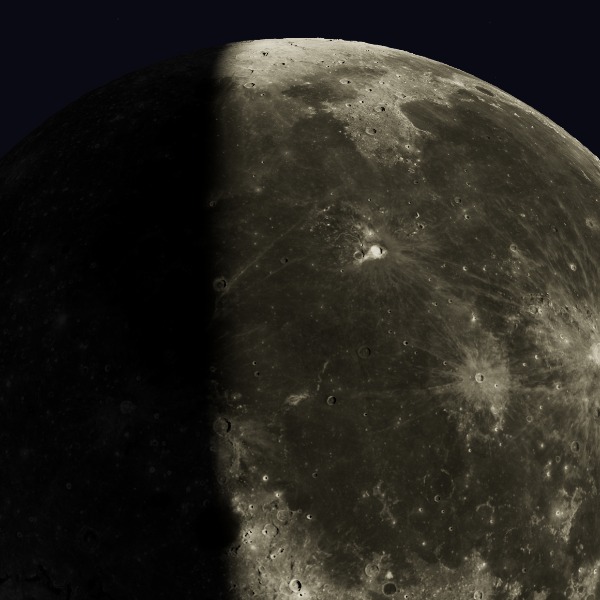
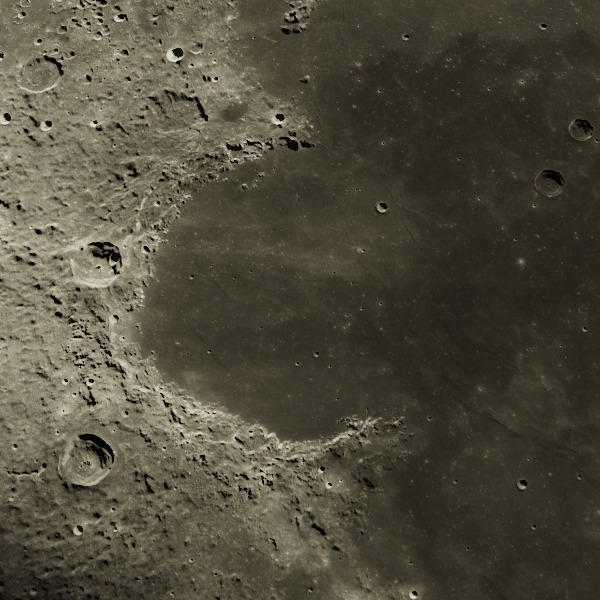
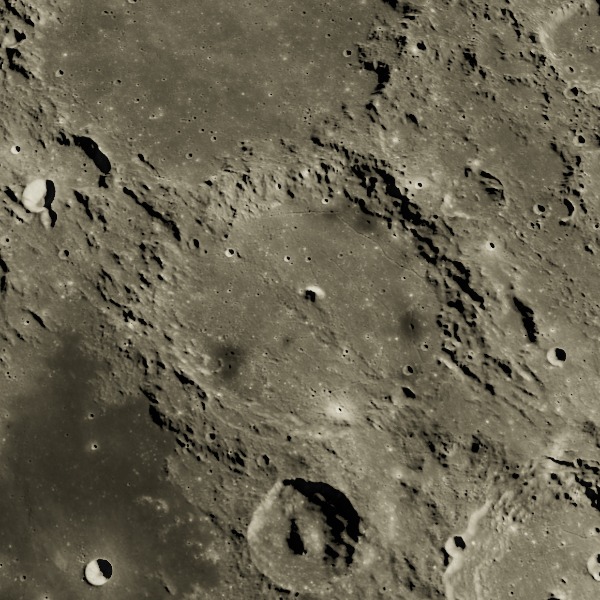
A visual tour of 42 of the Moon's most striking surface features. Each one is shown twice: a close-up that fills the frame, and a wider context view so you can place it on the lunar disc. All six Apollo landing sites are included.

Close-ups are rendered from NASA LRO elevation data (SLDEM2015 / LROC WAC) with simulated low-angle sunlight near the terminator, so shadows reveal the relief. Open /Moon for the full interactive 3D Moon.

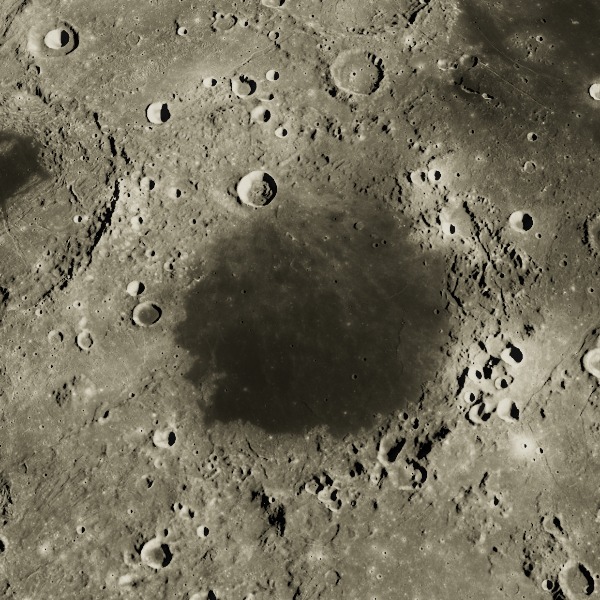
Apollo 11 Landing Site

Landing site
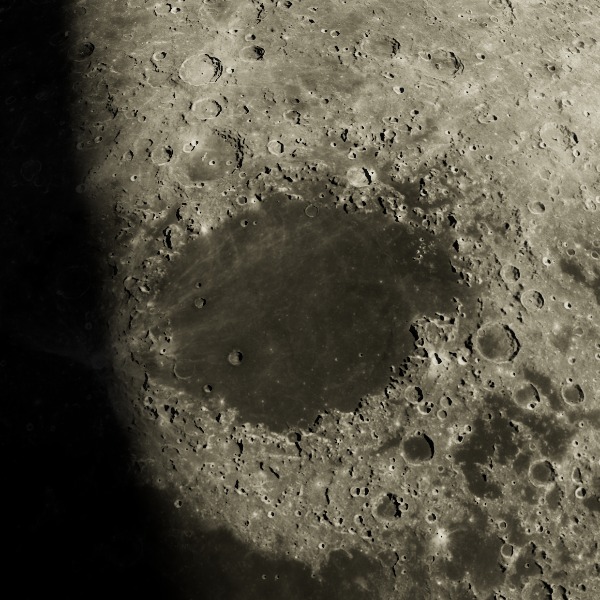
Apollo 11 Landing Site — relief close-up under low, raking sunlight near the terminator
Close-up
Location on the lunar disc

First crewed Moon landing on July 20, 1969 in southwestern Mare Tranquillitatis. Armstrong and Aldrin spent 2.5 hours on the surface. The site itself is not visible but the area is easy to locate.

Open on /Moon

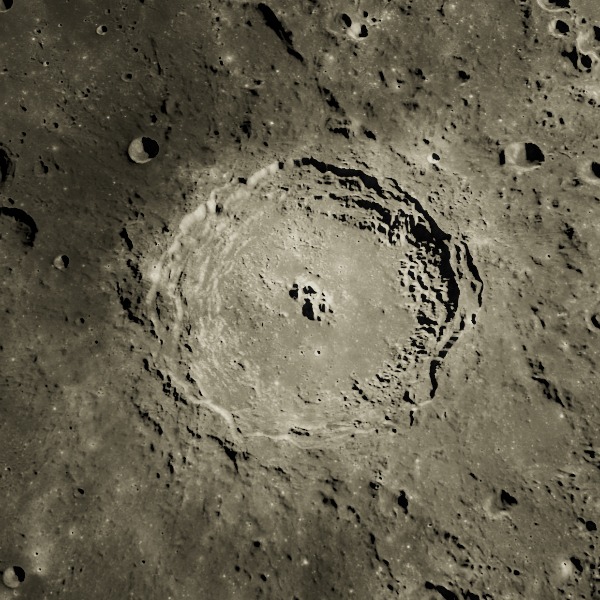
Apollo 12 Landing Site

Landing site
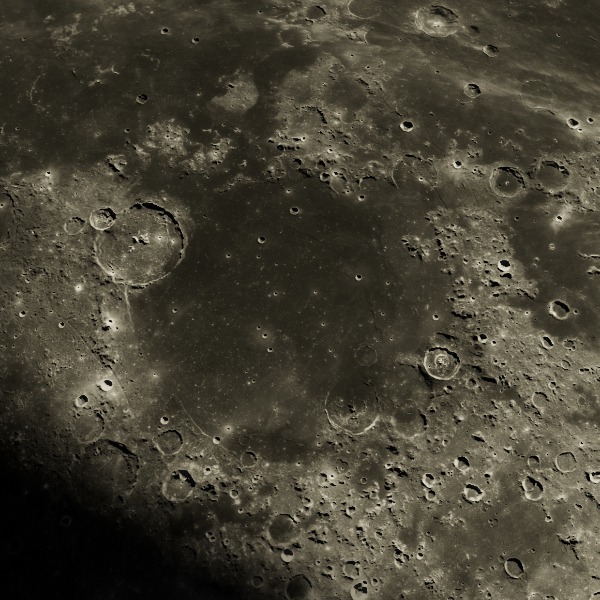
Apollo 12 Landing Site — relief close-up under low, raking sunlight near the terminator
Close-up
Location on the lunar disc

Second crewed landing on November 19, 1969 in Oceanus Procellarum near Surveyor 3 crater. Precision landing within walking distance of Surveyor 3 probe.

Open on /Moon

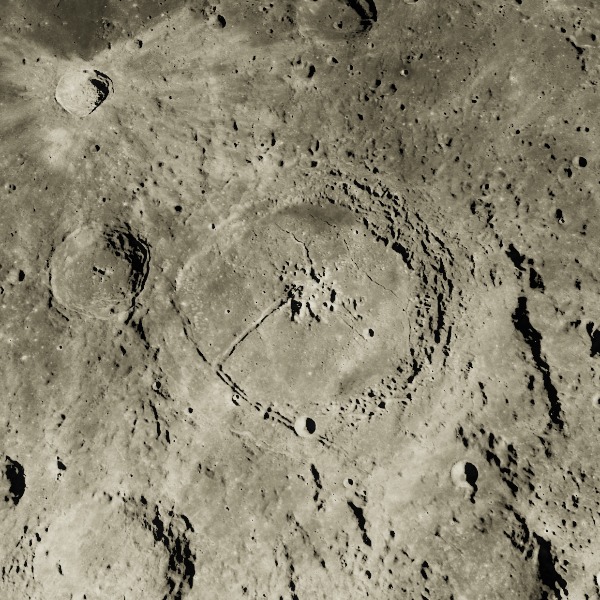
Apollo 14 Landing Site

Landing site
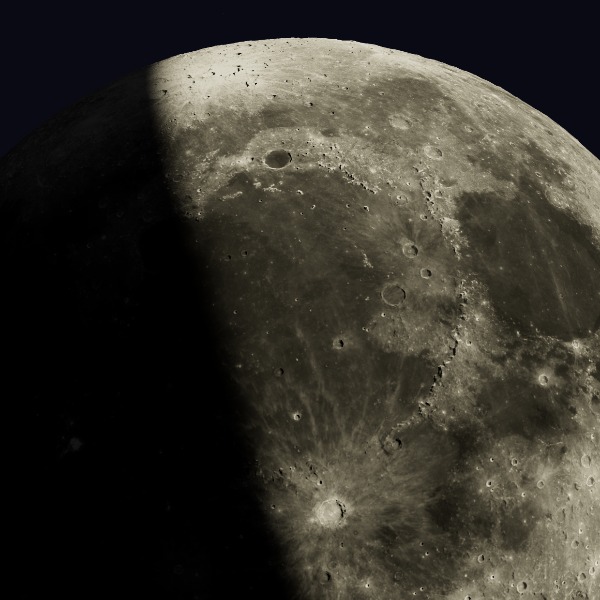
Apollo 14 Landing Site — relief close-up under low, raking sunlight near the terminator
Close-up
Location on the lunar disc

Third crewed landing on February 5, 1971 in the Fra Mauro highlands. Shepard and Mitchell explored the Fra Mauro formation, ejecta from the Imbrium impact.

Open on /Moon

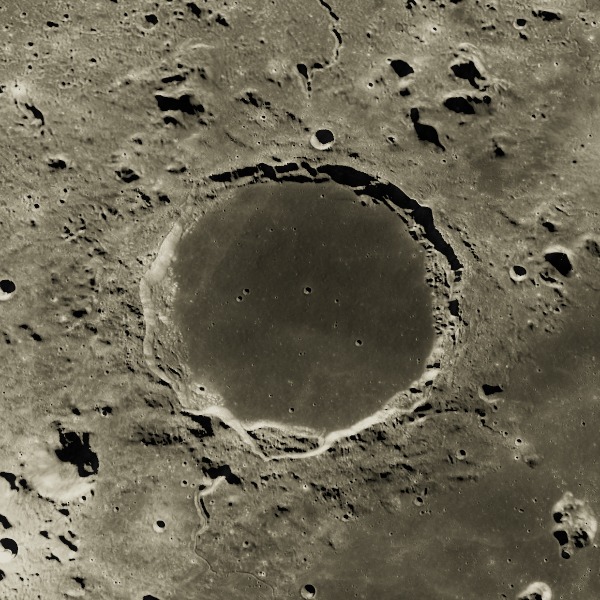
Apollo 15 Landing Site

Landing site
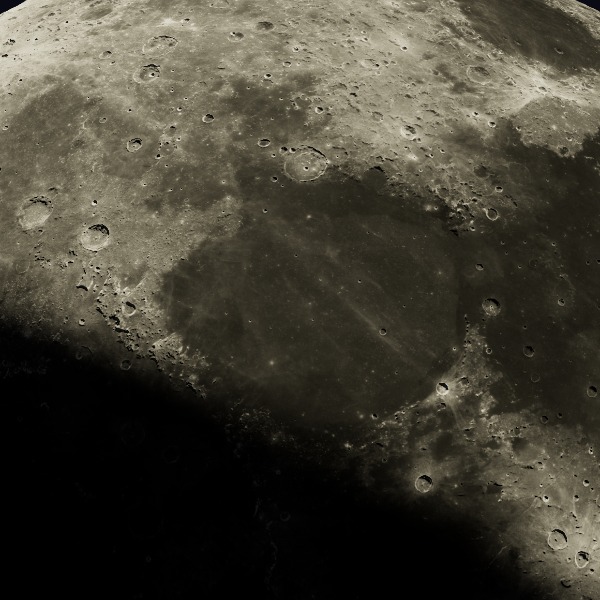
Apollo 15 Landing Site — relief close-up under low, raking sunlight near the terminator
Close-up
Location on the lunar disc

Fourth crewed landing on July 30, 1971 at Hadley-Apennine. First use of the Lunar Rover. Explored Rima Hadley and Mons Hadley Delta. Spectacular mountain scenery.

Open on /Moon

Apollo 16 Landing Site

Landing site
Apollo 16 Landing Site — relief close-up under low, raking sunlight near the terminator
Close-up
Location on the lunar disc

Fifth crewed landing on April 21, 1972 in the Descartes Highlands. Young and Duke explored the Cayley Formation. Only highland landing site.

Open on /Moon

Apollo 17 Landing Site

Landing site
Apollo 17 Landing Site — relief close-up under low, raking sunlight near the terminator
Close-up
Location on the lunar disc

Last crewed Moon landing on December 11, 1972 in Taurus-Littrow valley. Cernan and Schmitt (only scientist-astronaut) discovered orange soil. Longest surface stay.

Open on /Moon

Mare Crisium

Mare · 556 km
Mare Crisium — relief close-up under low, raking sunlight near the terminator
Close-up
Location on the lunar disc

Sea of Crises. Isolated circular mare near the eastern limb. Appears elongated N-S due to foreshortening but is actually wider E-W. First major feature after new Moon.

Open on /Moon

Mare Humorum

Mare · 389 km
Mare Humorum — relief close-up under low, raking sunlight near the terminator
Close-up
Location on the lunar disc

Sea of Moisture. Circular mare with Gassendi on its northern rim. Contains wrinkle ridges and ghost craters. Beautiful at 10-11 days.

Open on /Moon

Mare Imbrium

Mare · 1123 km
Mare Imbrium — relief close-up under low, raking sunlight near the terminator
Close-up
Location on the lunar disc

Sea of Rains. Second largest mare, formed by a giant impact 3.9 billion years ago. Contains Archimedes, Plato on its rim, and Sinus Iridum bay.

Open on /Moon

Mare Serenitatis

Mare · 707 km
Mare Serenitatis — relief close-up under low, raking sunlight near the terminator
Close-up
Location on the lunar disc

Sea of Serenity. Circular dark basin with prominent wrinkle ridges. Bordered by Montes Haemus and Montes Caucasus. Contains Dorsa Smirnov ridge system.

Open on /Moon

Mare Tranquillitatis

Mare · 873 km
Mare Tranquillitatis — relief close-up under low, raking sunlight near the terminator
Close-up
Location on the lunar disc

Sea of Tranquility. Site of the Apollo 11 landing. Irregular shape with bluish tint from titanium-rich basalts. Contains Lamont ghost crater and wrinkle ridges.

Open on /Moon

Oceanus Procellarum

Mare · 2568 km
Oceanus Procellarum — relief close-up under low, raking sunlight near the terminator
Close-up
Location on the lunar disc

Ocean of Storms. Largest dark area on the Moon, not a true circular basin. Contains Aristarchus, Kepler, and Copernicus. Site of several robotic landings.

Open on /Moon

Sinus Iridum

Mare · 236 km
Sinus Iridum — relief close-up under low, raking sunlight near the terminator
Close-up
Location on the lunar disc

Bay of Rainbows. Spectacular bay on the northwest edge of Mare Imbrium bounded by Montes Jura. The Jeweled Handle effect occurs when sunlight catches just the rim. Site of Chang'e 3 landing.

Open on /Moon

Alphonsus

Crater · 119 km
Alphonsus — relief close-up under low, raking sunlight near the terminator
Close-up
Location on the lunar disc

Central crater in the Ptolemaeus chain. Central peak and dark-haloed volcanic vents on the floor. Site of observed transient lunar phenomena by Kozyrev in 1958.

Open on /Moon

Archimedes

Crater · 83 km
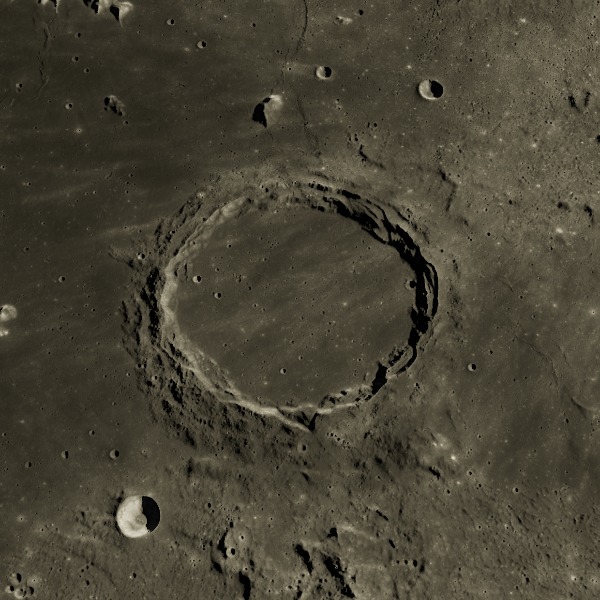
Archimedes — relief close-up under low, raking sunlight near the terminator
Close-up
Location on the lunar disc

Large crater in Mare Imbrium with a smooth lava-flooded floor. Prominent walls but no central peak due to lava filling. Forms a trio with Aristillus and Autolycus.

Open on /Moon

Aristarchus

Crater · 40 km
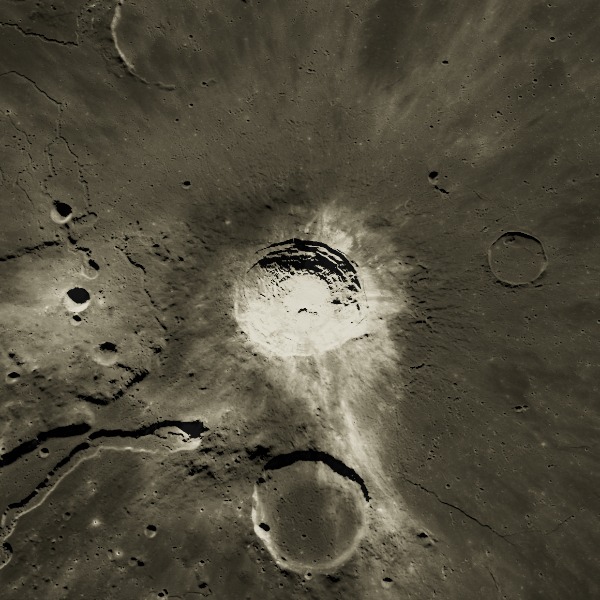
Aristarchus — relief close-up under low, raking sunlight near the terminator
Close-up
Location on the lunar disc

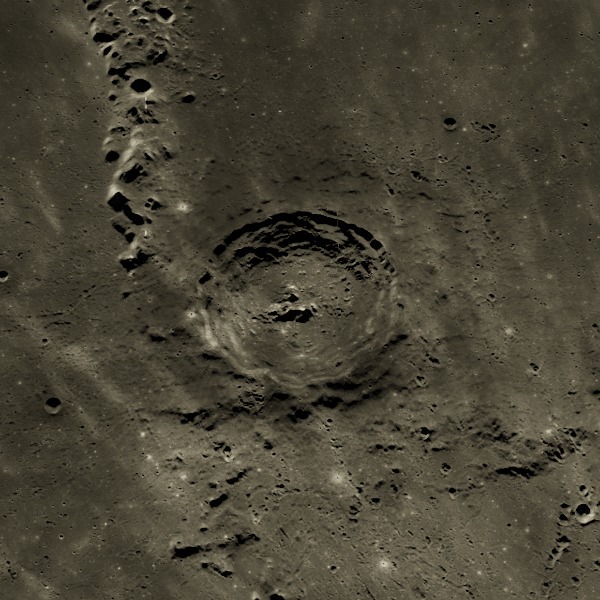
Brightest crater on the Moon. Terraced walls and central peak. Adjacent to Vallis Schroteri. Frequent site of reported transient lunar phenomena.

Open on /Moon

Aristoteles

Crater · 87 km
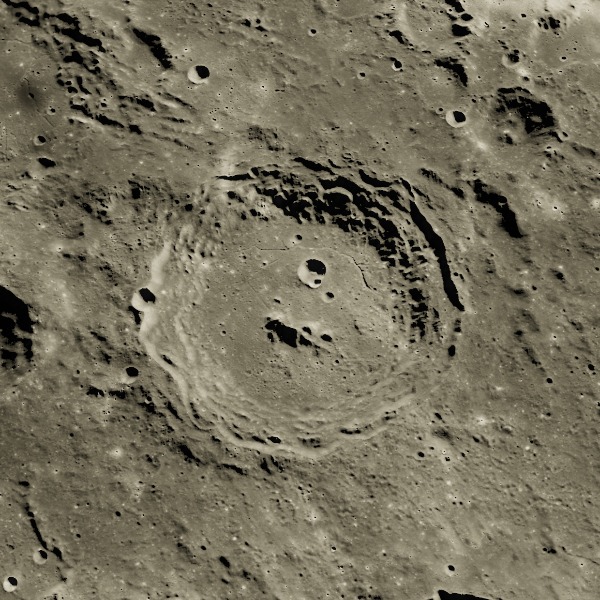
Aristoteles — relief close-up under low, raking sunlight near the terminator
Close-up
Location on the lunar disc

Prominent terraced crater in the northern highlands. Forms a striking pair with nearby Eudoxus. Deep floor with central peaks.

Open on /Moon

Arzachel

Crater · 96 km
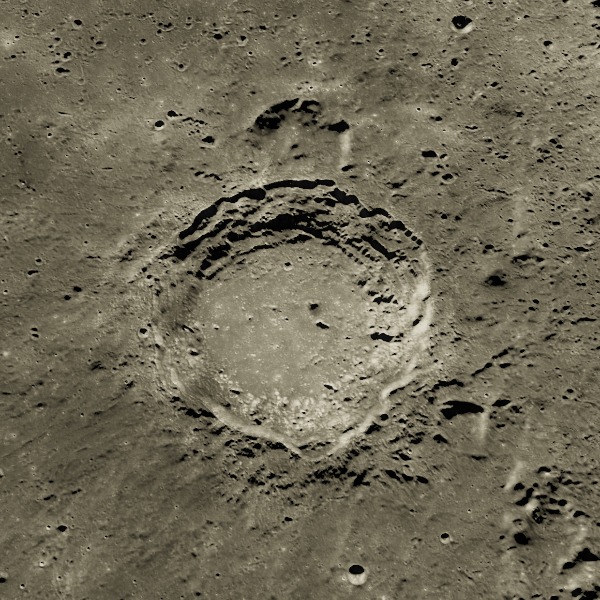
Arzachel — relief close-up under low, raking sunlight near the terminator
Close-up
Location on the lunar disc

Southernmost and youngest of the Ptolemaeus chain. Sharp terraced walls, central peak, and a prominent rille on the floor.

Open on /Moon

Clavius

Crater · 225 km
Clavius — relief close-up under low, raking sunlight near the terminator
Close-up
Location on the lunar disc

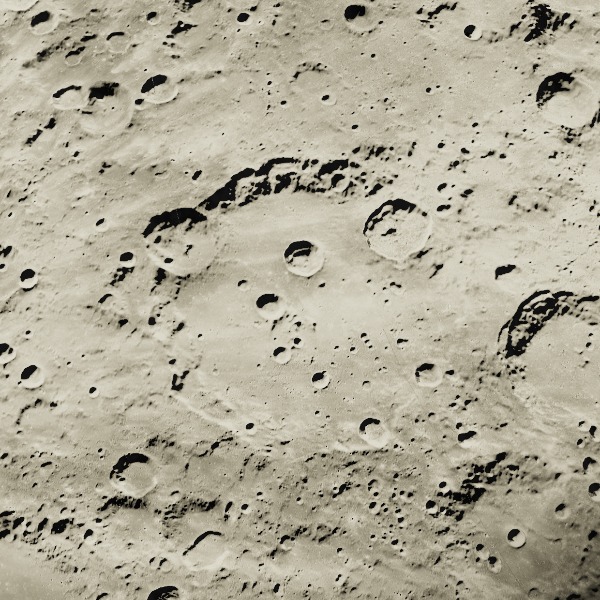
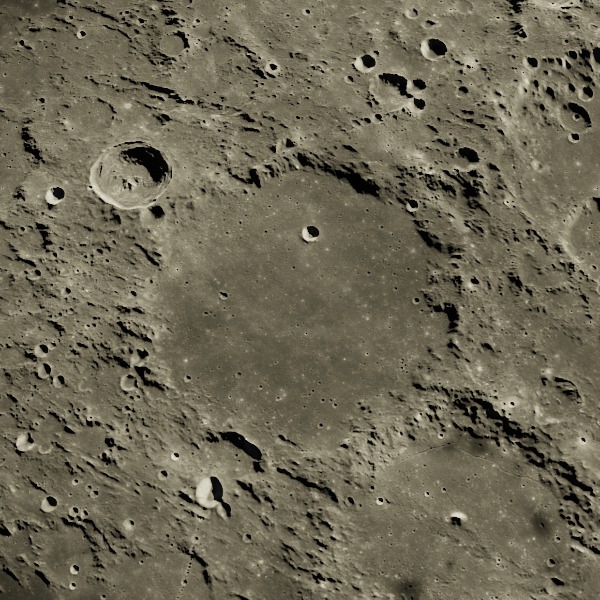
One of the largest craters visible on the Moon. Contains a distinctive arc of progressively smaller craters across its floor. Impressive at any magnification.

Open on /Moon

Copernicus

Crater · 93 km
Copernicus — relief close-up under low, raking sunlight near the terminator
Close-up
Location on the lunar disc

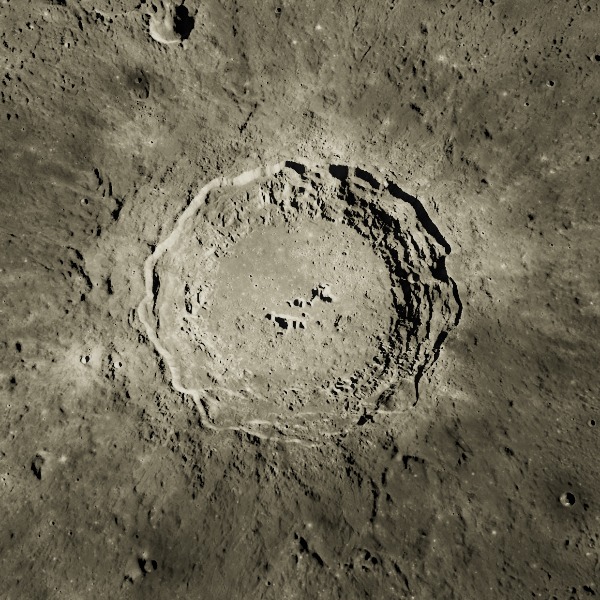
Spectacular terraced crater with central peaks and extensive ray system. One of the most prominent craters on the Moon, best seen near first quarter.

Open on /Moon

Eratosthenes

Crater · 58 km
Eratosthenes — relief close-up under low, raking sunlight near the terminator
Close-up
Location on the lunar disc

Well-preserved crater at the end of the Apennine mountain range. Deep terraced walls and central peaks. Marks the boundary between Mare Imbrium and Sinus Aestuum.

Open on /Moon

Gassendi

Crater · 110 km
Gassendi — relief close-up under low, raking sunlight near the terminator
Close-up
Location on the lunar disc

Floor-fractured crater on the northern edge of Mare Humorum. Complex rille system on floor, central peaks. Northern wall breached by mare lava.

Open on /Moon

Grimaldi

Crater · 172 km
Grimaldi — relief close-up under low, raking sunlight near the terminator
Close-up
Location on the lunar disc

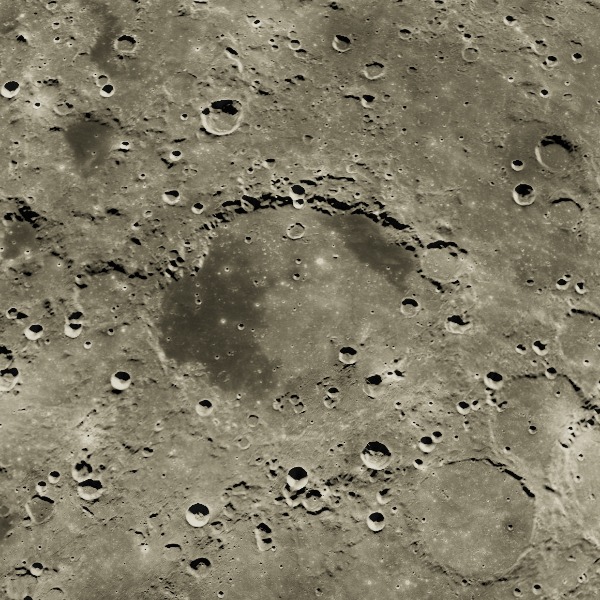
Very dark-floored walled plain near the western limb. One of the darkest spots on the Moon. Visible with the naked eye as a dark spot.

Open on /Moon

Langrenus

Crater · 132 km
Langrenus — relief close-up under low, raking sunlight near the terminator
Close-up
Location on the lunar disc

Large terraced crater on the eastern limb near Mare Fecunditatis. Prominent central peak and well-defined walls. One of the first features visible after new Moon.

Open on /Moon

Petavius

Crater · 177 km
Petavius — relief close-up under low, raking sunlight near the terminator
Close-up
Location on the lunar disc

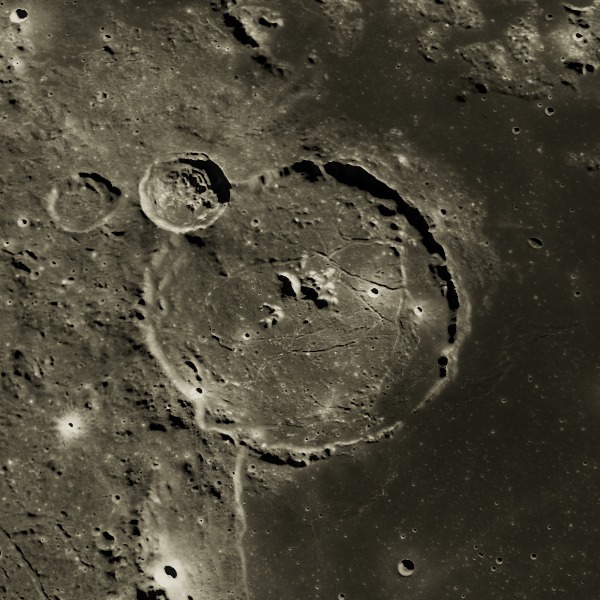
Magnificent crater with prominent central peak complex and a distinctive rille running from the center to the southwest wall. Best seen at 2-3 days after new Moon.

Open on /Moon

Plato

Crater · 101 km
Plato — relief close-up under low, raking sunlight near the terminator
Close-up
Location on the lunar disc

Large dark-floored crater on the northern edge of Mare Imbrium. Smooth lava-filled floor with subtle craterlets. Excellent test of seeing conditions.

Open on /Moon

Posidonius

Crater · 95 km
Posidonius — relief close-up under low, raking sunlight near the terminator
Close-up
Location on the lunar disc

Floor-fractured crater on the northeast edge of Mare Serenitatis. Complex floor with rilles, hills, and the smaller crater Posidonius A.

Open on /Moon

Ptolemaeus

Crater · 153 km
Ptolemaeus — relief close-up under low, raking sunlight near the terminator
Close-up
Location on the lunar disc

Large walled plain near the center of the visible disk. Flat dark floor with subtle features. Forms a magnificent chain with Alphonsus and Arzachel.

Open on /Moon

Schickard

Crater · 227 km
Schickard — relief close-up under low, raking sunlight near the terminator
Close-up
Location on the lunar disc

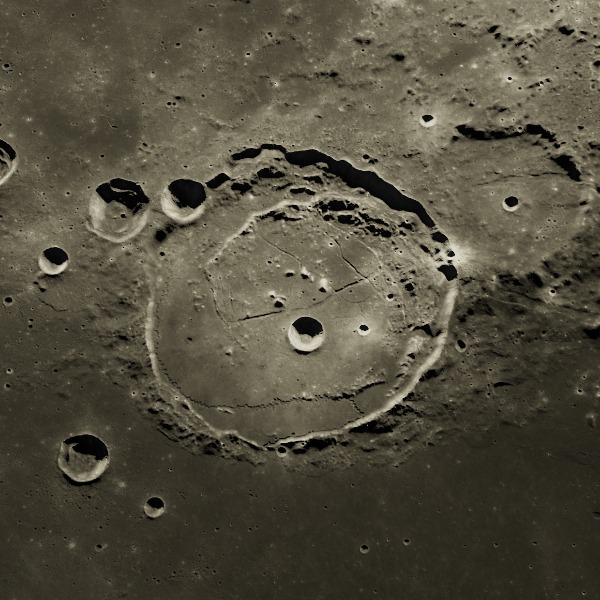
Very large walled plain near the southwestern limb. Floor has distinctive dark and light patches forming a banded appearance.

Open on /Moon

Theophilus

Crater · 100 km
Theophilus — relief close-up under low, raking sunlight near the terminator
Close-up
Location on the lunar disc

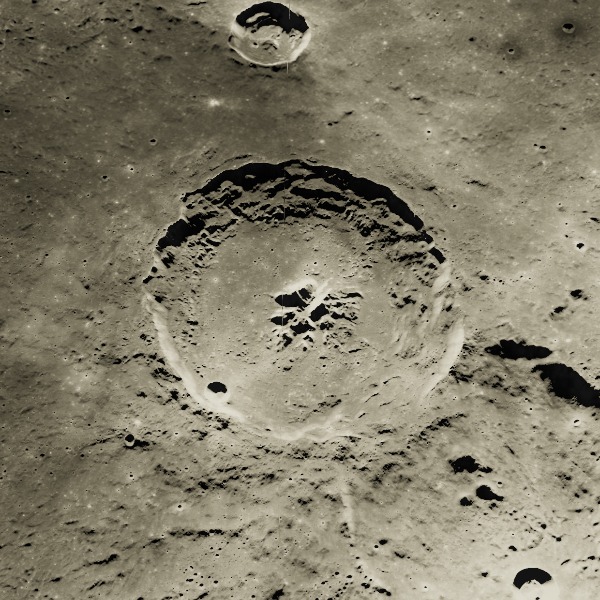
Impressive crater overlapping Cyrillus, forming part of a famous trio with Cyrillus and Catharina. Terraced walls and massive central peak complex.

Open on /Moon

Tycho

Crater · 85 km
Tycho — relief close-up under low, raking sunlight near the terminator
Close-up
Location on the lunar disc

Young crater with the most prominent ray system on the Moon, extending over 1500 km. Central peak visible in moderate telescopes. Best at full Moon for rays.

Open on /Moon

Mons Hadley

Mountain · 25 km
Mons Hadley — relief close-up under low, raking sunlight near the terminator
Close-up
Location on the lunar disc

Mountain at the edge of Palus Putredinis rising 4.6 km. Adjacent to the Apollo 15 landing site and Rima Hadley. One of the tallest lunar peaks.

Open on /Moon

Mons Pico

Mountain · 25 km
Mons Pico — relief close-up under low, raking sunlight near the terminator
Close-up
Location on the lunar disc

Prominent isolated mountain in northern Mare Imbrium. Rises 2.4 km above the plain. Part of an inner ring of the Imbrium basin. Stunning long shadows.

Open on /Moon

Mons Piton

Mountain · 25 km
Mons Piton — relief close-up under low, raking sunlight near the terminator
Close-up
Location on the lunar disc

Isolated mountain peak in Mare Imbrium rising 2.3 km above the plain. Casts a dramatic long shadow at low sun angles. Easy binocular target.

Open on /Moon

Montes Alpes

Mountain · 281 km
Montes Alpes — relief close-up under low, raking sunlight near the terminator
Close-up
Location on the lunar disc

Lunar Alps. Mountain range on the NE border of Mare Imbrium bisected by Vallis Alpes (Alpine Valley). Peaks up to 2.4 km high.

Open on /Moon

Montes Apenninus

Mountain · 600 km
Montes Apenninus — relief close-up under low, raking sunlight near the terminator
Close-up
Location on the lunar disc

Lunar Apennines. Most impressive mountain range on the Moon forming the SE border of Mare Imbrium. Peaks reach 5 km. Best around first quarter when shadows are dramatic.

Open on /Moon

Montes Jura

Mountain · 422 km
Montes Jura — relief close-up under low, raking sunlight near the terminator
Close-up
Location on the lunar disc

Jura Mountains. Curved range forming the boundary of Sinus Iridum. Creates the famous Jeweled Handle effect when sunlight catches the peaks at lunar sunrise.

Open on /Moon

Rima Hadley

Rille · 80 km
Rima Hadley — relief close-up under low, raking sunlight near the terminator
Close-up
Location on the lunar disc

Sinuous rille near the Apollo 15 landing site at the base of Mons Hadley. About 1.5 km wide and 300 m deep. Lava tube collapse channel.

Open on /Moon

Vallis Alpes

Valley · 166 km
Vallis Alpes — relief close-up under low, raking sunlight near the terminator
Close-up
Location on the lunar disc

Alpine Valley. Spectacular graben cutting through the Montes Alpes connecting Mare Imbrium to Mare Frigoris. Contains a narrow rille on its floor visible in larger telescopes.

Open on /Moon

Vallis Schröteri

Valley · 168 km
Vallis Schröteri — relief close-up under low, raking sunlight near the terminator
Close-up
Location on the lunar disc

Schröter's Valley. Largest sinuous rille on the Moon near Aristarchus. Begins at the Cobra Head volcanic vent. Up to 10 km wide. Impressive in moderate telescopes.

Open on /Moon

Reiner Gamma

Feature · 70 km
Reiner Gamma — relief close-up under low, raking sunlight near the terminator
Close-up
Location on the lunar disc

Bright tadpole-shaped swirl pattern in Oceanus Procellarum with no topographic expression. Associated with a localized magnetic anomaly that deflects solar wind. Unique feature.

Open on /Moon

Rupes Recta

Feature · 110 km
Rupes Recta — relief close-up under low, raking sunlight near the terminator
Close-up
Location on the lunar disc

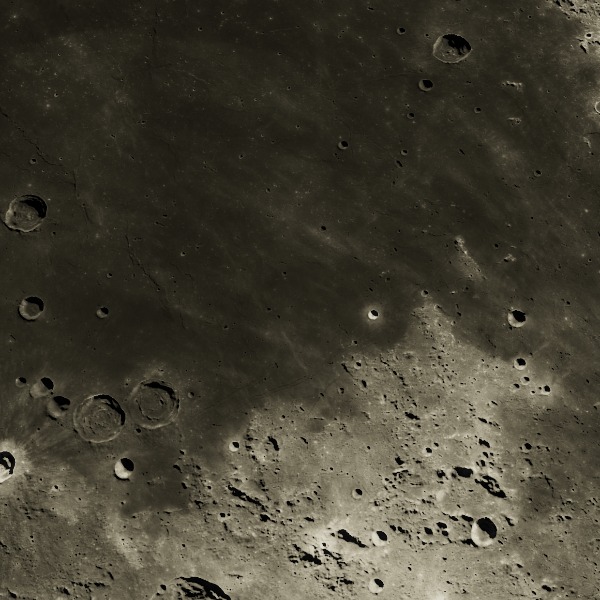
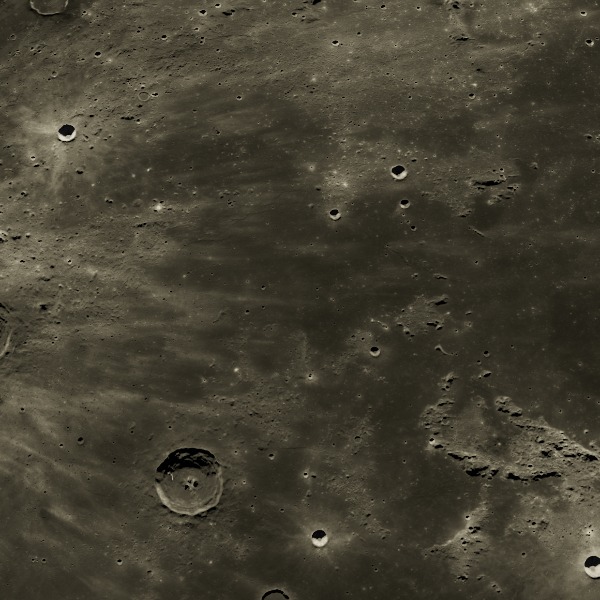
The Straight Wall. Most famous lunar fault scarp, a 110 km long, 300 m high cliff in Mare Nubium. Appears as a dark line before full Moon and bright line after. Best around day 8.
Open on /Moon