
Charles Wolf (1827–1918)
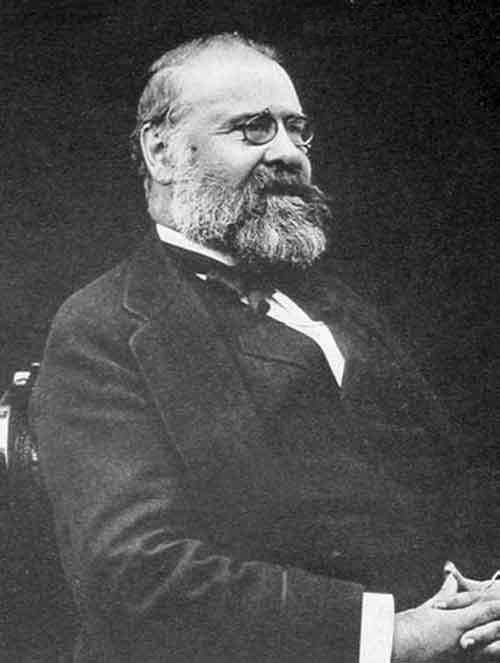
Georges Rayet (1839–1906)
In 1867, at Paris Observatory, Charles Wolf and Georges Rayet pointed a spectroscope at three unremarkable-looking stars in Cygnus. Every other star they had measured showed dark absorption lines — a rainbow with stripes cut out. These three showed the opposite: bright, broad emission bands, as if the star were a neon sign rather than a lamp behind a shade.
They had no idea what it meant. A century would pass before astronomers worked out that those broad emission lines were the fingerprint of a hurricane — stellar wind so dense and fast that the star is shrouded in its own outbound atmosphere, lit from below like fog under a streetlamp.
Today that fingerprint defines the Wolf-Rayet class, abbreviated WR.
