Properties
Position & Identifiers
Physical Properties
Orbital Properties
Brightness Forecast (next 12 months)
Apparent magnitude as Earth–asteroid distance changes through the year. The peak marks the brightest moment in the window — usually around opposition, when the asteroid is closest and fully illuminated.
Computed from JPL orbital elements via m = H + 5·log10(r·Δ). Phase-function correction is omitted, so curves trace distance variation only — accurate within a few tenths for main-belt asteroids; coarse for fast-moving NEOs near Earth.
Observing Tips
Discovery
Current Ephemeris
How easy to spot?
| Telescope | Bortle 3 | Bortle 4 | Bortle 5 |
|---|---|---|---|
| 80 mm refractor 80mm refr. | Medium+ | Medium+ | Medium |
| 150 mm Newton 150mm Newt. | Easy | Easy | Medium+ |
| Celestron C8 (203 mm SCT) C8 203mm | Easy | Easy | Easy |
Bortle 3 = rural · 4 = outer suburbs · 5 = suburbs
Visibility
Set a location in User Settings to see visibility data.
Community Photos (1)
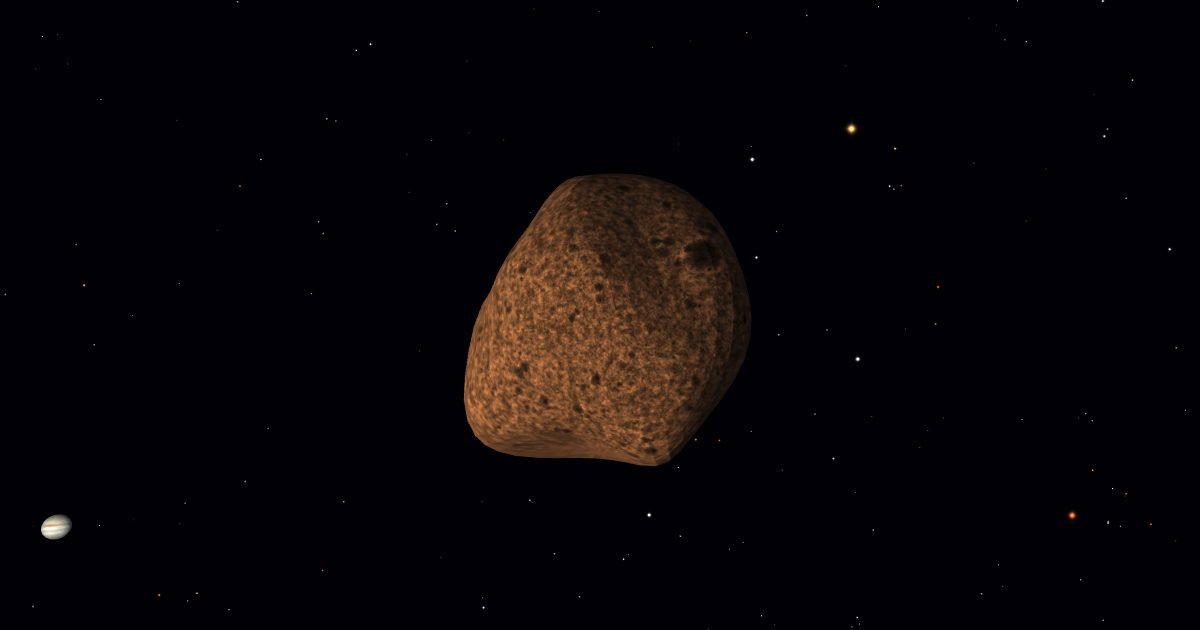
Rendered preview of Julia from the Nightbase orrery, lit from the current Sun direction with the terminator visible.
Credit: Nightbase orrery render.
Skybred Apr 27, 2026
Explore Nightbase
Related knowledge, tools, and stories — no observation planning required.
