Metis — Asteroid in Wassermann
Über Metis
Beschreibung
Metis ist ein S-Typ-Asteroid mit 173 km Durchmesser bei 2,39 AE. Sie könnte der freigelegte Kernrest eines größeren Asteroiden sein, der durch eine katastrophale Kollision in der Frühzeit des Sonnensystems zerstört wurde. Spektrale Ähnlichkeiten mit Asteroid 113 Amalthea deuten darauf hin, dass beide Fragmente desselben Ursprungskörpers sein könnten. Metis rotiert ungewöhnlich schnell in etwas über 5 Stunden.
Beobachtungstipps
Metis kann in den günstigsten Oppositionen 6,3 mag erreichen und gehört damit zu den helleren Asteroiden – sichtbar im Fernglas. Typischerweise liegt die Helligkeit zwischen 7 und 9 mag. Die Eigenbewegung über zwei bis drei Nächte bestätigt die Identität. Beste Beobachtungszeit ist typischerweise März bis Mai.
Geschichte
Metis wurde am 25. April 1848 von Andrew Graham am Markree Observatory in der irischen Grafschaft Sligo entdeckt – der einzige jemals von irischem Boden aus entdeckte Asteroid. Benannt nach Metis, der Titanin der Weisheit in der griechischen Mythologie.
Wissenswertes
Metis ist der einzige in Irland entdeckte Asteroid. Ihre schnelle Rotation von 5 Stunden ist für ihre Größe ungewöhnlich – die meisten Asteroiden dieser Größe rotieren langsamer. Falls Metis ein freiliegender metallischer Kern ist, bietet sie die seltene Möglichkeit, die innere Zusammensetzung eines differenzierten Körpers zu studieren.
Eigenschaften
Position & Bezeichnungen
Physikalische Eigenschaften
Bahneigenschaften
Brightness Forecast (next 12 months)
Apparent magnitude as Earth–asteroid distance changes through the year. The peak marks the brightest moment in the window — usually around opposition, when the asteroid is closest and fully illuminated.
Computed from JPL orbital elements via m = H + 5·log10(r·Δ). Phase-function correction is omitted, so curves trace distance variation only — accurate within a few tenths for main-belt asteroids; coarse for fast-moving NEOs near Earth.
Beobachtungstipps
Entdeckung
Aktuelle Ephemeriden
Wie leicht zu erkennen?
| Teleskop | Bortle 3 | Bortle 4 | Bortle 5 |
|---|---|---|---|
| 80 mm Refraktor 80mm Refr. | Leicht | Leicht | Leicht |
| 150 mm Newton 150mm Newt. | Leicht | Leicht | Leicht |
| Celestron C8 (203 mm SCT) C8 203mm | Leicht | Leicht | Leicht |
Bortle 3 = ländlich · 4 = Stadtrand · 5 = Vorstadt
Sichtbarkeit
Standort in den Benutzereinstellungen festlegen um Sichtbarkeitsdaten zu sehen.
Community-Fotos (1)
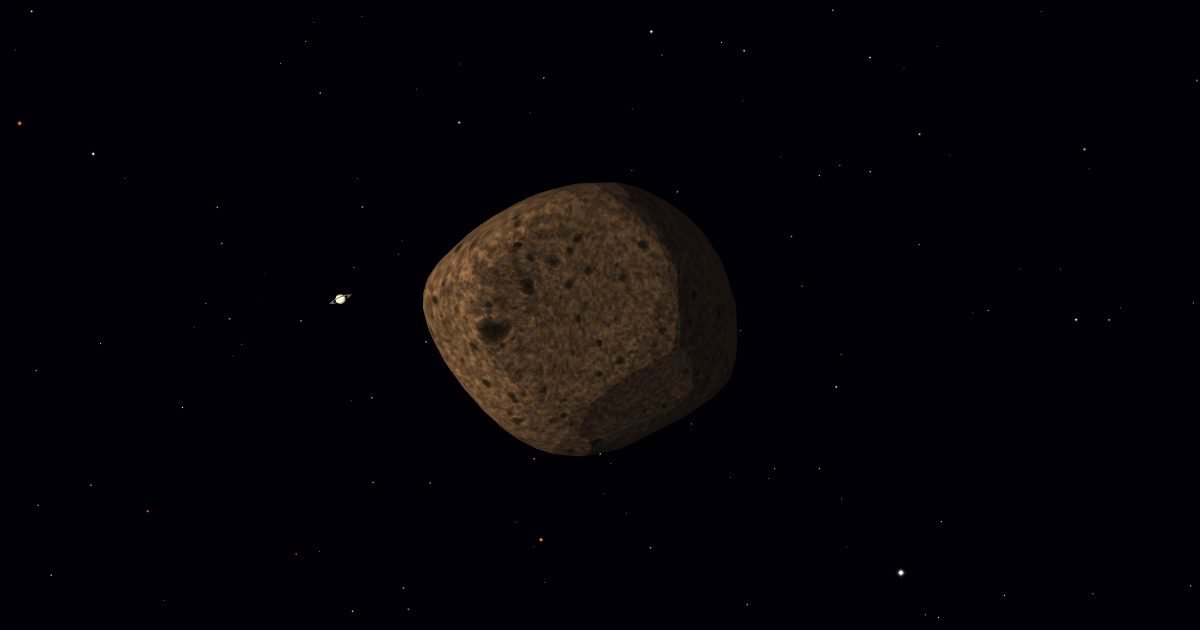
Rendered preview of Metis from the Nightbase orrery, lit from the current Sun direction with the terminator visible.
Credit: Nightbase orrery render.
Skybred Apr 27, 2026
Nightbase entdecken
Verwandtes Wissen, Werkzeuge und Geschichten – ohne Beobachtungsplanung.
