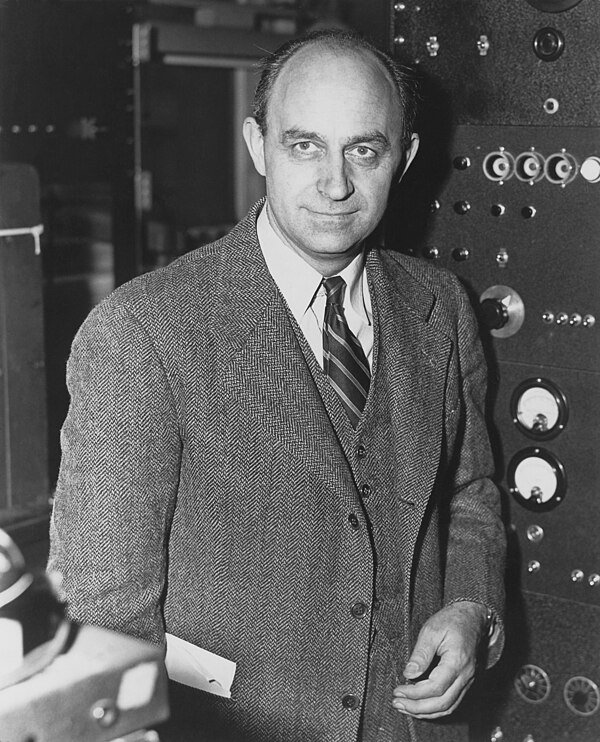
It was the summer of 1950 at the Los Alamos National Laboratory. Enrico Fermi — Nobel laureate, architect of the first nuclear reactor, the kind of physicist whose mental arithmetic estimated bomb yields from scraps of paper drifting on the Trinity blast wave — was walking to lunch with Edward Teller, Emil Konopinski, and Herbert York. The conversation, sparked by a New Yorker cartoon about flying saucers stealing trash cans, drifted into faster-than-light travel and the plausibility of interstellar visitors.
The group sat down. Conversation moved on. Then, in the middle of an unrelated topic, Fermi said it out loud: "Where is everybody?"
Everyone at the table understood instantly. Fermi had done the silent arithmetic in his head — the age of the galaxy, the number of stars, the time required for a moderately motivated civilization to spread from one to all of them — and concluded that the sky should be teeming with evidence of other minds. Yet our radios were quiet, our telescopes saw nothing artificial, and no probe had ever landed in the cornfields of Iowa.
That single lunchtime question is now the Fermi Paradox. It isn't a riddle with one answer — it's a constraint on every theory of life in the universe. Whatever you believe about biology, intelligence, or technology, your model has to explain why the sky is empty.
Did you know?
The 1977 "Wow! signal" was a 72-second narrowband radio burst at 1420 MHz — the hydrogen line, the frequency every SETI textbook lists as the obvious channel for an interstellar greeting. Astronomer Jerry Ehman circled it on the printout and wrote "Wow!" in the margin. Despite hundreds of follow-up observations of that exact patch of sky in Sagittarius, it has never repeated. We have one anomaly, half a century old, and nothing to compare it to.