Stars are born inside enormous clouds of gas and dust called nebulae. These clouds are mostly hydrogen — the simplest and most abundant element in the universe — mixed with helium and traces of heavier elements left behind by earlier generations of stars.
A nebula can drift quietly for millions of years. Then something disturbs it: a shockwave from a nearby supernova, a collision with another cloud, or the tidal squeeze of a passing star. Pockets of gas begin to collapse under their own gravity. As the material falls inward, it heats up and spins into a flattened disk. At the center, pressure and temperature climb relentlessly.
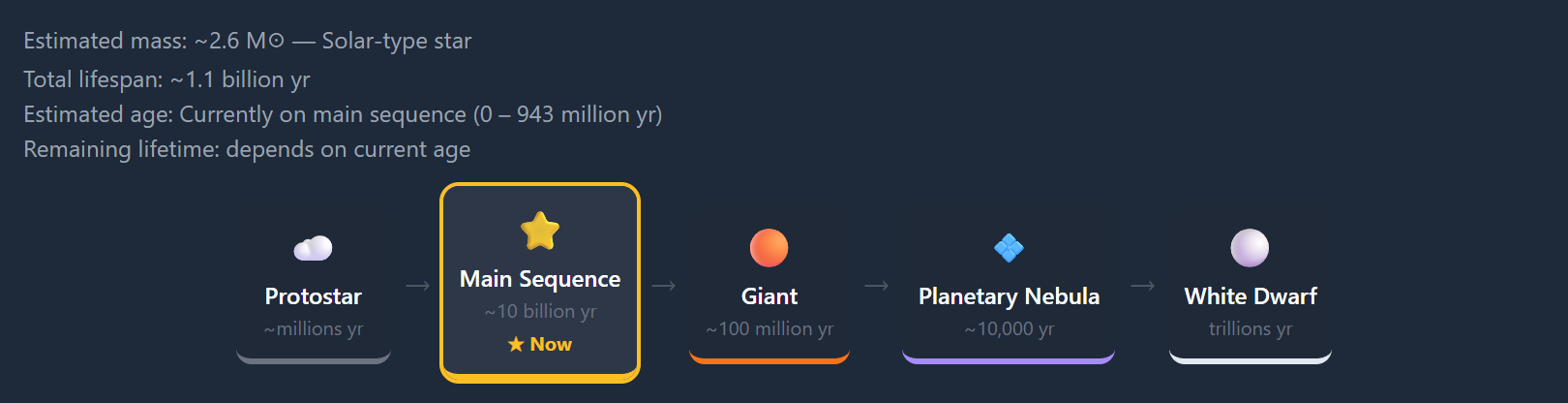
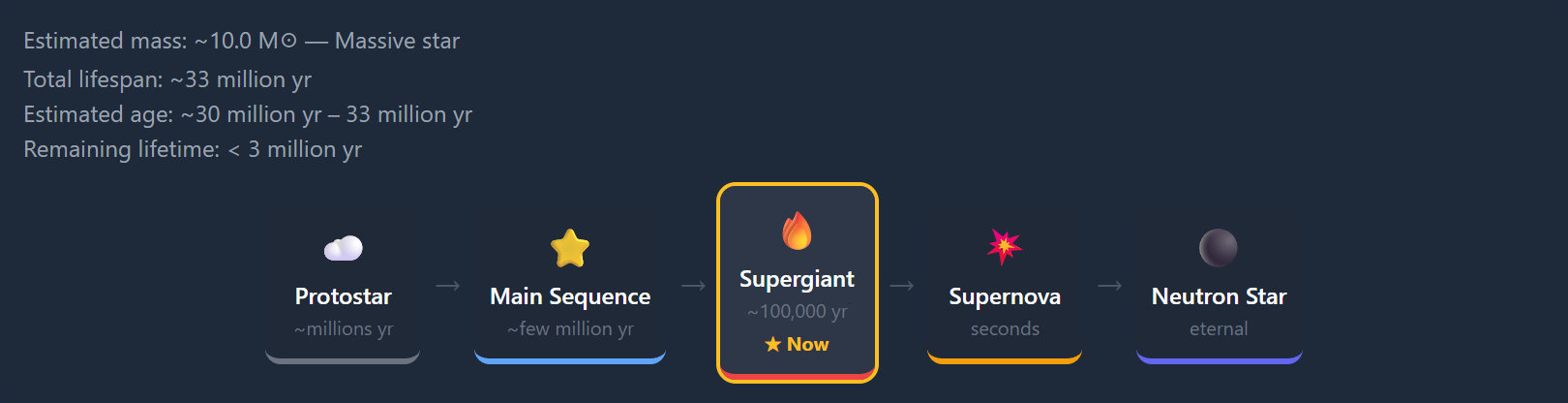
This collapsing core is called a protostar. It glows in infrared light — warm, but not yet a true star. The protostar stage can last anywhere from about 100,000 years for a massive cloud to tens of millions of years for a small one.
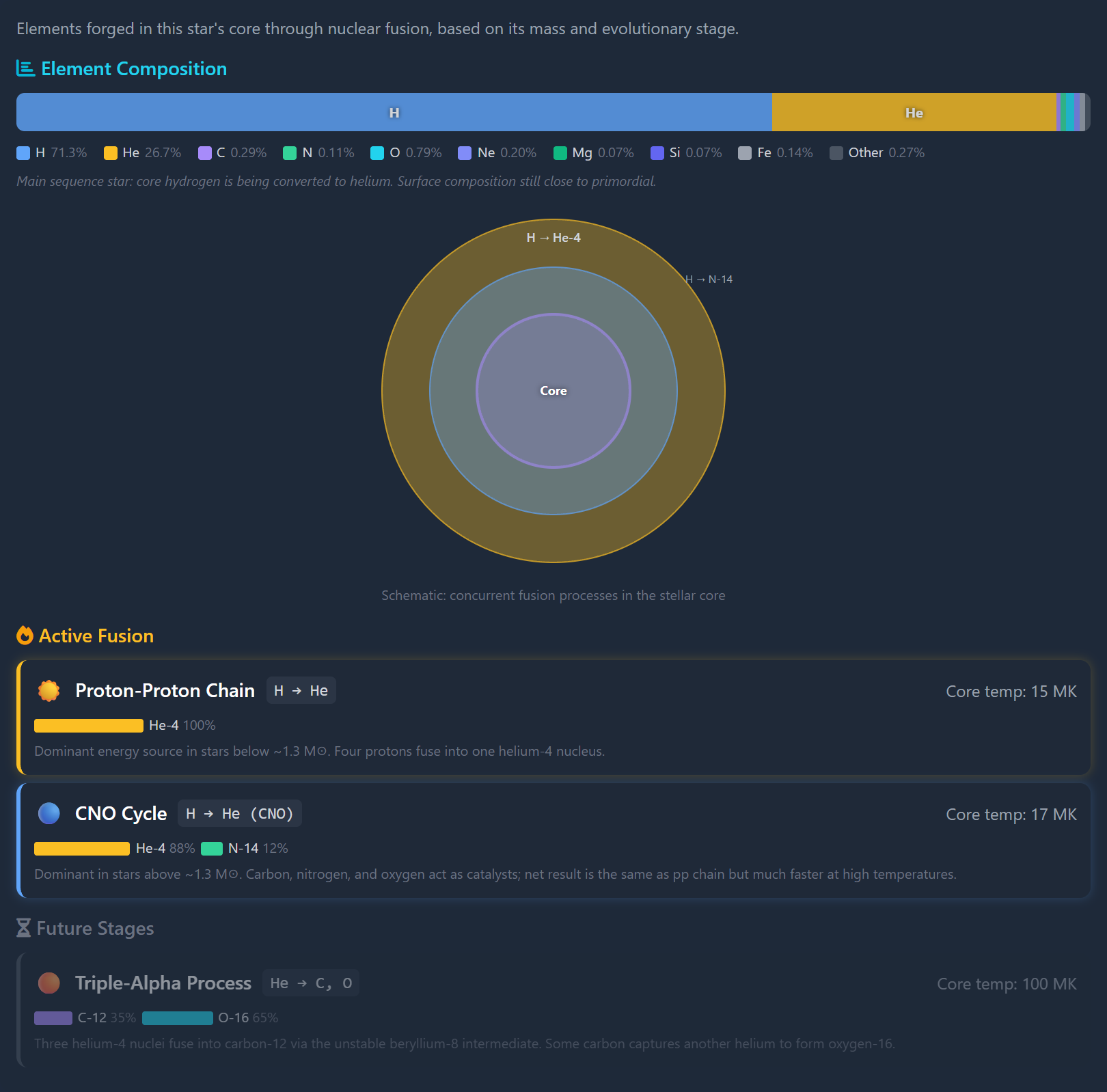
When the core temperature reaches roughly 10 million kelvin, hydrogen nuclei begin to fuse. A star is born.
See a nursery tonight
The Orion Nebula (M42) is the closest major star-forming region, visible to the naked eye as a fuzzy patch in Orion's sword. Through a telescope you can see the Trapezium — four newborn stars whose fierce ultraviolet radiation lights up the surrounding gas.